

Jon Marsh says fanzines beat the algorithm, 50 years after punk
DIY UK music zines are surging again, turning fan obsession into tangible community and resisting scrolling fatigue.
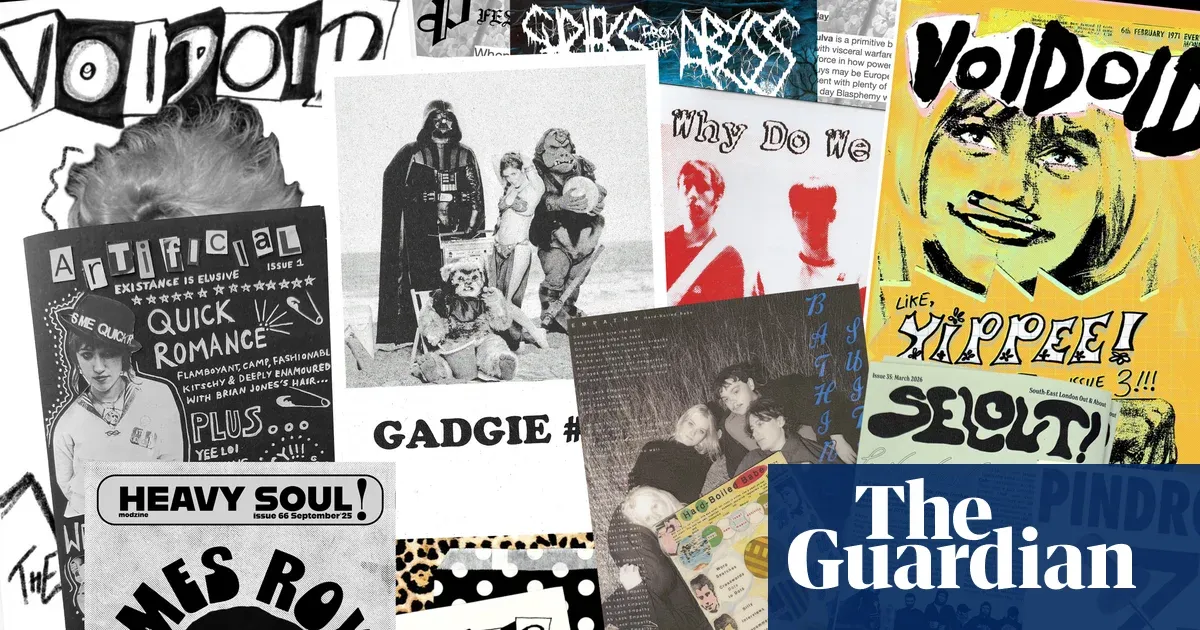
London-based zine-maker Jon Marsh points to a DIY revival that keeps “fan” at the center, with creators positioning fanzines as a real alternative to algorithm-driven attention. For decision-makers, it signals where audiences may be shifting: from endless feeds toward slow, physical, community-first media.
Five decades after punk bible Sniffin' Glue, DIY magazines are in rude, rich health. London-based zine-maker Jon Marsh puts the framing bluntly: “The most important part of the word ‘fanzine’ is ‘fan’.” That emphasis on fanhood is doing more than tugging at nostalgia. It is shaping a new kind of attention economy for music, one where the artifact is tangible and the relationship is the product.
The reason this matters now is the same pressure that makes most mainstream media feel interchangeable. Music fanzines exist outside mainstream release cycles and outside search engine optimisation demands. They also, crucially, sidestep algorithm fatigue. Hip-hop musician ExP, creator of the West Yorkshire Hip-Hop zine, spells out the pitch with a modern, slightly brutal comparison: digital attention span is at an all-time low, and “You’re almost definitely going to spend more time looking at a zine than anything you see scrolling. It’s more interesting and more real.” In other words, the comeback is not just cultural. It is behavioral.
To see why the comeback has teeth, look at how punk zines worked in the 1970s and why that model still resonates. In that era, punk zines such as Sniffin' Glue, Alternative Ulster, and Ripped & Torn let fans share news and enthusiasm quickly and cheaply. They were a fast, low-cost distribution channel, built to move information and identity horizontally, not vertically through gatekeepers. And because the format could be made by fans rather than purchased through institutions, it helped fan communities feel like they were co-authoring the scene.
Half a century on, the resurgence is being positioned as resistance to algorithm fatigue and the hyper-capitalist music industry. That phrase might sound like a slogan, but it maps onto concrete incentives. Mainstream platforms reward speed, scale, and measurable engagement. They push creators toward content that is optimized for discovery and repeated exposure. Fanzines, by design, break that loop. They can be self-published primarily for the maker's own enjoyment, which changes the incentive structure. Instead of producing content to feed a system, creators produce objects to share with other humans.
There is also a rhythm difference. ExP’s claim is about time spent. Stephen McRobbie, from indie-pop icons and fanzine regulars the Pastels, offers the metaphor that tells you what that time is buying: “It’s the long way round compared to other media, but the scenery is always better.” That line is a reminder that attention does not always mean velocity. Sometimes attention is quality, immersion, and the slow satisfaction of reading something that was not assembled for swipe-through consumption.
From a decision-maker perspective, this is a second-order story about how communities form when the feed gets noisy. Algorithms can widen reach, but they also compress context. They can turn distinct subcultures into just more content. Fanzines do the opposite. They take fandom seriously, keep it specific, and create a place where identity and taste can be exchanged without being instantly flattened into metrics. That is likely why the creator community keeps describing fanzines as both obsession and connection: music fanzines are obsessions turned into tangible objects, with the potential of forging connections with like-minded people.
Zoom out further and you can see why this kind of resurgence would matter beyond music. Media is increasingly judged by how well it performs in feeds, and formats that do not fit the feed can be undervalued or ignored. Yet what fanzines are demonstrating is that there is still demand for a different kind of media purchase: one that signals belonging, rewards curiosity, and offers a physical alternative to endless scrolling. For boards and leaders watching brand building, distribution strategies, and audience retention, this is a live case study. Not a replacement for digital, but a reminder that the strongest engagement often comes from clarity of audience and intentional scarcity.
So the strategic stake is simple: if music audiences are spending more time with zines than with scrolling, then the center of gravity for attention is not only moving. It is fragmenting. Fanzines prove that a smaller, more committed format can outperform a larger, algorithm-shaped one, especially when the format delivers reality, community, and time. That is a signal founders and operators ignore at their peril, even if the product looks handwritten and the distribution looks delightfully old-school.
This story's Key Insights and Take-aways are locked.
Create a free account to unlock Executive Actions for one credit.
Register to UnlockAlways free for Executives Club members. Join the Club
More in Entertainment

12TB Steam 'teraleak' goes beyond Valve: GTA 3, Mafia 2 prototypes exposed
A 12-terabyte dump of Steam data reveals prototypes and builds of third-party classics like GTA 3 and Mafia 2, plus unreleased Valve content, rewriting game history.

LinkedIn's romance problem: 1 in 4 workers say dating on it is fair game
A new survey shows a quarter of U.S. employees treat the professional network as fair game for romance, even as LinkedIn bans it and removes hundreds of thousands of offending posts.

Enhypen's first No. 1 album breaks K-pop's Billboard 200 streak
The K-pop group's 98,000-unit debut tops the chart while Dolly Parton's catalog reentry shows how death reshapes streaming.