
Jony Ive-era Apple designers fled as studio lost executive seat, Bloomberg says
Incoming CEO John Ternus inherits a weakened design org and promises to put it back at the center.
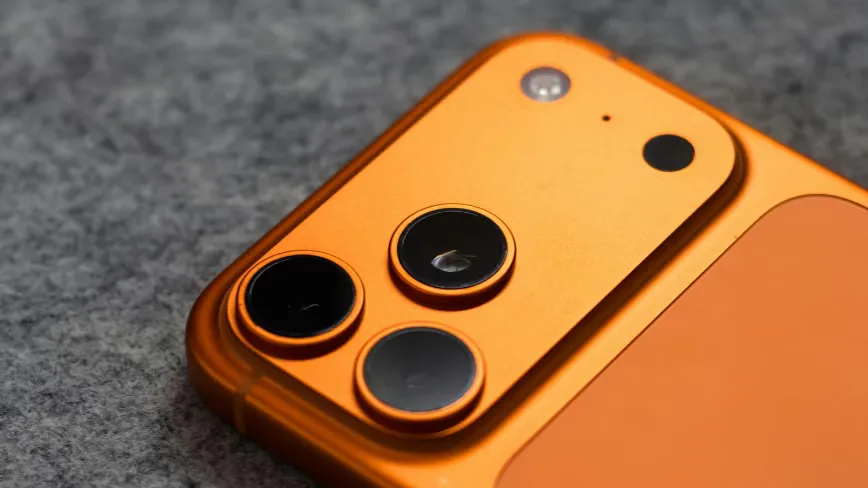
Apple’s industrial design studio has been gutted, with Bloomberg’s Mark Gurman reporting it no longer has a true seat at the executive table. Incoming CEO John Ternus says he’ll fix it, and the change signals what design influence will look like under his leadership.
Apple’s industrial design studio, once the kind of design machine that set the tone for consumer tech globally, has been gutted. Bloomberg’s Mark Gurman reports the team no longer has a true seat at the executive table, has less influence and credibility than at any point in decades, and has become a service bureau where other teams do the work and design responds.
If you are trying to map what John Ternus is walking into, that is the point. Gurman’s reporting frames a studio that used to help steer executive-level decisions now operating as support. In other words, the “studio” still exists, but the power dynamics that made it consequential are missing. And that matters because Apple’s products are not just built. They are staged. They are engineered and packaged into experiences people recognize in a glance. When the design group loses its executive leverage, the whole system can drift.
To understand why this story hits, you have to remember what Jony Ive-era industrial design meant inside Apple. In the decades-long period Gurman references, design was not an afterthought and it was not confined to aesthetics. It was a high-visibility, high-authority function. That authority shaped how product teams prioritized tradeoffs: what gets simplified, what gets hidden, what becomes “the point.” When your design function stops being a table partner and starts being a service desk, those tradeoffs get decided elsewhere, often by engineers, marketing, or platform stakeholders with different incentives.
Gurman’s description is especially stark because it is not just about staffing. It is about governance and credibility. A team can add designers, refresh portfolios, and update tooling, but if it lacks a “true seat at the executive table,” it cannot reliably influence the decisions where the product’s shape is determined. Less influence and credibility than at any point in decades sounds like an internal perception problem as much as an org chart problem. And that is where second-order effects show up: if other teams learn that design leadership cannot block, steer, or materially change outcomes, design will naturally become a later-stage input. The work still gets done, but it no longer drives.
Now factor in the leadership transition. The source says incoming CEO John Ternus says he’ll fix it. That promise is not a vague platitude. It is an implicit statement that the design org’s current position is misaligned with Apple’s operating model. For decision-makers, that is the part to watch: Ternus is effectively saying that Apple’s product differentiation relies on design influence that has to be re-established at the executive level.
There is also a broader market context behind why Apple would care so intensely about this particular lever. In consumer hardware, product differentiation is often more about integration and usability than raw specs. Design is the bridge between engineering capability and human behavior. When design influence weakens, companies can end up with products that work, but do not persuade. The result is not necessarily an immediate collapse, but it can degrade the “Apple feel” over time, especially as competitors narrow gaps in hardware and manufacturing.
From an internal politics standpoint, the move to service-bureau status also hints at how Apple’s product teams might be organized around other priorities. If the studio is serving rather than leading, then the executive table may be filled by leaders whose job is to manage timelines, platform roadmaps, or supply chain realities. Those priorities are real. But they are different from design’s job, which is to translate a product vision into form, interaction, and coherence. When those functions do not have equal leverage, the product can become a patchwork of optimization decisions rather than a unified statement.
Finally, consider why this matters to peers in the industry. Executives at other consumer tech companies know that industrial design is not just branding. It is a strategic function that can determine how quickly teams converge on a product identity and how confidently they commit to it. Gurman’s reporting suggests that Apple’s design studio has lost that strategic role, and Ternus’s stated plan to fix it signals that Apple is taking the “design leverage” problem seriously, not just the “design output” problem. If that correction succeeds, it will show how CEO-level authority can re-wire influence across product development. If it fails, it will be a warning to every board watching whether design remains a core competitive advantage or becomes ceremonial.
For Apple, the stake is simple: when the studio no longer influences decisions at the executive table, the product roadmap can drift away from the design principles that made Apple’s most recognizable work possible. For Ternus, the promise to fix it is a bet that restoring design credibility and executive-level influence can restore coherence, speed, and conviction in how products are shaped.
This story's Key Insights and Take-aways are locked.
Create a free account to unlock Executive Actions for one credit.
Register to UnlockAlways free for Executives Club members. Join the Club
More in Business

A flaw in PHP just forced governments to pull their own sites offline
European agencies from Belgium to Germany took websites dark to patch a critical weakness in the language behind almost 70% of the web, and the blast radius extends far beyond government portals.

BioWare shuts down, Mass Effect 5 dead after $55B EA buyout
The legendary RPG studio's closure lands months after a $55 billion investment group buyout of EA, raising tough questions for gaming's biggest acquirers.
Musk weighs Tesla-SpaceX mega-merger as boards form review panels
Special committees at both companies will examine a tie-up that could fuse electric vehicles and space launch, forcing a fresh look at governance and valuation.