

Jupiter-sized object around a brown dwarf may redraw the definition of a “moon”
An almost-Jupiter body orbiting a brown dwarf challenges how astronomers classify moons, with real knock-on effects for future surveys.
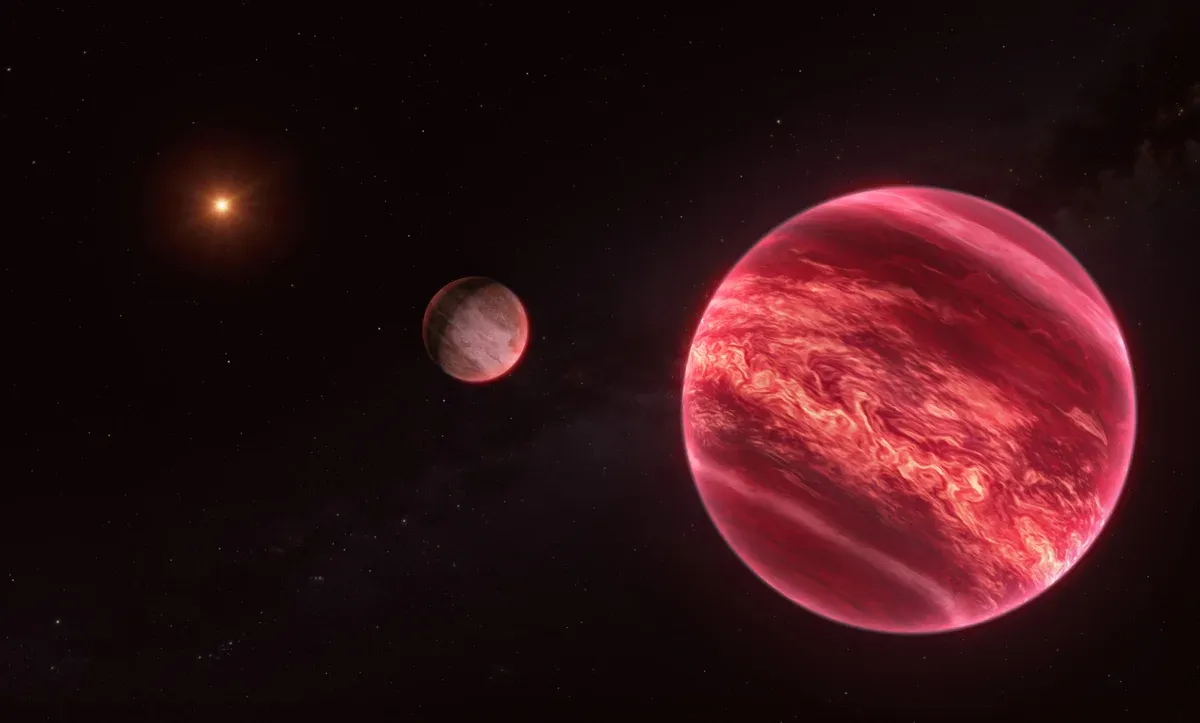
An almost Jupiter-sized object is orbiting a brown dwarf, which is in turn orbiting a small star, according to Scientific American. For decision-makers tracking science programs and telescope roadmaps, it raises classification stakes that can reshape how future discoveries are counted and compared.
Scientific American reports on a cosmic setup that is small in distance and big in implications: an almost Jupiter-sized object is orbiting a brown dwarf, and that brown dwarf is orbiting a small star. In plain English, you have a “parent” that is not quite a normal star, and around that parent you have a large body that, depending on how you define things, might look an awful lot like a moon. The catch is that the moment you try to label it cleanly, the universe pushes back.
Why this matters now is simple. “What is a moon?” is not just a trivia question. It is a classification problem that affects how astronomers organize data, compare systems, and decide what follow-up measurements are worth spending time on. An object nearly the size of Jupiter sitting in an orbit around a brown dwarf forces astronomers to rethink what counts as a moon when the central object is itself an astrophysical oddball. The source frames the central tension directly: this huge body could force astronomers to rethink their concept of a moon.
To understand the second-order implications, it helps to zoom out for a moment on how these systems are typically discussed. In many everyday contexts, “moon” implies an object that orbits a more massive planet. But space does not come with a neatly laminated instruction manual. Brown dwarfs sit in the gray zone between giant planets and small stars. They are often described as “failed stars” because they do not sustain the same kind of hydrogen fusion that a true star does. That means the boundary between “planet-like” and “star-like” can get fuzzy, especially when you add a huge orbiting body that is almost Jupiter-sized.
Classification is where definitions become money, time, and opportunity cost. In astronomy, a label decides which observation plans get priority, which instruments are scheduled, and how survey results get summarized. If an object like this is treated as a moon, it gets folded into one kind of narrative. If it is treated as something else, it gets folded into another. Either way, the choice shapes the downstream pipeline: how catalog entries are built, how statistical trends are interpreted, and how likely it is that astronomers notice patterns across many systems instead of isolated curiosities. When the category itself is under pressure, everyone who uses the catalog for comparison has to recalibrate.
There is also a “program management” angle that execs and board members will recognize even if they do not run telescopes. Scientific institutions fund missions and maintain observation time with a mix of scientific goals and operational constraints. Definitions influence those goals. If astronomers have to rethink what a moon is in systems involving brown dwarfs and very large orbiting objects, it can ripple into the types of targets proposed for future campaigns. That does not mean the world ends or that previous work becomes worthless. It means the evaluation rubric for what counts as “new” or “confirming” can shift, and that changes how stakeholders measure progress.
Now add the role of governance and coordination. Astronomy is global and collaborative, involving institutions that often align around shared data standards, naming conventions, and publication frameworks. A conceptual change like “this may force a rethink of what a moon is” creates pressure not only on researchers but on the ecosystem around them: teams responsible for catalog curation, cross-survey data harmonization, and the interpretive summaries that policymakers and funders rely on to understand why a mission should matter. If classification categories evolve, so do the documentation and the logic behind what gets compared.
For decision-makers watching related science funding, the strategic stakes are straightforward. The universe is generating discoveries that blur the lines between categories we use to organize knowledge. When that happens, the winners are the groups and programs that can adapt quickly: update taxonomies, revise analysis workflows, and still communicate clearly to non-specialist stakeholders. The almost Jupiter-sized object orbiting a brown dwarf, in a brown dwarf system orbiting a small star, is not just a neat headline. It is a reminder that our definitions can lag behind reality, and when that happens, the cost is paid in analysis rework, follow-up decisions, and how confidently future discoveries are interpreted.
Second-order, the ripple goes beyond naming. If astronomers rethink moon definitions, it can affect how they infer formation histories for these systems. What counts as a moon versus a different type of companion can change the story you tell about how such bodies formed and evolved. That affects which physical questions get asked next, what models get stress-tested, and how often teams prioritize similar systems. For executives and boards, the takeaway is not that science is unstable. It is that science is dynamic, and the organizations best positioned to benefit are those that treat conceptual frameworks as living infrastructure rather than fixed labels.
This story's Key Insights and Take-aways are locked.
Create a free account to unlock Executive Actions for one credit.
Register to UnlockAlways free for Executives Club members. Join the Club
More in Science

Alaska's 1,580-foot tsunami had warning signs. Scientists just found them.
Rapid glacier retreat, heavy rainfall, and thousands of tiny tremors preceded Alaska's 1,580-foot tsunami, a warning for every coastal community in a warming world.

The rare mutation that lets high-risk brains dodge Alzheimer's
Scientists found a natural defense against protein buildup, opening a new path to preventive treatments.

3,000 steps a day may halve Alzheimer's decline, study finds
New research links a modest daily walk to less tau buildup and nearly half the cognitive and functional decline, even for those with early signs.