

Justin Bieber’s “Everything Hallelujah” streams jumped 110% after World Cup halftime
Luminate measured the post-performance lift, and it shows halftime tracks outperform full catalogs across major stars.
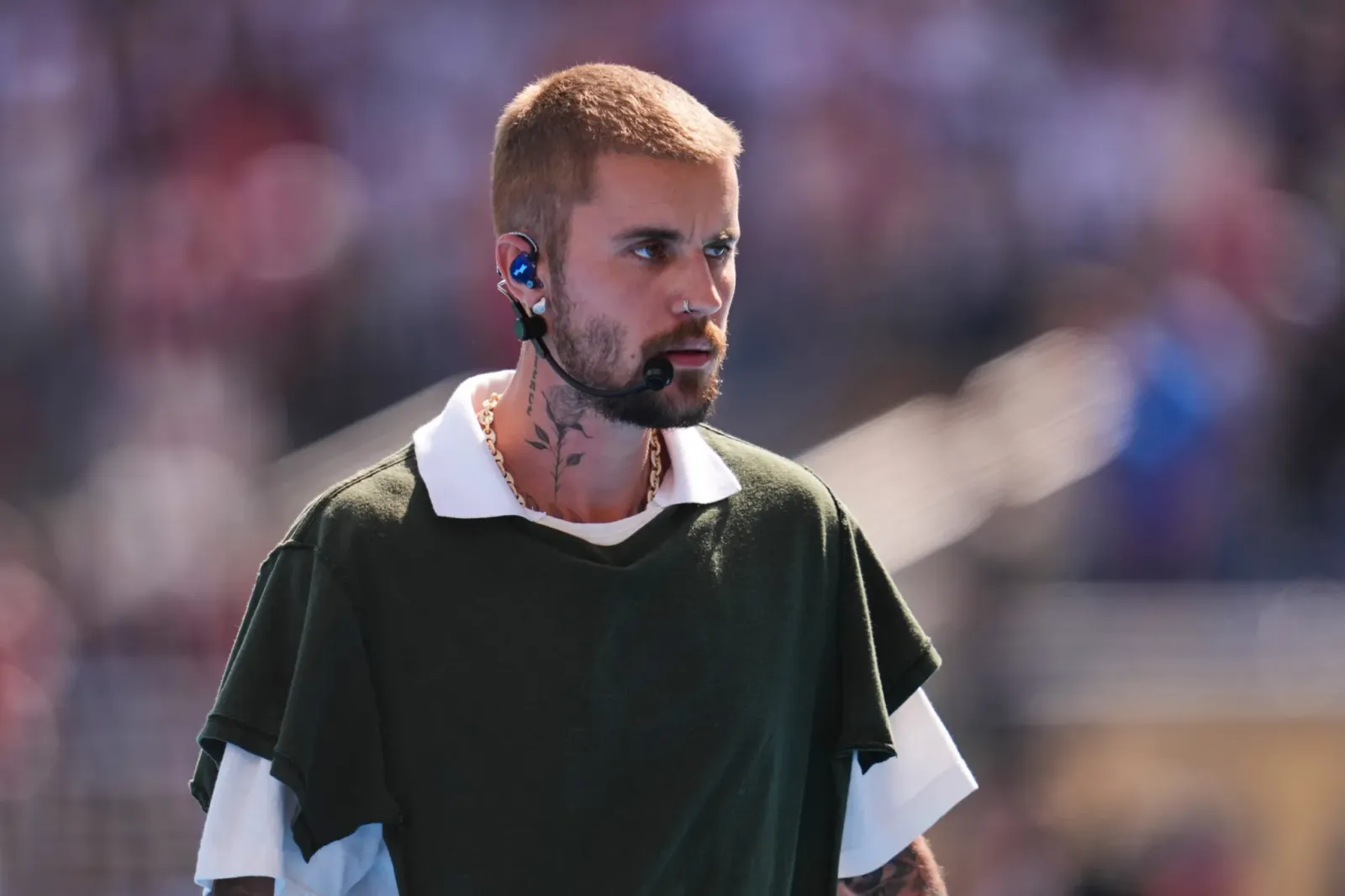
Luminate, the music analytics firm, compared streams for songs performed during the World Cup’s first halftime show to the prior days and the following Monday. The resulting lift, led by Justin Bieber’s “Everything Hallelujah” with a 110% jump, matters to decision-makers tracking how big televised moments translate into measurable audience behavior.
Justin Bieber’s World Cup halftime contribution was an 11-minute moment with a very measurable hangover. Luminate, the industry data and analytics company that tracks changing behaviors in music listenership, says global streams of Bieber’s “Everything Hallelujah” jumped 110%, rising from 592,000 streams to 1.25 million when comparing two days before the final (Friday and Saturday) with the day after (Sunday and Monday).
This is the part executives should care about: Luminate did not just see a general surge. It found the strongest increases landed on the specific songs performed on the field last weekend, not across the artists’ entire catalogs. That pattern is consistent with a broader entertainment playbook, and it helps explain why certain halftime choices turn into real-world distribution events rather than one-off headlines.
The World Cup halftime show, held Sunday just outside New York, featured abridged hits from multiple artists. Madonna, BTS, and Shakira also appeared, each delivering a shortened set rather than a full album moment. According to Luminate, Madonna’s “Music” rose 66%, from 193,000 to 321,000 global streams. BTS saw growth too, with “Dynamite” increasing 43%, from 2.14 million global streams to 3.05 million. Shakira and Burna Boy’s official 2026 World Cup anthem, “Dai Dai,” recorded a 24% increase, from 14.78 million to 18.27 million global streams, plus a sharper U.S. lift.
In the U.S. alone, “Dai Dai” streams rose 52%, from 1.68 million to 2.55 million. So while the global numbers show the halftime broadcast moved listeners at scale, the U.S. results suggest localized audience behavior can amplify the effect. For platforms and rights-holders, that means the “where” of consumption matters as much as the “how much.” Streaming is not one metric; it is geography, timing, and context all stacked together.
There is also a comparison embedded in Luminate’s findings: halftime boosts look different from full-catalog boosts. Luminate “found that the aforementioned artists only saw considerable jumps in the songs they performed on the field last weekend as opposed to their full catalogs.” That distinction is important because it reframes what a board or executive team should measure after a mega-event. If your KPI dashboard only watches catalog-level momentum, you might miss the more precise impact: spikes concentrated in the exact tracks audiences heard in the performance.
Luminate’s report explicitly calls out how this phenomenon is more common for Super Bowl halftime performers, and it backs that up with a striking benchmark from Bad Bunny. After his record-breaking performance this year, streams of his catalog jumped 175% in the U.S. on the day after the Super Bowl, compared to the previous Monday. The contrast is instructive. The World Cup data shows sizable jumps, but the catalog-wide effect mentioned for Bad Bunny is even more dramatic, suggesting that the type of act, the U.S. audience response, and the performance context can change the magnitude and spread of the streaming impact.
For decision-makers in music, media, and adjacent consumer tech, this is not just pop culture trivia. It is distribution intelligence. When a televised performance happens, it creates a short window where discovery and replay behavior can shift. The numbers Luminate reported show that window can last across the immediate before-and-after period and concentrate on the songs that were actually performed. That has second-order implications for how labels and platforms plan releases, how marketers time campaigns, and how executives set expectations for return on big, expensive media moments.
It also raises a strategic question for executives in similar roles: are you treating halftime as a brand moment, a PR moment, or a measurable growth lever? Luminate’s measured lifts make the case for the last option. If the biggest streaming gains are tied to performed tracks, then future partnerships and performance setlists become more than creative choices. They become a distribution strategy with financial consequences, especially for catalog monetization and real-time audience analytics.
This story's Key Insights and Take-aways are locked.
Create a free account to unlock Executive Actions for one credit.
Register to UnlockAlways free for Executives Club members. Join the Club
More in Entertainment

12TB Steam 'teraleak' goes beyond Valve: GTA 3, Mafia 2 prototypes exposed
A 12-terabyte dump of Steam data reveals prototypes and builds of third-party classics like GTA 3 and Mafia 2, plus unreleased Valve content, rewriting game history.

LinkedIn's romance problem: 1 in 4 workers say dating on it is fair game
A new survey shows a quarter of U.S. employees treat the professional network as fair game for romance, even as LinkedIn bans it and removes hundreds of thousands of offending posts.

Enhypen's first No. 1 album breaks K-pop's Billboard 200 streak
The K-pop group's 98,000-unit debut tops the chart while Dolly Parton's catalog reentry shows how death reshapes streaming.