

Justin Gaethje shocks Ilia Topuria to win UFC lightweight title at Trump's White House
The UFC undisputed lightweight crown changed hands at a Trump White House event, with Gaethje delivering the decisive upset.
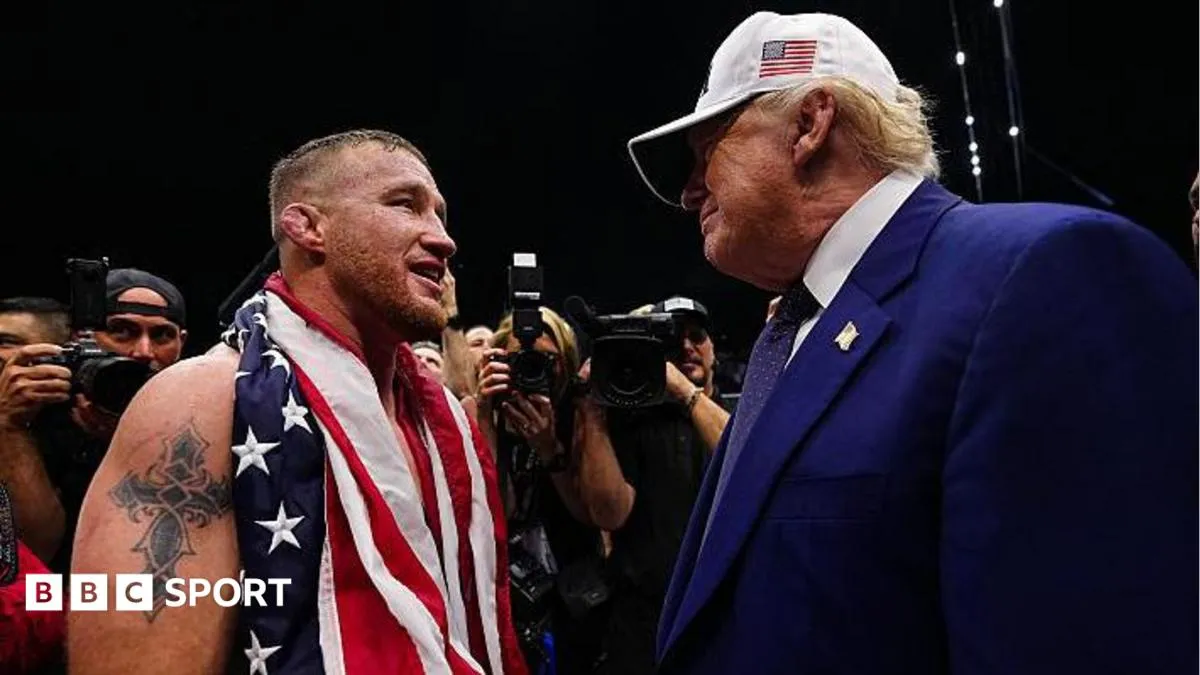
Justin Gaethje won the UFC undisputed lightweight title by shocking Ilia Topuria at a White House show that included President Donald Trump. For decision-makers, the moment underscores how major sports brands increasingly intertwine high-profile politics, media strategy, and global fan attention.
Justin Gaethje walked into the White House, on a stage that included President Donald Trump, and delivered the kind of finish American sports fans wanted. In a headline-making performance, he shocked Ilia Topuria to win the UFC undisputed lightweight title. The win also acted like a full stop on the night for US viewers and for the UFC’s media machine: a clear champion, a high-stakes opponent, and a moment designed for maximum visibility.
For executives and operators, the key detail is simple: Gaethje took the undisputed lightweight title by beating Topuria at this event, not just by winning a fight. That matters because “undisputed” is brand language with consequences. It signals there is one true top challenger in a weight class, which helps the sport cut through fan confusion, stabilize narratives, and concentrate attention on the champion going forward. In other words, the UFC did not just deliver drama. It delivered a clean, marketable resolution at a venue that reads as mainstream power.
This kind of setting is not accidental. UFC events have increasingly used celebrity and culture-adjacent platforms to broaden reach beyond the core fight fan. The White House appearance, with Donald Trump in the mix, turns a bout into a headline and a headline into distribution. Even if you are not tracking every match-up, you understand what the UFC and its partners are doing: aligning fight credibility with political and mainstream visibility. That alignment can pull in new audiences, but it also raises the stakes for brand management, because every viewer is now watching not just the athletes, but the event’s cultural “fit.”
There is also an incentive layer underneath the glamour. A title change at a prominent venue resets market expectations. Once the undisputed belt is on Gaethje, the UFC can package him as the defining figure of the division and use that clarity to shape the next cycle of match-making and media programming. Topuria’s loss matters just as much for that reason. When an unbeaten or dominant storyline gets interrupted, the audience reorients quickly. That reorientation is good for engagement metrics because it creates urgency, debate, and the immediate question of who rises next.
Now zoom out to the broader sports and regulation context. Combat sports are governed by rulesets that typically require commissions, sanctioning, and compliance with safety standards. While the BBC Sport piece focuses on the result and the White House backdrop, the underlying reality is that the sport’s legitimacy is built on a governance framework. Executives in media and sponsorship know that legitimacy is not just about entertainment, it is about repeatability. Title fights, in particular, are where credibility gets stress-tested. An undisputed lightweight championship carries extra weight because it implies unified status across stakes, rankings, and fan recognition, which makes it more valuable to partners looking for stable brand signaling.
That regulatory and legitimacy foundation is exactly why the optics of the location matter. The White House is not a random arena. It is a symbolic stage that puts the sport into a mainstream political context. For the UFC, that can expand reach, but it also means the spotlight is broader, not narrower. When mainstream attention arrives, so does scrutiny, and the UFC has to keep delivering clean outcomes and compelling storylines that make the event worth the attention it gets.
Second-order effects spill outward beyond the Octagon. For other athletes and promoters, Gaethje’s win demonstrates how quickly careers can be re-valued when the narrative flips and when the fight is positioned in a high-visibility moment. For investors or partners thinking about sponsorships, it highlights the value of being associated with a product that can create instant, widely shareable moments. And for boards and senior executives at sports organizations, it underlines a strategic trade-off: you can chase broader attention, but you must pair it with credible performance and clear championship outcomes, because the audience will demand both.
Ultimately, the strategic takeaway from this White House show is about concentration. Gaethje did not merely win; he won the UFC undisputed lightweight title against Ilia Topuria, in front of a mainstream political audience that included President Donald Trump. The result gives the UFC a sharper storyline, a more direct champion narrative, and a stronger platform for what comes next. In a business where attention is the scarcest asset, this was a case of grabbing it at the highest level and paying it off instantly.
This story's Key Insights and Take-aways are locked.
Create a free account to unlock Executive Actions for one credit.
Register to UnlockAlways free for Executives Club members. Join the Club
More in Entertainment

Russell Brand's accuser 'bewildered and confused' as he denies 7 sex charges
The criminal case against the comedian is a live test of how media companies manage talent risk when serious allegations go public.

'It's a Magic Trick': Ballet Experts Say Rosalía's SNL Pose Is Impossible
Three ballet experts tell Rolling Stone Rosalía's gravity-defying SNL stillness shouldn't be possible - and why the debate is now part of the show.

Activision CMO: GTA 6 Will Boost Call of Duty, Not Bury It
Activision's top marketer says Rockstar's blockbuster will drive players back to consoles and into Modern Warfare 4, even as the company admits its recent strategy failed.