

Kalshi’s World Cup final contract tops $1.27 billion, with Spain favored over Argentina
Kalshi and Polymarket are turning the World Cup into their biggest-ever betting draw, and the numbers are already staggering.

Kalshi says its World Cup final contract for Argentina vs. Spain, which went live Wednesday after Argentina beat England, has surpassed $1.27 billion in trading volume. For decision-makers, this is a live stress test of how fast prediction markets are scaling in the US and how they price uncertainty.
The World Cup final already looks like a money machine, at least on prediction markets. Kalshi reports that the contract tied to the outcome of the Argentina-Spain final went live Wednesday, following Argentina’s win over England, and has already surpassed $1.27 billion in trading volume. As of mid-day Friday on Kalshi, Spain was priced as the favorite at 61% odds to prevail over Lionel Messi’s squad.
That is not a rounding error. It is the single largest market in Kalshi’s history, and it underscores how quickly sports can become the liquidity engine for these platforms right before a global spotlight hits. Meanwhile, the broader World Cup trading picture is also breaking records: on Kalshi, total trading across World Cup contracts had exceeded $25 billion as of Tuesday morning, dwarfing other major sports-related contracts such as roughly $2 billion for the NBA finals and $1 billion for the Super Bowl.
Polymarket’s activity tells a parallel story. The Argentina-Spain contract on Polymarket had reached nearly $3 million in trading volume as of Friday. The platform also told Fortune that more than 64,000 users had engaged with the match page three days before the final, a useful datapoint for anyone thinking about market depth. More liquidity usually means tighter spreads, easier entry, and a more “real” trading feel compared with thinner markets that can swing wildly on small trades.
If you zoom out, Polymarket’s World Cup Winner market has become its own blockbuster. Since launching in July 2025, it has generated $4 billion in cumulative trading volume, which Polymarket says makes it the largest single market in the platform’s history and surpasses the 2024 U.S. presidential election. June alone brought nearly $11 billion in global monthly notional volume on Polymarket, largely driven by World Cup trading. That is the kind of scale that stops being a quirky side project and starts looking like infrastructure for how people express beliefs about real-world outcomes.
Now the important part for leaders is not just “sports are popular.” It is that prediction markets are proving they can be more than a novelty. These platforms allow users to take small positions directly from their phones, across markets that range from sports to politics. For many fans, these markets have become part of a standard playbook for engaging with major events, sitting alongside traditional sportsbooks and fantasy leagues.
But prediction markets have a feature that also creates risk, and it shows up clearly in the World Cup record so far: mixed accuracy. Sports outcomes are far less predictable than domains where traders have more hard signals. With interest rate decisions, for example, traders can draw on economic data. With political elections, polling and sentiment can provide clearer signals. With soccer, surprises are part of the product. The result is that pricing can look “smart” and still land wrong, especially when volatility hits.
Fortune’s reporting highlights exactly that pattern. Two closely watched semifinal matchups this week were France vs. Spain and Argentina vs. England. Early market pricing ahead of kickoff did not match the eventual results in both matches. In both, Kalshi markets initially gave roughly a 10% edge to the team that ultimately lost. Polymarket mirrored that pattern, though with a smaller percentage gap. In France vs. Spain, odds flipped about 20 minutes into the game, just before Spain scored its first penalty goal. In England vs. Argentina, odds were more volatile, largely tracking whichever team was ahead on the scoreboard.
The story gets more interesting when you compare those semifinal swings to earlier-round matches. In Morocco vs. France in the quarterfinals, Kalshi bettors favored Kylian Mbappé’s side at 76%, while Polymarket users put the team at 62%. Ahead of Argentina’s match against Switzerland, the odds were tilted toward Messi’s team. Spain’s matchup against Belgium shows a similar tilt: Lamine Yamal’s side was favored at 73% on Kalshi and 59% on Polymarket. The only example where the gap was slightly smaller and favored the other side was Norway vs. England.
For executives and boards, the takeaway is not that prediction markets are “right” or “wrong.” It is that they are scaling fast in a way that forces everyone involved to understand uncertainty in real time. When markets misprice volatility, users see it immediately. When markets deepen dramatically, those prices can move quickly, especially around live-game moments. That combination can attract new users, but it also makes governance, platform design, and risk framing more critical. The World Cup is not only a global tournament this year. It is also a high-volume proving ground for how quickly belief becomes liquidity, and how quickly liquidity becomes a reputational and operational test.
This story's Key Insights and Take-aways are locked.
Create a free account to unlock Executive Actions for one credit.
Register to UnlockAlways free for Executives Club members. Join the Club
More in Business

Uber buys Delivery Hero for nearly $15B, vaulting to top food delivery outside China
The deal doubles Uber's dual-services footprint and pushes a ride-and-eats bundling play into 50 more markets.

Epic and Google drop settlement bid, forcing rival Android app stores by July 22
Google told the court it is ready to carry third-party app stores starting Wednesday, July 22.
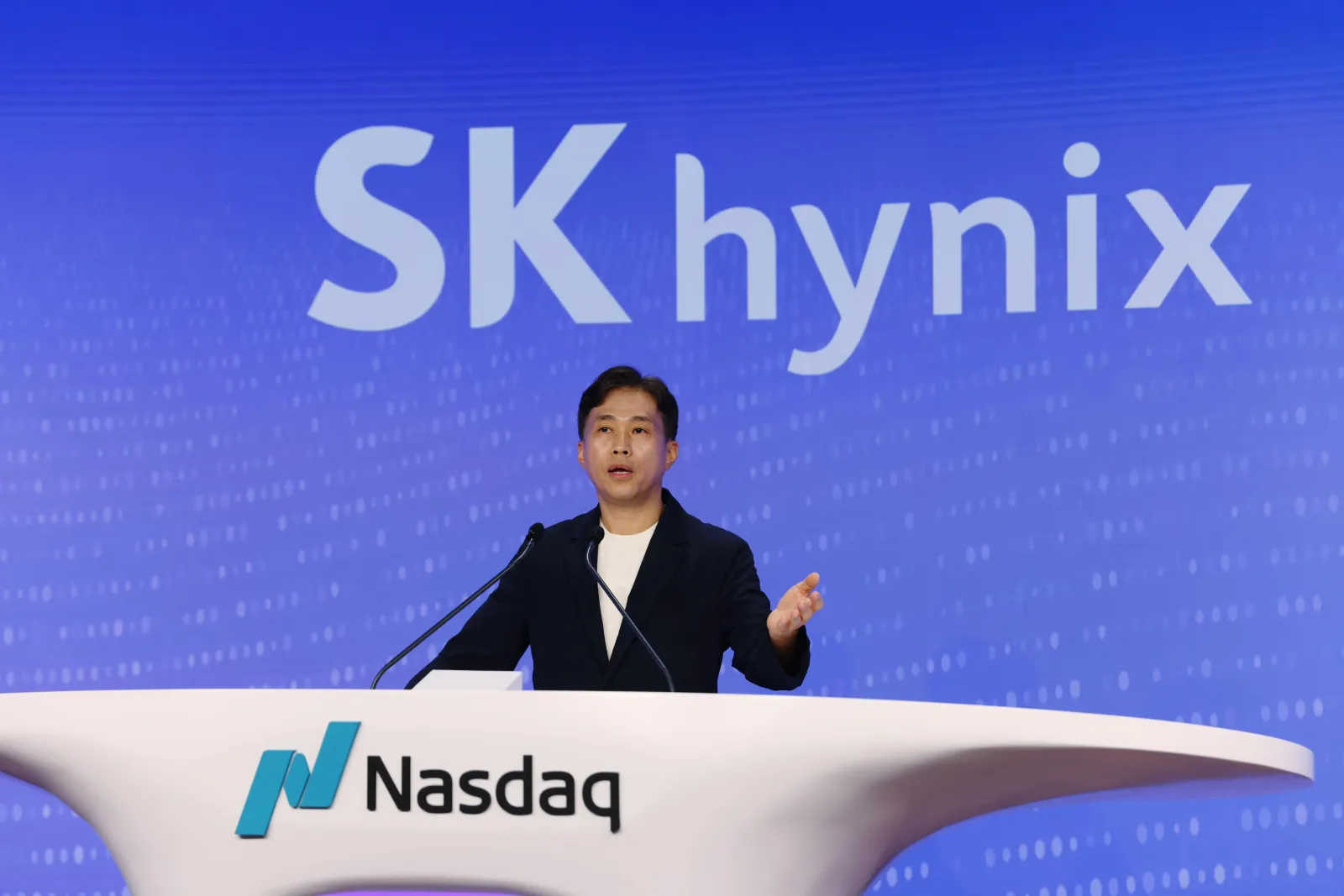
SK Hynix opens at $170, raises $26.5B, and tops foreign IPO records
In Friday's Wall Street debut, SK Hynix turns AI RAM demand into a $26.5B fundraising moment that rewrites comps.