

Kane's two goals in Atlanta flip the World Cup tie and sink Congo's Leopards
Congolese led 1-0 at halftime in Atlanta Wednesday, until England's Harry Kane scored twice after break.
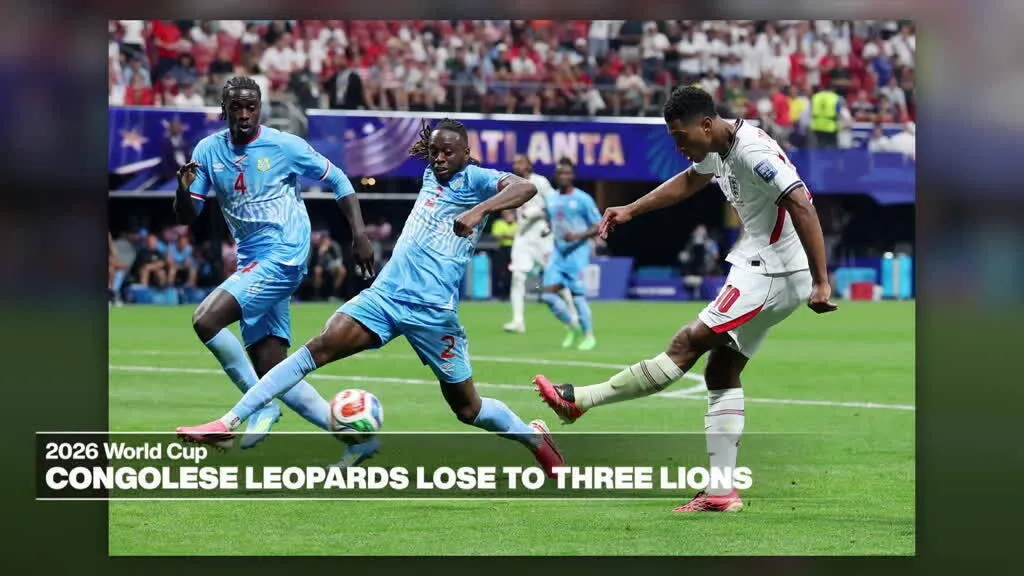
Congolese Leopards went into halftime of the World Cup knockout round in Atlanta on Wednesday with a 1-0 lead, but England's Harry Kane scored twice in a second-half rally. For decision-makers, the result is a reminder that momentum shifts can erase a first-half advantage instantly, changing perceptions, planning, and next-step opportunities.
It started as a story of control, then flipped into a lesson about how quickly sport can change when one elite finisher gets space. At the World Cup knockout round in Atlanta on Wednesday, the Congolese Leopards carried a 1-0 lead up to halftime. Then England's Harry Kane scored twice in the second half, turning a promising cushion into a loss.
That halftime lead matters because it represents the phase where a team has largely translated preparation into execution: structure, risk management, and the ability to win moments without overexposing. But the match showed the harsh math of knockouts. In a single second-half surge, Kane's two goals erased the Leopards' advantage and reshaped the outcome of the tie, leaving Congolese football with a bittersweet day rather than the relief that comes with moving forward.
For readers who think about competition like a strategy problem, the key is not the final scoreboard alone. It is the transition. Knockout matches compress time and raise the value of every attacking sequence. A team can look organized and effective for 45 minutes and still lose the plot when the opponent tightens the game plan after halftime. Kane's ability to convert in that rally phase is the kind of swing factor that turns half-time optimism into second-half regret.
Congolese football has its own context that makes this moment resonate beyond one match. In World Cup knockout rounds, the gap between survival and elimination is the difference between international visibility and the end of a tournament run. That visibility matters for players, federations, sponsors, and youth pathways. The Leopards were not simply playing a single opponent. They were trying to advance in a tournament format where one shift in momentum changes who gets attention, who gets opportunity, and who gets to build on a successful campaign.
England, meanwhile, represents the opposite kind of narrative pressure. Teams coming into later tournament stages are expected to do more than compete. They have to finish. The fact that Kane found the net twice in the second half shows how much of a knockout round can come down to execution when defenses are most strained. Once the Leopards' early lead evaporated, the emotional and tactical rhythm also shifted. Leading teams often become forced to chase the game, which can open the very spaces elite attackers thrive in.
In practical terms, decision-makers in football leadership, from coaching staff to board members, can read this result as a governance-style reminder about asymmetry. A 1-0 lead at halftime is a strong signal of performance, but it is not a guarantee. The second half is where adjustments, substitutions, and tactical discipline are tested. Boards and executives who evaluate staff and plans after a knockout can focus not only on the end result but also on the match management that allowed a sustained comeback to happen.
There is also a broader implication for peers managing talent and risk. In international tournaments, outcomes influence narratives quickly. A halftime advantage creates one story. A second-half reversal creates another just as fast. That speed affects media coverage, player confidence, and the bargaining landscape for future engagements. Even when the underlying squad talent remains the same, perception can shift overnight based on whether a team converts early control into advancement.
So the takeaway is not to treat sport as random. It is to treat it as unforgiving. The Congolese Leopards held a 1-0 lead up to half time in Atlanta on Wednesday, but England's Harry Kane scored twice in a second-half rally. In knockout football, that is all it takes to turn a promising road into a bittersweet exit. For anyone building plans under competitive pressure, the message is clear: you can earn an early edge, but you still have to protect it through the moment the opponent starts to hunt for the break.
This story's Key Insights and Take-aways are locked.
Create a free account to unlock Executive Actions for one credit.
Register to UnlockAlways free for Executives Club members. Join the Club
More in Politics

Glacial collapse, not rain, killed 180 in Nepal's Himalayan flood
The Himalaya's extreme geography hid the true cause of Nepal's catastrophic flood, a glacial collapse that turned a geological battleground into a mass-casualty zone.

Iran’s Esmail Baghaei says Oman talks start shipping via Hormuz, not US talks yet
Temporary route plans with Oman aim to restart commerce while Tehran says Washington dialogue is not on the table.

Standards watchdog opens probe into Reform UK deputy leader Richard Tice over interests
The parliamentary standards commissioner says it began an investigation on 28 July into a possible undeclared interest.