
Keffe D, who 'ordered' Tupac's death, gets 40 years to life
The 40-year sentence caps a rare cold-case conviction and signals that decades-old admissions can still carry legal weight.
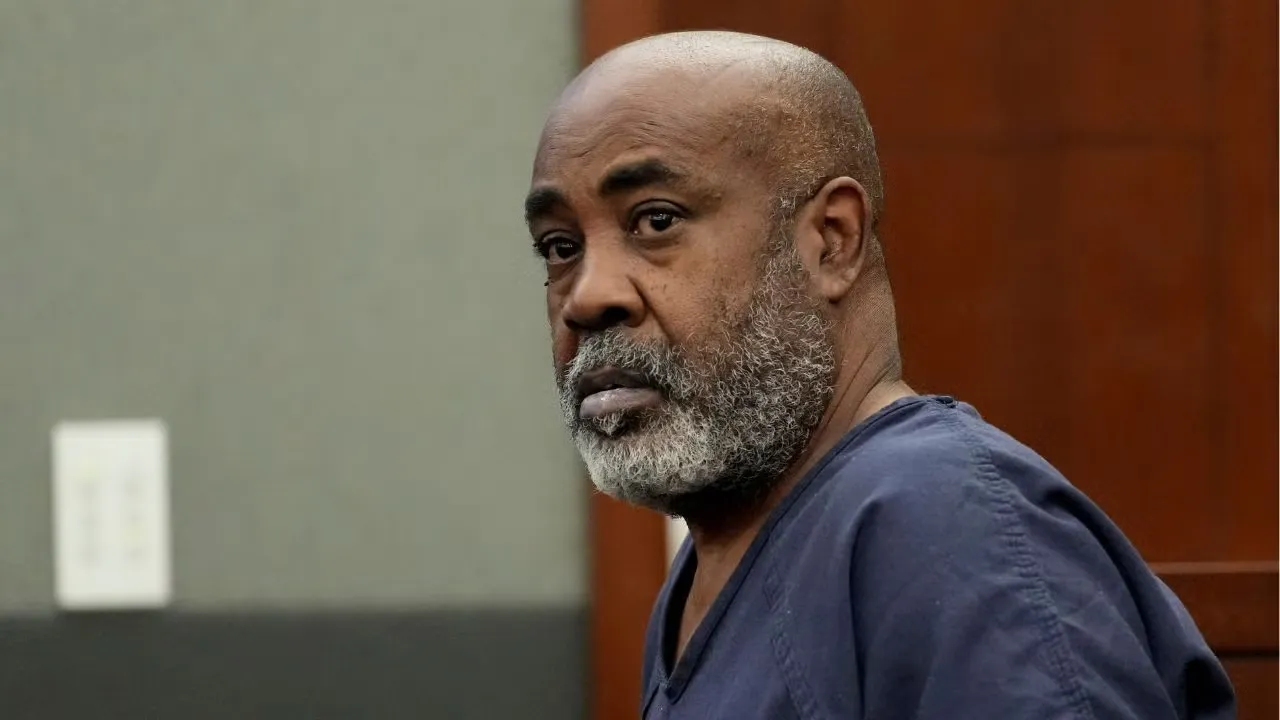
Duane 'Keffe D' Davis, 63, was sentenced to 40 years to life in Las Vegas for orchestrating Tupac Shakur's 1996 murder, nearly three decades after the drive-by shooting. The sentence underscores how long-tail legal exposure can resurface, and why documented accountability matters for executives and boards.
Duane 'Keffe D' Davis, the 63-year-old man convicted of orchestrating the 1996 murder of Tupac Shakur, was sentenced Tuesday to 40 years to life in a Las Vegas courtroom. The sentence lands just after the 30th anniversary of the drive-by shooting that killed the 25-year-old rapper, and it follows a jury conviction in August that took just three hours of closed-door deliberation.
Davis was arrested and indicted in September 2023 on one count of murder with a deadly weapon. He has maintained his innocence, saying he invented the story to sell his memoir, but he had previously admitted in interviews and in his 2019 book 'Compton Street Legend' that he was in the Cadillac that pulled up alongside Suge Knight's car during the shooting. Clark County Chief Deputy District Attorney Marc DiGiacomo described Davis as the person who 'ordered the death' of Shakur.
The killing itself has become one of the most examined unsolved murders in American music history. On Sept. 7, 1996, Shakur was in Las Vegas to celebrate the birthday of business partner Tracy Danielle Robinson and attended a Mike Tyson boxing match with Death Row Records founder Suge Knight at the MGM Grand. Around 11:15 p.m., a white late-model Cadillac sedan pulled up to the passenger side of Knight's BMW on the Las Vegas Strip and fired repeatedly, striking Shakur four times. Bullets hit his arm, thigh, and twice in the chest, with one bullet entering his right lung. He was taken to University Medical Center of Southern Nevada, where he died from internal bleeding six days later.
The trial turned on Davis's own words. During closing arguments, DiGiacomo quoted Davis as saying, 'I beat the streets, I beat the Feds, and I beat cancer,' before adding, 'Now, he's trying to beat 12 of you… Mr. Davis is attempting to escape responsibility for a crime everybody knows he committed, even him … End of the day, hold him accountable for the crime he committed.' Davis told media outlets he plans to appeal the conviction.
The criminal sentence is not the end of the legal story. Davis was also named a defendant earlier this year in a wrongful death lawsuit filed by Shakur's surviving family, who said in the complaint that 'there remain individuals who were involved in Tupac's murder who, for 30 years, have not been held accountable for their crimes.' That civil case could continue even as Davis appeals, and it suggests the family believes other people connected to the killing have not yet faced consequences.
For executives and boards, the case is a reminder that old admissions and public statements can become evidence decades later. Davis's own memoir and interviews were central to the prosecution, a cautionary tale for anyone who has put potentially incriminating details on the record. The case also shows that cold cases can be reopened when new evidence or pressure emerges, and that murder has no statute of limitations. The alleged trigger, a violent feud between West Coast and East Coast hip-hop labels, remains part of the cultural context, but the legal outcome now rests on one man's documented role. The conviction is notable because it came nearly three decades after the crime and because Davis's own words, in interviews and his memoir, formed a central part of the case.
The broader lesson for decision-makers is about the long tail of accountability. A 30-year gap between crime and conviction did not erase the legal exposure, and the family's wrongful death suit makes clear that civil liability can outlive criminal proceedings. For media and entertainment companies, the case also highlights the commercial and legal complexity of true-crime narratives: Davis's own book and interviews became the evidence that helped convict him. The sentence is a reminder that in high-stakes industries, what leaders say on the record, in memoirs, or in interviews can come back with force. For boards, the case is a practical example of how reputational and legal risk can compound over time.
This story's Key Insights and Take-aways are locked.
Create a free account to unlock Executive Actions for one credit.
Register to UnlockAlways free for Executives Club members. Join the Club
More in Business

Elon Musk unveils a flying car, and SpaceX helped build it
The Tesla CEO's showcase at a SpaceX facility signals a future where road and rocket engineering converge.

Apple's $2,000 iPhone Duo opens preorders, taking on Samsung and Google
Apple's first foldable hits the market at a premium price, reshaping a category Samsung and Google have led.

Pope Leo XIV, first American pope, diagnosed with lung cancer
The 71-year-old Chicago-born pontiff underwent successful surgery on his right lung, and his diagnosis raises new questions about his AI-focused papacy and the Vatican's future.