
Keith Richards questions Rolling Stones tours, hints residencies instead
The 25th studio album Foreign Tongues drops July 10, while Richards says travel is the biggest live-performance obstacle.
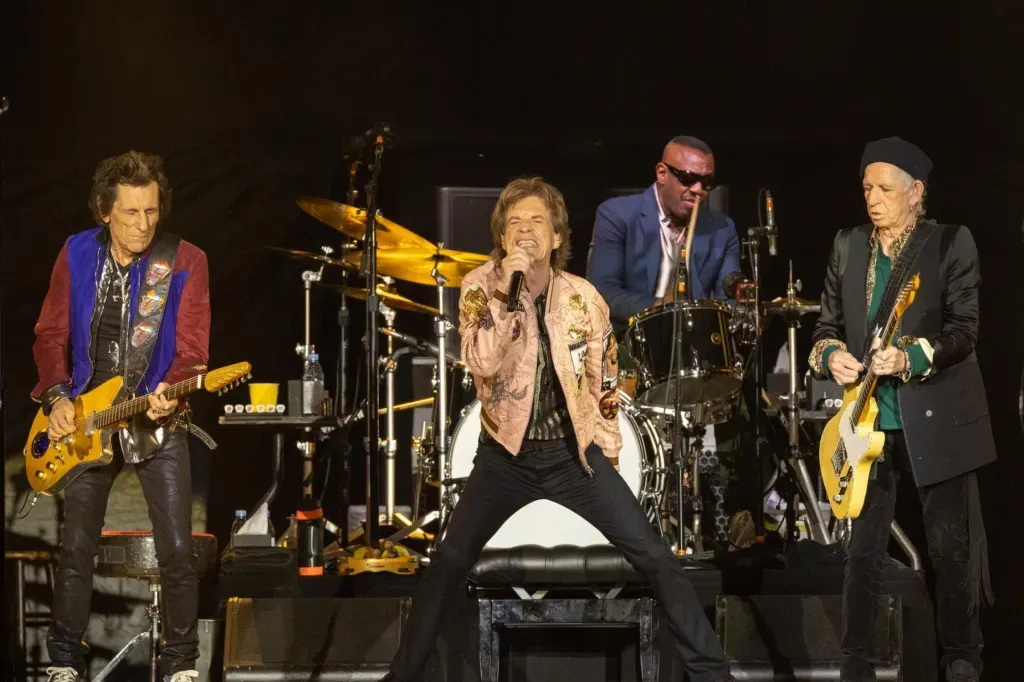
Keith Richards said the Rolling Stones might move away from traditional touring toward residencies because the physical strain of travel is draining. The band’s July 10 release of Foreign Tongues, recorded with Andrew Watt and featuring major guest stars, lands alongside live-concerns that could reshape touring economics for legacy acts.
Keith Richards has raised a question that is small in words and big in implications for the live business: are traditional Rolling Stones tours still possible? In comments to Uncut Magazine, Richards said, "I don't know if tours are possible." He then got specific about why, telling the publication, "It's the travelling that takes it out of you." And, crucially, he didn’t just float the idea and walk away. Richards said he does see "the possibility of us doing residency somewhere" and name-checked several major cities, including London, New York, and Paris, adding, "I'll play Rome!" His bottom line was that it’s feasible to keep performing without the full road-trip model: "I don't see why they shouldn't be able to throw some shows together in a new format."
For executives who track concert revenue, venue strategy, and scheduling risk, this matters because it is not theoretical. Richards tied the shift to the physical demands that directly affect whether a touring machine can run year after year. He also placed it inside a broader real-world timeline: the Stones scrapped plans for a U.K. and European stadium tour in 2026 after Richards was unable to commit to the run. So when Richards says tours may not be possible, he is not only addressing future hypotheticals. He is describing a live-performance constraint that already disrupted the band’s long-range calendar. And yet, he made it clear the desire to play is still there. "It'll be exciting until something inside me says, 'That's that,'" he said, then followed with the blunt reality of artist incentives: "I love working with the guys. I mean, what am I gonna do?"
This is also landing while the band is still gearing up for a major studio milestone. The Rolling Stones are preparing to release their 25th studio album, Foreign Tongues, on July 10 via Polydor and Universal Music. The album was recorded in less than a month at Metropolis Studios in West London with producer Andrew Watt. The guest list reads like a cross-generational routing map of modern rock and pop: Paul McCartney, The Cure's Robert Smith, Red Hot Chili Peppers' Chad Smith, and Steve Winwood. There is also a special appearance by late drummer Charlie Watts, recorded during one of his final creative sessions with the band before his death in 2021. Fans will also get continuity with previously released tracks, including "Rough and Twisted" and "In the Stars," plus a cover of Amy Winehouse's "You Know I'm No Good."
Why mention the album details in a piece about touring? Because in legacy music, the studio plan often determines the live plan. Richards discussed the recording process as part of that package, describing continuity from Hackney Diamonds, and saying, "it was great to be working in London again, and to have that London vibe around us." He also called the work, "a month of concentrated punch." That studio cadence matters to labels and booking ecosystems because it helps keep momentum tight between release cycles and performance commitments. For decision-makers, the question becomes less, "Will there be shows?" and more, "What format preserves margin and minimizes artist risk while still converting album attention into ticket demand?"
The touring conversation is not coming from Richards alone. The comments build on remarks Mick Jagger made recently on BBC Radio 2. Jagger said he "can't wait" to get back on the road and is hoping to tour again "as soon as possible," but he acknowledged it would not happen this year. That combination, hope plus limitation, is a tell. It suggests the band is trying to reconcile two conflicting objectives: the creative pull of performing and the operational reality of health and travel. It also signals something operators know well: even if demand exists, the schedule cannot be forced if the people who must execute the performance cannot commit.
If you’re advising venues, promoters, festivals, or agencies, residencies are a different beast than stadium tours. A residency can concentrate production budgets, smooth operational planning, and reduce the number of full-scale travel resets that physically wear down artists and crews. It can also stabilize the marketing window around a fixed set of dates in one geography. Richards essentially proposed that logic for the Stones by suggesting shows in a "new format" in cities such as London, New York, and Paris. Meanwhile, for the industry, the second-order effect is that touring risk may increasingly shift from pure demand forecasting to execution risk management. In other words, the constraint may move from "Will fans buy tickets?" to "Can the act safely and reliably perform the required number of dates without escalating medical or fatigue issues?" That’s a different underwriting model.
And for executives inside labels and music businesses, the stakes go beyond one band’s schedule. Foreign Tongues is the Stones’ 25th studio album, and the project’s public build-up includes the band’s history-making moments. Richards’ framing also references the Stones’ recent album cycle: Hackney Diamonds, described in the source as the band’s first album of original material in 18 years, debuted at No. 3 on the Billboard 200 and produced "Angry," which became the band’s first U.K. top 40 hit since 2005. When an act with that level of chart impact starts questioning traditional touring feasibility, other legacy and marquee performers will take note. Even if those acts do not change plans immediately, their boards will ask how to protect revenue and brand heat when travel-intensive touring becomes harder to guarantee.
Bottom line: Richards is not declaring the end of live performance. He is pointing to a specific bottleneck, travel strain, and explaining how it already affected the band’s 2026 stadium plans by saying he couldn't commit. Then he offers a practical alternative, residencies in major cities, as the way to keep working with the guys until an internal stop signal arrives. For the broader live ecosystem, the real question is whether this is a one-off artist constraint or the start of a more durable shift in how legacy acts structure risk, bookings, and cash flow.
This story's Key Insights and Take-aways are locked.
Create a free account to unlock Executive Actions for one credit.
Register to UnlockAlways free for Executives Club members. Join the Club
More in Entertainment

Russell Brand's accuser 'bewildered and confused' as he denies 7 sex charges
The criminal case against the comedian is a live test of how media companies manage talent risk when serious allegations go public.

'It's a Magic Trick': Ballet Experts Say Rosalía's SNL Pose Is Impossible
Three ballet experts tell Rolling Stone Rosalía's gravity-defying SNL stillness shouldn't be possible - and why the debate is now part of the show.

Activision CMO: GTA 6 Will Boost Call of Duty, Not Bury It
Activision's top marketer says Rockstar's blockbuster will drive players back to consoles and into Modern Warfare 4, even as the company admits its recent strategy failed.