

Ken Paxton touts voter-fraud fight. His opponent alleges he voted from the wrong address.
A complaint asks Texas officials to investigate alleged repeat illegal voting, just as the race to replace John Cornyn heats up.
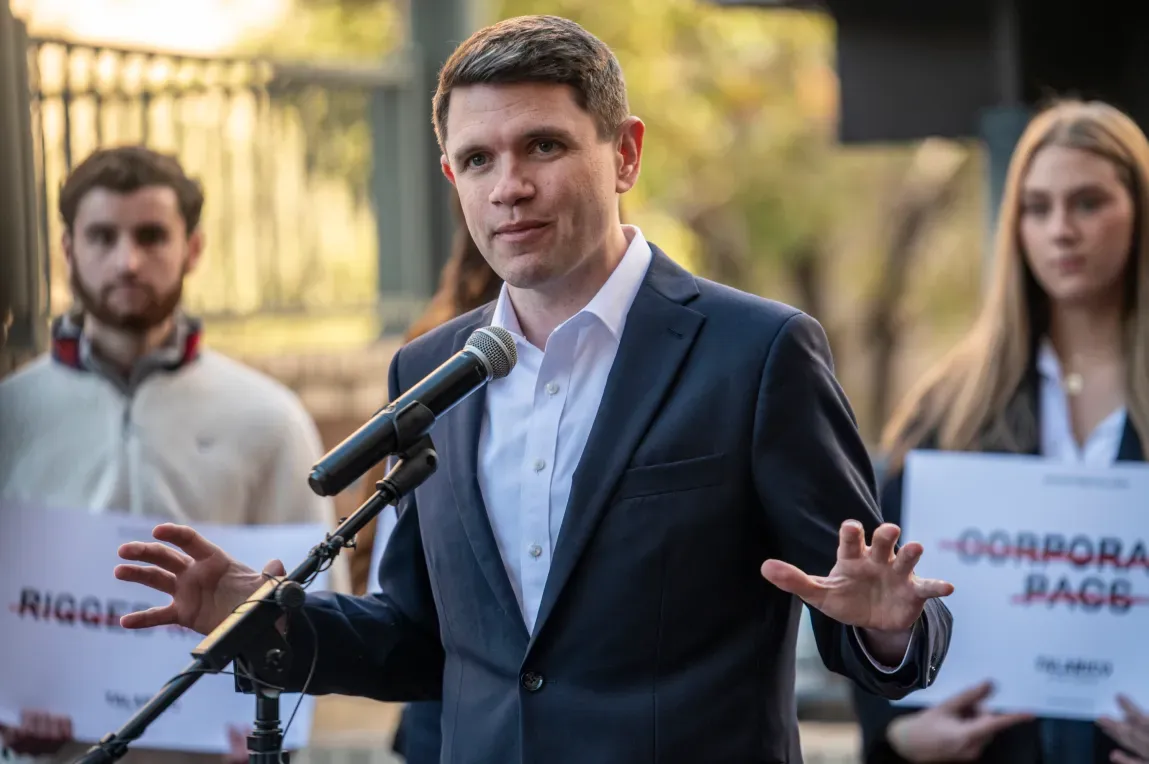
Texas Attorney General Ken Paxton is campaigning to replace U.S. Sen. John Cornyn, while Democratic challenger state Rep. James Talarico claims Paxton voted illegally in six straight elections from an address he no longer lived at. The dispute follows ProPublica and The Texas Tribune reporting that Paxton moved out of the home he shared with wife state Sen. Angela Paxton in 2024 but kept voting using that address, including the March Republican primary.
Ken Paxton is making voter fraud sound like a crusade. But in Texas' U.S. Senate race, his Democratic opponent says Paxton was doing the exact thing he claims to oppose.
State Rep. James Talarico, the Democrat running to replace U.S. Sen. John Cornyn, told a campaign event in Houston that Paxton “has gone on a voter fraud witch hunt.” Then he sharpened it into a specific accusation: he said Paxton was “committing voter fraud the whole time,” voting illegally in six elections in a row “from the wrong address.” This comes after ProPublica and The Texas Tribune reported that Paxton moved out of the home he shared with his wife, state Sen. Angela Paxton, in 2024 but continued to vote using that address. The reporting also includes the March Republican primary in which Paxton beat Cornyn.
The immediate question now is not just political theater. It is legal exposure, and the mechanics of how Texas treats address residency for voting. Texas law permits voters to temporarily cast ballots using an address where they do not reside, so long as they intend to return. Election lawyers told the newsrooms it is unlikely Paxton could make such an argument, pointing to his ongoing public and acrimonious divorce. And three election experts told ProPublica and The Texas Tribune that Paxton may have broken state law.
Last week, the Collin County Democratic Party filed a complaint with the Texas secretary of state urging that office to investigate Paxton for election fraud. The complaint sits inside a procedural funnel that has been a flashpoint for critics of how quickly election-related allegations get routed to the right place. Under state law, the secretary is required to “promptly” refer complaints to the attorney general if there is “reasonable cause to suspect that criminal conduct occurred.” But the timeline matters. Secretary of State Jane Nelson’s last day in office was Friday, three days after the complaint was filed. Gov. Greg Abbott appointed one of his senior advisers, Robert Howden, to replace her.
So where does that leave the system when the allegation points straight at the attorney general himself? The Collin County Democratic Party Vice Chair, Mary Higbe, said Nelson told her in an email Thursday that the complaint “remains under review by one of our staff attorneys.” Meanwhile, the attorney general’s office has not responded to questions about whether it received the complaint or whether it would hire a special prosecutor to investigate something involving the attorney general. The lack of answers from the office that would oversee the outcome is exactly the kind of ambiguity that can turn a voting dispute into a trust dispute.
Paxton, for his part, has been pushing back in a way that is both familiar and strategic. On Tuesday, he held a rare news conference to tout the endorsement of nearly two dozen sheriffs and attacked Talarico as soft on crime. At his own news conference Wednesday, Talarico denied the charge, saying he had voted for billions of dollars in law enforcement funding as a member of the Legislature. When a Dallas Morning News political writer asked Paxton why he voted in Collin County, Paxton shook his head as a campaign aide interceded, saying “We’re just going to answer questions on law enforcement today.” ProPublica and The Texas Tribune report that Paxton’s office and campaign did not respond to similar questions on Thursday about his voter registration and residency, nor did they answer questions about Talarico’s comments.
This all lands in a broader political and institutional context that executives and board members should understand, even if you are not tracking Texas elections daily. The reporting’s core allegation, and the silence around it, may resonate with voters because it reinforces longstanding accusations that Paxton used his office for personal gain. That theme was central to the Texas Legislature’s impeachment of Paxton in 2023 on charges of bribery and corruption, after which the state Senate voted to acquit him.
In that sense, the voter fraud dispute is not isolated. Southern Methodist University political science professor Cal Jillson said voters are aware of Paxton’s legal challenges that he was able to slip out of. Jillson added that the latest reporting about his voting practices is “another example of playing fast and loose with a law you must be familiar with as attorney general.” Jon Taylor, a political science professor at the University of Texas at San Antonio, offered an additional institutional critique: the silence from a Republican-led state government suggests a slow-walk on investigating Paxton, which is difficult to square with rhetoric by Paxton and the secretary of state’s office that securing Texas elections is a top priority. Taylor said that smacks of “rank hypocrisy.”
For decision-makers watching from outside Texas, the second-order lesson is about incentives and governance under conflict-of-interest pressure. When the alleged wrongdoer is also the top law enforcement official, the credibility of the process becomes the story, not only the allegation. And when political actors control the pace of referrals and investigations, even accurate procedures can feel negotiable to the people who are most affected.
Right now, the key stakes for peers in government-facing leadership roles are simple: does the referral mechanism work when it points upward; does the process protect the system from perceptions of self-dealing; and does the machinery move fast enough that “review by a staff attorney” does not become the substitute for accountability. The complaint may or may not produce an outcome, but the timing, the unanswered questions, and the contrast between election security rhetoric and alleged inaction are already reshaping how this race is being understood.
This story's Key Insights and Take-aways are locked.
Create a free account to unlock Executive Actions for one credit.
Register to UnlockAlways free for Executives Club members. Join the Club
More in Politics
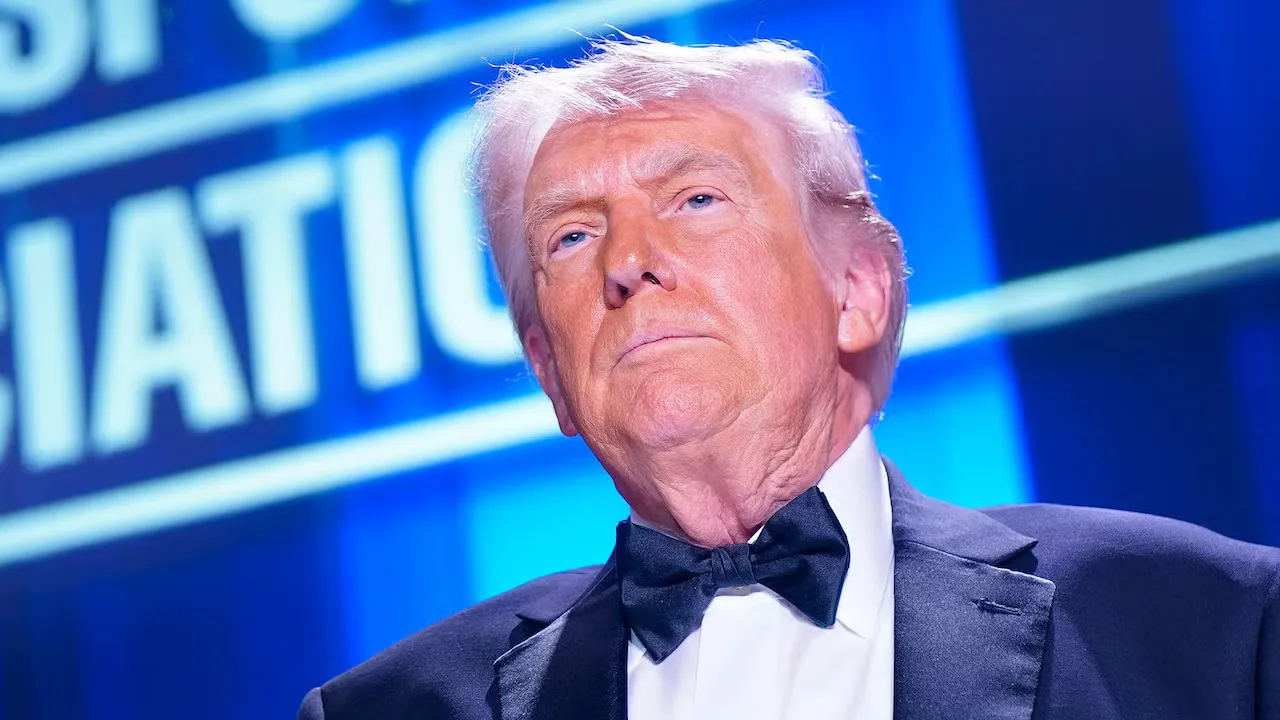
Trump calls himself ‘oversensitive,’ then targets Anderson Cooper and Kaitlan Collins
At the rescheduled White House Correspondents' Dinner, Trump mixed self-admission with sharp insults, raising more questions than laughs.

Trump calls LeBron James “Maybe He’s a Racist” after years of NBA attacks
A new Trump jab escalates the long-running political feud with LeBron James, with implications for brands and institutions.

Frank Yiannas demands independent review of federal Cyclospora response
The former FDA Deputy Commissioner argues thousands of Americans were left exposed, and federal process needs a reset.