
Kielce pogrom anniversary: 40 Jews killed after a ritual-murder lie inflamed the mob
On the 80th anniversary of the 1946 Kielce massacre, Poland still wrestles with how false claims triggered real-world violence.
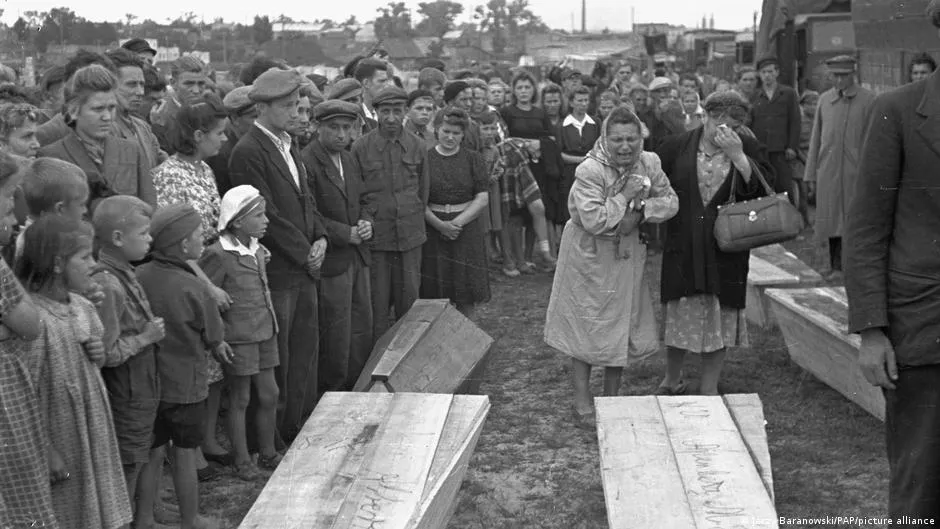
A mob in Kielce, Poland killed around 40 Jews just over a year after World War II ended, including Holocaust survivors, according to Deutsche Welle. Decision-makers and institutions face a recurring risk: how a fabricated allegation can rapidly escalate into mass harm.
Just over a year after World War II ended, a mob in the Polish city of Kielce killed around 40 Jews, including some Holocaust survivors. This is the moment marked by the 80th anniversary of the 1946 Kielce massacre described by Deutsche Welle, and it carries a blunt lesson for modern institutions: false claims can become ignition sources when they travel fast through fear.
The escalation hinged on a lie about ritual child murder. That single narrative, reported as the catalyst in the DW account, spread enough to turn a hostile crowd into a deadly one. The detail matters, because it strips the event down to mechanism, not myth: a fabricated accusation was the spark, and the mob provided the fuel.
To understand why this story still matters for executives, the key is to recognize how group dynamics respond to threats in periods of instability. Kielce happened just after the war’s end, when communities across Europe were dealing with displacement, trauma, and the collapse of familiar social order. In that kind of environment, people reach for explanations that feel simple and morally urgent. The DW summary is careful to frame the tragedy as driven by an escalatory lie, not by inherent “inevitability.” That distinction is strategically important today because it points to preventable failure points: how rumors get interpreted as evidence, how uncertainty gets filled with accusations, and how quickly institutions and bystanders can become passive.
There is also a governance angle. When violence is tied to misinformation, the “response system” becomes part of the story. In the modern context, boards and compliance teams think in terms of controls: verification processes, escalation protocols, and communication policies that reduce rumor contagion. The Kielce case is not a corporate scandal, but it is a case study in what happens when verification fails and collective emotion takes over. Executives who lead organizations with public interfaces, internal communities, or operations in politically tense regions can map the lesson onto their own risk frameworks, even if the subject matter is different.
Regulatory and legal systems have evolved dramatically since 1946, but the underlying problem is recognizably human: misinformation that assigns intent and targets a vulnerable group can move from allegation to action faster than authorities can respond. In many countries, contemporary legal regimes and platform policies attempt to address incitement and harmful falsehoods. The strategic relevance here is not to treat regulation as a box-checking exercise, but to see it as infrastructure. When infrastructure is weak, delayed, or inconsistent, harms multiply. Kielce shows how speed and social reinforcement can overwhelm reality before any correction arrives.
Second-order implications also show up in how institutions handle truth after the event. Mass violence linked to false claims leaves a long tail: historical memory, social trust, and minority safety all become battlegrounds. For decision-makers, this translates into reputational risk and ethical risk that outlasts the news cycle. Even where current operations are far from 1946 Poland, organizations can inherit the consequences of how societies remember. Failure to confront misinformation, or to support credible education and documentation, can keep old narratives alive and make future outbreaks more likely.
For executives, the hard takeaway is to treat rumor escalation as a measurable risk, not a moral lecture. The Kielce massacre described by Deutsche Welle involved around 40 Jewish victims, including Holocaust survivors, and it was triggered by a lie about ritual child murder. That is the core causal chain. Everything else in the tragedy, including its momentum, followed from that chain. If you lead a company, run a newsroom, manage a platform, or sit on a board with influence over communications, the strategic stake is clear: build systems that slow down false allegations before they become action, and build them early enough that fear cannot outrun verification.
This story's Key Insights and Take-aways are locked.
Create a free account to unlock Executive Actions for one credit.
Register to UnlockAlways free for Executives Club members. Join the Club
More in Politics

Glacial collapse, not rain, killed 180 in Nepal's Himalayan flood
The Himalaya's extreme geography hid the true cause of Nepal's catastrophic flood, a glacial collapse that turned a geological battleground into a mass-casualty zone.

Iran’s Esmail Baghaei says Oman talks start shipping via Hormuz, not US talks yet
Temporary route plans with Oman aim to restart commerce while Tehran says Washington dialogue is not on the table.

Standards watchdog opens probe into Reform UK deputy leader Richard Tice over interests
The parliamentary standards commissioner says it began an investigation on 28 July into a possible undeclared interest.