

Kimi K3 toppled US models on frontend coding, and investors immediately noticed the implications
In a day, Moonshot AI’s open-weight Kimi K3 surged on Arena and Artificial Analysis, igniting debate over AI risk, regulation, and capital.
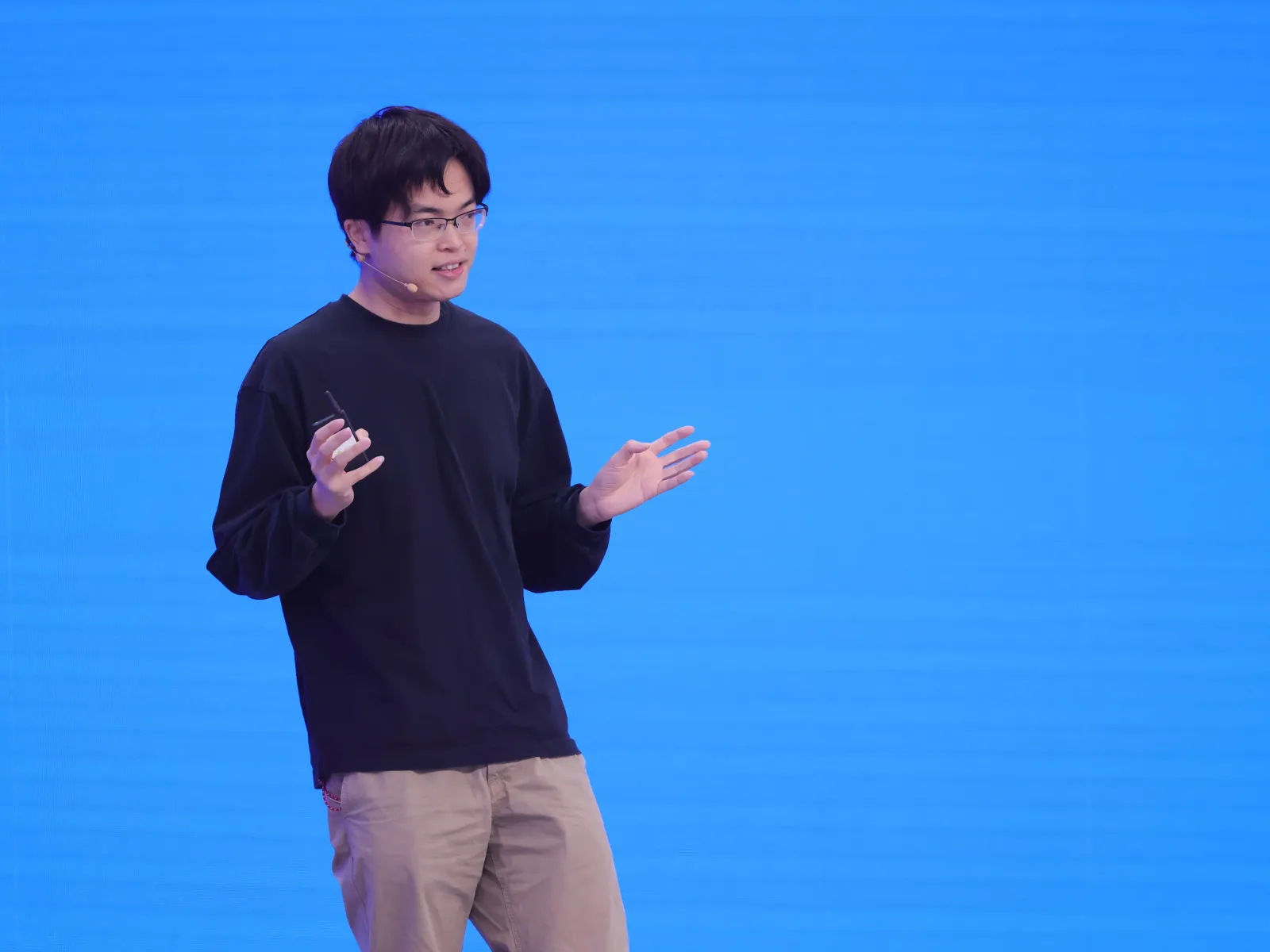
Moonshot AI released Kimi K3 on Thursday, calling it the largest open-weight AI system in the world, with performance that quickly beat every leading US model on Arena’s frontend coding leaderboard. The launch rattled markets and triggered sharp reactions from figures including David Sacks, Aaron Levie, Ethan Mollick, and Gary Marcus, forcing decision-makers to rethink AI infrastructure, governance, and where open models fit.
Moonshot AI dropped Kimi K3 on Thursday and, within 24 hours, it hit the top of Arena’s frontend coding leaderboard. In other words: on a concrete benchmark tied to building software interfaces, a Chinese open-weight model beat every leading US model. It also placed third on Artificial Analysis’s Intelligence Index, landing behind only Anthropic’s Claude Fable 5 and OpenAI’s GPT-5.6 Sol.
That quick leaderboard run matters because it happened before the usual hype cycle had time to cool down. Moonshot, backed by Alibaba and Tencent, says K3 is the largest open-weight AI system in the world. It also makes a key admission alongside the brag: it still trails the most powerful proprietary models, including Claude Fable 5 and GPT-5.6 Sol, while beating the labs’ second-tier systems such as Claude Opus 4.8 and GPT-5.5. The result is a pattern executives should notice. Open models are not just catching up on “demo” tasks, they are closing ground on work-like capabilities, including coding and agentic tasks.
The timing adds another layer. Moonshot released Kimi K3 just ahead of the 2026 World Artificial Intelligence Conference in Shanghai, a moment when governments, labs, and buyers all want to show momentum. The piece also frames the release as another sign that Chinese AI labs are narrowing the gap with leading US systems. That matters beyond bragging rights, because AI leadership is increasingly a supply chain story: compute, data access, distribution, and the ability to ship capable systems fast.
And the money is already reacting. Moonshot is valued at roughly $31.5 billion, a fraction of the trillion-dollar-plus valuations attached to Anthropic and OpenAI. That valuation gap can be comforting to risk managers and CFOs, but it also raises the strategic question: what happens if model quality continues improving while open-weight distribution lowers the cost and friction of adoption? Aaron Levie, CEO of Box, treated the release as a “huge win” for companies building on AI. He pointed to Kimi K3’s third-place ranking on the Intelligence Index, behind only Claude Fable 5 and GPT-5.6 Sol, and argued cheaper frontier-level intelligence expands what enterprises can automate. His underlying logic is simple: enterprises hit a wall when automation is expensive at the token level, not when ideas are scarce.
But not everyone is buying a smooth narrative. David Sacks, a venture capitalist who co-chairs the President’s Council of Advisors on Science and Technology after serving as President Donald Trump’s first AI and crypto czar, called the release “concerning.” In an X post sharing the Arena leaderboard, he highlighted that this was the first time a Chinese model took the top spot for frontend coding, while also scoring at or near the frontier on other benchmarks. Sacks argued the US is hobbling itself, citing blocking new data centers, state regulations layering on top, and pressure for federal agencies to pre-approve frontier models. He framed it as a “permissionless innovation” issue, warning that addressing risks is necessary but that bogging down the US could let other countries narrow the lead further.
Sacks’ angle is regulatory by design, and it connects to a practical fear inside many US AI boardrooms: if compute availability and model approval cycles slow down, the industry may fall behind even if it has smarter talent and better tools. Meanwhile, critics worry the opposite, that open speed creates new failure modes. Ethan Mollick, a Wharton professor who studies AI’s effects on work, offered “a note of caution” amid the hype. He said Kimi K3 “messed up in a bunch of ways” when he asked it to perform a complex statistical audit of prior academic work. Mollick shared a detailed critique of the audit, generated by OpenAI’s rival GPT-5.6 Pro model, that identified errors in the audit’s core statistical approach, and he said he agreed with the critique. For executives, the second-order implication is that benchmark wins do not automatically translate into reliable reasoning, especially in tasks involving complex domain logic.
Even the cheerleaders came with side comments about what comes next. Jason Calacanis, an investor and “All-In Podcast” cohost, said AI progress is accelerating and argued that the field moved faster in the last 30 days, across a dozen players, than in the previous year. He credited open-source models “compounding” while frontier labs refine. Calacanis predicted things will “get wild” when open-source AI reaches robotics, self-driving, and life sciences, and he claimed 2026 will be the year of AGI, with superintelligence following in 2027 or 2028. That part is speculation, but the compounding thesis points to a real operational reality: open model ecosystems can generate faster iteration loops through wider adoption and feedback.
Russ Salakhutdinov, a Carnegie Mellon professor who co-advised Moonshot founder and CEO Zhilin Yang’s Ph.D., offered a different kind of validation. He called the release “a huge win for the open-source community” and congratulated his former student. The source also recalls Yang’s CMU Ph.D. completed in just four years, along with influential research including Transformer-XL and XLNet, which helped shape the architecture of modern language models. That matters because the open community is not just a distribution channel. It is also where technical improvements often get stressed, forked, and absorbed.
Still, there are hard edges. Gary Marcus, an AI researcher and professor emeritus at NYU, urged a blunt policy response, writing “Congress should investigate. Seriously” and citing a Goldman Sachs chart projecting capital expenditure for major US cloud providers to reach roughly $1 trillion in 2027, about eight times the projected spending of their Chinese counterparts. Marcus’ point is about capacity and economics: if cloud spending scales unevenly, the country with the faster infrastructure buildout can convert model progress into deployment advantage.
Zoom out and the strategic stakes sharpen. Kimi K3’s leaderboard results are not just a scoreboard moment. They are an argument about the direction of AI: whether open-weight models can reliably reach “frontier-adjacent” performance quickly, whether regulators will slow the US through pre-approval cycles and compute constraints, and whether investors should treat open ecosystems as a compounding force or a quality-risk. For executives evaluating partnerships, product roadmaps, and governance, the real question is not whether Kimi K3 is impressive. It is whether the competitive center of gravity is shifting toward systems that can spread fast, improve quickly, and force traditional leaders to prove both capability and compliance at scale.
This story's Key Insights and Take-aways are locked.
Create a free account to unlock Executive Actions for one credit.
Register to UnlockAlways free for Executives Club members. Join the Club
More in Technology

Google quietly links your phone number to every Android account on your SIM
Adding a SIM now ties your phone number to all Google accounts - and future accounts inherit it. Here's the security and privacy stakes.

Hijacker AI 'Skynet mode' runs 100,000 attack steps against exposed models
Symantec caught a criminal AI agent that borrows other models, steals data, and mines crypto; the only relief is no confirmed victims yet.

Nvidia's AI-financier shift faces its first big test as neoclouds stumble
A rout in neocloud stocks is forcing investors to weigh Nvidia's hidden exposure as both supplier and lender to the AI buildout.