
Kwalee laid off Luna Abyss team on June 16, weeks after the May 21 release
A full redundancy came less than a month after launch, despite critical praise. Here’s what sales signals suggested.
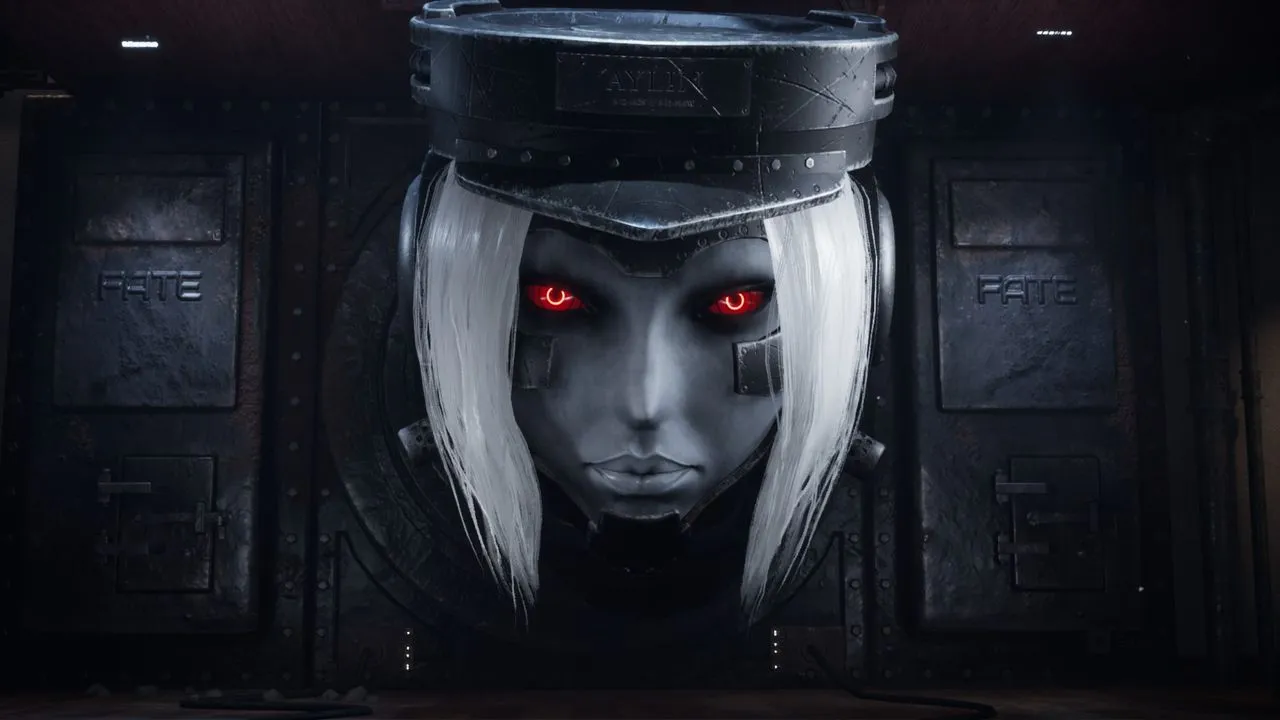
Kwalee Labs CEO Hollie Emery posted June 16 that the entire Luna Abyss team was made redundant, effective immediately. For decision-makers, it shows how fast genre excitement can be outpaced by sales reality.
Less than a month after Luna Abyss launched on May 21, Kwalee Labs CEO Hollie Emery said on June 16 that the entire team was made redundant. In the LinkedIn post, Emery framed it bluntly: “The entire team has been made redundant; a decision that was completely outside of our control.” She also said the entire team would be available for work “as of today,” and thanked the developers for their work while noting, “I have no doubt that our team will go on to make amazing things.”
The timeline is what makes this hit hard. The game went out May 21, and by June 16 the developers who built it were out. The nine affected developers are listed in Emery’s post, which also encourages potential employers, and anyone connected to potential employers, to reach out directly and share the post. It is a grim snapshot of an industry rhythm that is accelerating: ship, hope, measure fast, and if the numbers do not land, restructure even quickly.
To understand why this happened, you have to look at what the public signals were saying after release. According to SteamDB, the game has a concurrent player count of just 43 as the report was written, and at its peak it only ever reached 317. SteamDB’s concurrency metric is not the same thing as total sales, but for a niche genre it often becomes the first visible scoreboard: it tells you whether the launch captured attention or fizzled once the novelty wave passed.
Luna Abyss is a bullet hell FPS, a genre fusion that takes something long-established and tries to make it feel new by reframing it. In the impressions cited by PC Gamer senior editor Wes Fenlon, the core premise is that the game merges bullet hell with FPS moment-to-moment action using autoaim-infused blasting and pattern dodging. The “freshness,” as Fenlon put it in his earlier coverage, comes from first-person perspective that “robb[es] you of the peripheral vision Returnal is kind enough to offer.” In other words, it is not a totally new genre, but it is a re-engineering of how the genre’s iconic dodging tension gets communicated.
Critically, the game apparently had momentum. Fenlon wrote last month about Luna Abyss and said it left him “already hoping for more of its kind.” That matters because it highlights the disconnect that is increasingly common in games businesses: making something inventive and even beloved by critics does not automatically translate into broad commercial pull. For decision-makers, that disconnect is not emotional, it is operational. If your roadmap depends on sustained sales and you get early engagement signals that do not match your revenue assumptions, you often have limited runway to absorb the gap.
And the runway appears to have been short. PC Gamer notes that Luna Abyss released less than a month before the layoffs, on May 21, giving it a narrow window to draw in players before performance questions likely became impossible to ignore. This is where the industry context gets uncomfortable. 2025 has already been described as “a year full of” layoffs, and Luna Abyss is another example of how even game releases that feel like craft can still be treated like financial experiments with tight stop-loss boundaries.
For boards, CEOs, and CFOs, the second-order implication is that “quality” is not the only gating factor. In this case, SteamDB concurrency and peak concurrency show a launch that attracted far fewer players than a company might need to justify keeping a full team alive beyond release. When that happens, the response is often fast. Emery’s language suggests the decision was outside her control, implying internal realities like budget constraints, portfolio-level targets, or broader financial pressures that forced the timing. Even if the engineering and design were excellent, the business math still has to close.
The broader lesson for peers working on niche, high-variance genres is also strategic. Bullet hell has always been niche, and Luna Abyss “further tested that” by combining bullet hell with an FPS structure. That kind of bet might earn critical attention, but it also tends to demand a careful launch strategy and realistic forecasting. If the audience is small, you typically need either a very strong conversion to long-term retention or enough marketing reach to compensate. Otherwise, the launch window closes quickly, and teams become liabilities rather than assets.
Luna Abyss is a reminder that video game turbulence does not require failure in a conventional sense. Even when a game is celebrated critically, the industry’s funding, cost structure, and player behavior can still push companies toward redundancy. For executives watching their own live and post-launch metrics, the hard question is simple: how much time does your business plan allow between “release” and “the numbers have to work”? For Kwalee’s Luna Abyss team, that answer appears to have been weeks.
This story's Key Insights and Take-aways are locked.
Create a free account to unlock Executive Actions for one credit.
Register to UnlockAlways free for Executives Club members. Join the Club
More in Business

Accenture’s $4.18bn play fails as AI fears spark a 20% worst-ever stock plunge
On Thursday, Accenture hit its biggest one-day drop on record after forecasting worries that AI could hollow out consulting.

SpaceX stock jumps 3% after it overtakes Amazon’s market cap
CNBC says SpaceX’s shares surge following its IPO Friday, forcing investors to reprice what “space” and “AI” are worth.
SpaceX’s first options day breaks U.S. records after a $85B IPO win
Big IPO, bigger options debut: what it means for investors, risk teams, and anyone benchmarking market appetite.