
Kylo Ren’s crossguard traces to Luke and Vader’s severed hands, Jet Cooper says
Star Wars: The Force Awakens 3D modeling supervisor Jet Cooper breaks down how “losing their hands” reshaped Kylo’s saber design.
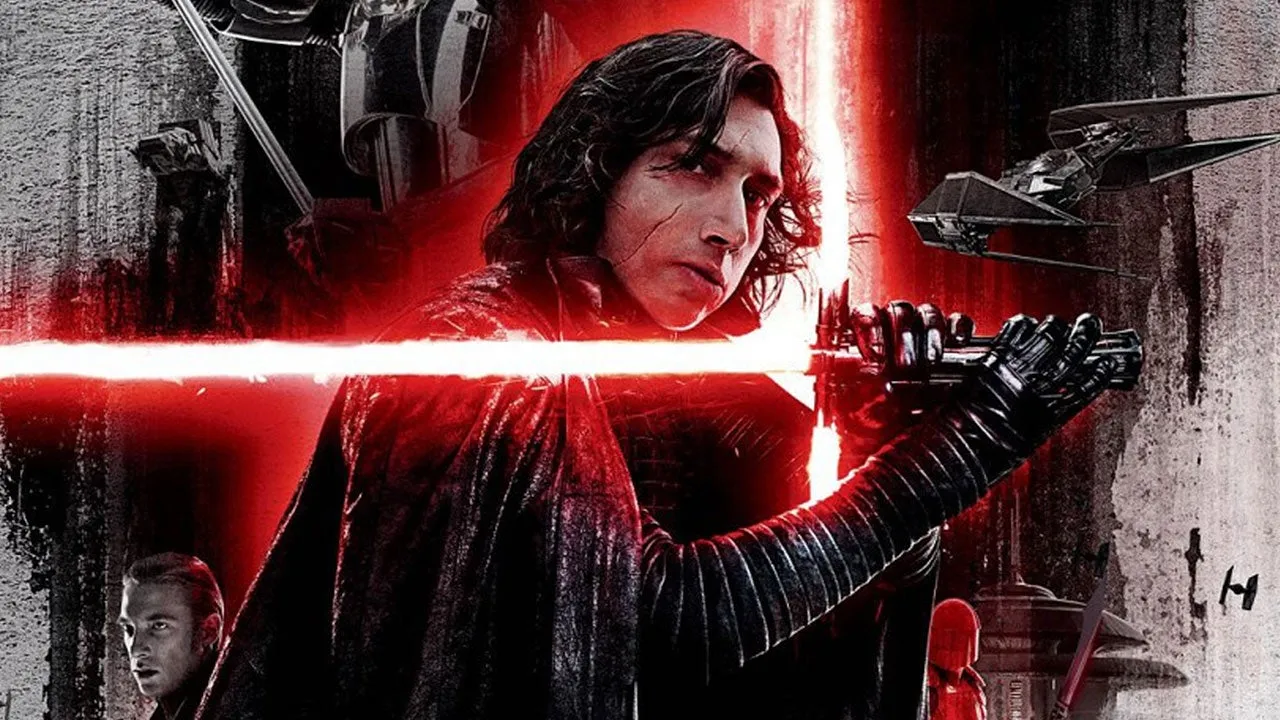
Jet Cooper, 3D Modelling Supervisor for Star Wars: The Force Awakens, says Kylo Ren’s crossguard was inspired by Luke Skywalker and Darth Vader’s severed hands. For decision-makers in entertainment and creative tech, it is a case study in how audience readability and historical design logic drive iconic IP.
Nearly 12 years ago, Star Wars: The Force Awakens introduced Kylo Ren, aka Ben Solo, in a teaser moment that still reads like a timed test of the internet’s patience. He switches on his red lightsaber, then instantly reveals the big screen first feature: the crossguard. Now IGN’s exclusive conversation with Jet Cooper, the film’s 3D Modelling Supervisor, adds a clean, specific origin story for that crossguard. Cooper says Luke Skywalker and Darth Vader’s severed hands directly reshaped the saber’s weapon design, with the crossguard functioning as a historical answer to a very specific threat: hand loss.
Cooper’s explanation is blunt in a way prop designers love, because it turns a visual flourish into a purpose-built object. He describes an early discussion that became the design seed: “everyone was losing their hands. Luke lost his hand. Vader lost his hand.” In his telling, the reason Europeans put quillons on swords was to stop that from happening. So when Kylo Ren’s saber was designed, the crossguard was not just aesthetic. It was there because the weapon form needed to prevent “that from happening,” translating a centuries-old sword defense into a sci-fi blade.
But the crossguard did not arrive fully formed. Cooper says the lightsaber went through various iterations, and he and The Force Awakens director and producer J.J. Abrams “dug back centuries, looking at knights’ swords, for inspiration.” Cooper frames Kylo as a particular kind of knight: “very much a knight but really, really crude.” That matters because it explains why the early version he describes was essentially a saber shape without a flare on the end. If Kylo is crude, you do not start with a pristine, engineered weapon. You start with a form that can evolve.
Then the prop logic sharpens. Cooper describes Kylo’s saber as having “the main beam with the cracked crystal,” which is “really irregular.” The team then asked a simple design question with a high payoff: what if the beam is split and “divert[ed] at the sides”? That is where the European historical parallel becomes practical. He says those Europeans used that portion “like a weapon, like a blade.” In other words, the crossguard is basically the translation layer between real-world sword anatomy and a lightsaber that still needs recognizable function on screen.
Cooper also describes a key choreography-driven choice: he says it was “nice that J.J. had Kylo Ren turn that and then push [the guard] into the person up against a tree.” That is not just action set dressing. It is how designers test whether the form communicates meaning. A guard that does not catch the way the character uses it will look like decoration. In Cooper’s telling, the crossguard’s final behavior matched the intended violence and silhouette, and that made it stick.
And there was a second, very human constraint besides historical realism: audience readability. Cooper explains that the end was flared out so that in silhouette “a 12-year-old could tell what it was.” That kind of requirement sounds like something you would only hear in toy design meetings, but Star Wars has always treated visuals like navigation. If the weapon reads in the first glance, the character feels instantly legible. The flare, then, becomes a communications tool, not a mere stylistic choice.
Cooper’s pride in the finished object is also specific. He says the creation landed after many cycles, ending on “version number 13,” calling it “Lucky number 13.” He even keeps Kylo Ren’s lightsaber in his office for “show-and-tell,” highlighting how much the iterative design process mattered to him personally. While the story is about a fictional weapon, the process is real: multiple passes, inspiration sources, and a final design that meets both functional and cultural requirements.
For executives and operators watching creative industries, this is a reminder that “iconic” rarely means “mysterious.” It often means the opposite: purpose, iteration, and constraints that map to real audiences. Cooper’s background underscores the crossover. Beyond Star Wars, he’s worked on Skyfall, X-Men: First Class, and Jurassic World: Fallen Kingdom, and he also serves as Creative Director and Head of 3D at Makinarium, which just unveiled a one-of-a-kind Terminator collectible available to preorder now. The second-order implication is straightforward: when design decisions are anchored in clear rules like “prevent hand loss,” “split the beam,” and “read instantly in silhouette,” brands can reuse a framework across properties without sanding down what makes each one feel new.
The strategic stakes for peers in entertainment, games, and creative tech are simple. Audiences do not just consume story. They recognize objects. They remember shapes. When a prop like Kylo Ren’s saber can be traced from a narrative injury, through European sword logic, to a silhouette test built for a 12-year-old, it shows how teams can reduce creative risk while increasing visual impact.
This story's Key Insights and Take-aways are locked.
Create a free account to unlock Executive Actions for one credit.
Register to UnlockAlways free for Executives Club members. Join the Club
More in Entertainment

12TB Steam 'teraleak' goes beyond Valve: GTA 3, Mafia 2 prototypes exposed
A 12-terabyte dump of Steam data reveals prototypes and builds of third-party classics like GTA 3 and Mafia 2, plus unreleased Valve content, rewriting game history.

LinkedIn's romance problem: 1 in 4 workers say dating on it is fair game
A new survey shows a quarter of U.S. employees treat the professional network as fair game for romance, even as LinkedIn bans it and removes hundreds of thousands of offending posts.

Enhypen's first No. 1 album breaks K-pop's Billboard 200 streak
The K-pop group's 98,000-unit debut tops the chart while Dolly Parton's catalog reentry shows how death reshapes streaming.