
L'Oréal ramps AI and robots in China to keep e-commerce moving fast
In a cost-conscious market where shoppers trade brands for value, multinationals are automating operations to stay alive.

L'Oréal is accelerating its deployment of artificial intelligence and automation in China, including to support a growing e-commerce footprint and operational needs. The move underscores how global brands are responding to sharper local competition and fast-changing consumer expectations in one of the world's biggest consumer goods markets.
Global brands are leaning harder into AI and robots in China, and the reason is blunt: competition is turning “life or die” for companies trying to keep share in the world’s second-largest consumer goods market. Analysts point to a market where local rivals have sharpened their edge and where shoppers often switch between brands when they think the price or value is better. In that kind of environment, even small operational weaknesses can become expensive. Faster fulfillment, cheaper handling, better forecasting, and tighter supply chains do not just improve efficiency. They can directly affect whether a shopper stays loyal or bounces to a competitor.
L'Oréal is one of the clearest examples. The company has accelerated its deployment of artificial intelligence and automation to support its growing e-commerce footprint and operational needs. This is not a marketing experiment. It is an operational bet on how consumers actually buy and how companies can execute at speed under cost pressure. The article notes that L'Oréal, after launching a smart operations centre in Suzhou, has continued to push these tools further. That matters because e-commerce is where shoppers compare instantly, act quickly, and punish delays or inefficiencies. If your systems cannot keep up, your product loses to the brand that can promise the better experience at the better price.
Zoom out and you see the same pattern spreading across multinationals: AI and robotics are becoming default responses to an unusually unforgiving mix of conditions. First, China is massive, which means consumer goods competition is crowded and fast-moving. Second, local players have gotten better at using their advantages in distribution, pricing, and speed of iteration. Third, shopper behavior adds volatility. The article emphasizes that shoppers often switch between brands for better value. That is a serious threat for any company banking on brand familiarity alone. When switching is easy, operational excellence can become a competitive moat.
In practice, automating in retail-facing operations tends to touch multiple layers of the business at once. AI can be used to improve forecasting and decision-making, which helps firms plan inventory and reduce waste. Robotics and automation can also change how goods move through warehouses and logistics workflows, cutting downtime and improving consistency during high-demand periods. Importantly, these are not only “backend” improvements. When you run a growing e-commerce footprint, backend performance shows up in front-end outcomes: product availability, delivery reliability, and the speed at which companies can respond to demand changes.
There is also a strategic timing component. The push for AI and automation in China arrives as firms confront cost-conscious consumer dynamics. When a market turns price-sensitive, margins get squeezed and spending pressure rises. That pushes companies to look for efficiency gains that are measurable, repeatable, and scalable. Robotics and AI are attractive because they can reduce some forms of labor intensity, standardize processes, and improve throughput. In boardroom terms, it shifts the conversation from “can we afford innovation” to “how do we buy cost stability while staying competitive.”
Regulation and compliance are part of the background for any technology expansion in China, and they can influence how quickly companies can deploy data-driven systems. Even without specific regulatory details in the source, it is reasonable to recognize why operational automation that supports e-commerce is getting attention. These systems have to run reliably, protect sensitive information, and function within the rules governing technology, data handling, and business operations. That means companies often want solutions that are already integrated into their workflows, not one-off pilots. A smart operations centre approach, like the Suzhou example noted in the article, suggests an effort to industrialize these capabilities rather than treat them as experimental.
The second-order implication for executives is how this changes competitive expectations. When one multinational upgrades operations with AI and automation, it raises the baseline that shoppers and partners begin to expect. Competitors then feel pressure to match or outperform the combined package of availability, speed, and value. That can lead to a faster “arms race” across the industry, particularly in categories where demand shifts quickly. Boards also need to think about how these investments affect organizational capabilities. Scaling AI and robotics can create new dependencies on vendors, systems integration teams, and internal operators who understand automated workflows. It is not just capex. It is also capability building.
For peers watching China, the strategic stake is straightforward: if you cannot execute efficiently under cost pressure, you risk losing the consumer not because your product is worse, but because your operations cannot deliver the better deal fast enough. L'Oréal’s acceleration of AI and automation to support its e-commerce footprint is a signal that multinationals want to survive the switching behavior and sharpened local competition. In a market where customers jump for value, operational agility can become the difference between growth and being outpaced.
This story's Key Insights and Take-aways are locked.
Create a free account to unlock Executive Actions for one credit.
Register to UnlockAlways free for Executives Club members. Join the Club
More in Business

Uber buys Delivery Hero for nearly $15B, vaulting to top food delivery outside China
The deal doubles Uber's dual-services footprint and pushes a ride-and-eats bundling play into 50 more markets.

Epic and Google drop settlement bid, forcing rival Android app stores by July 22
Google told the court it is ready to carry third-party app stores starting Wednesday, July 22.
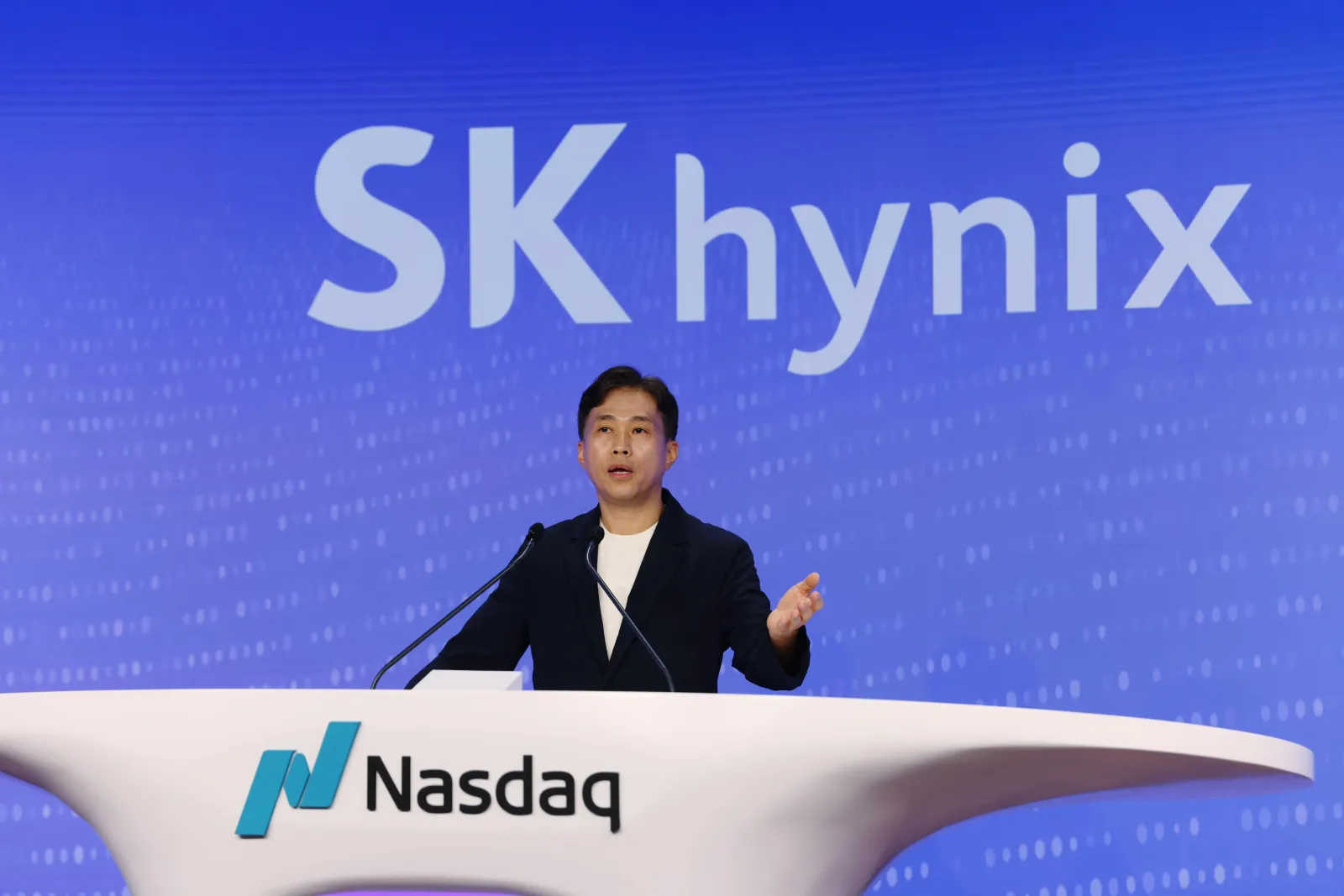
SK Hynix opens at $170, raises $26.5B, and tops foreign IPO records
In Friday's Wall Street debut, SK Hynix turns AI RAM demand into a $26.5B fundraising moment that rewrites comps.