
Ladies First gets panned, but its gender-flip premise still lands a sharp bias test
Netflix’s comedy with Sacha Baron Cohen may be absurd, yet it spotlights double standards and gendered language in plain sight.
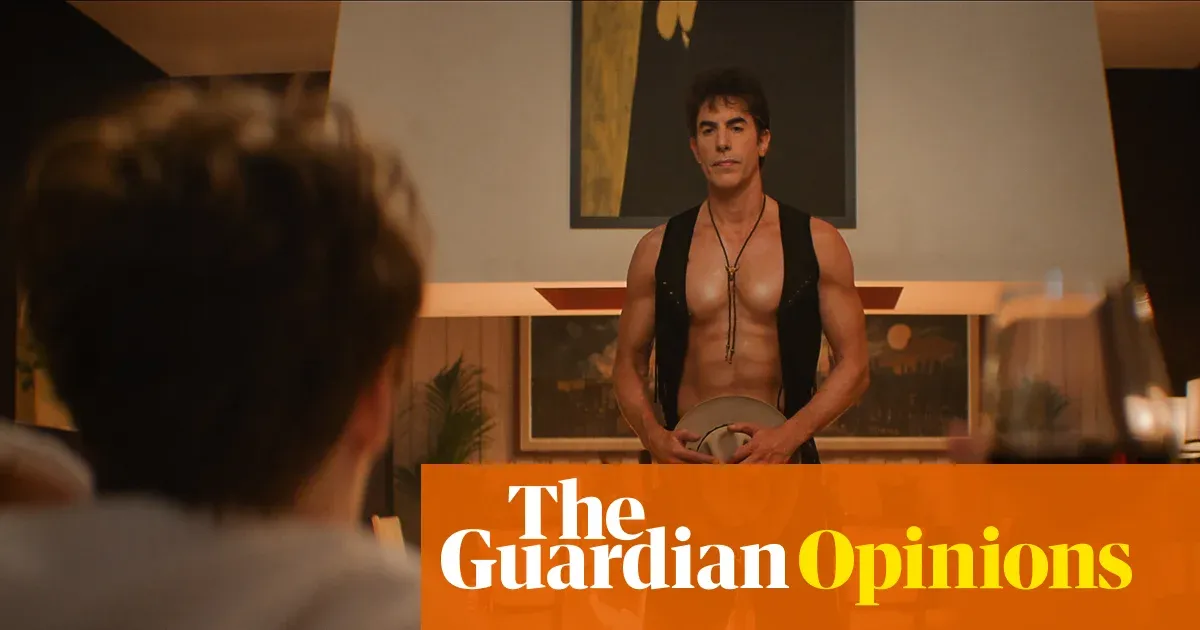
Netflix’s gender-flip comedy Ladies First, directed by Thea Sharrock and starring Sacha Baron Cohen as Damien, has largely negative reviews. For decision-makers, the film’s simple role reversal offers a durable case study of how gender bias shows up in everyday systems.
Ladies First, the Netflix comedy in which Sacha Baron Cohen’s character Damien wakes up to a world run by women, has been panned. Yet that same “absurd” premise is exactly why it can still function as an essential watch: it turns gender bias into something you can see in the moment, not an abstract concept you nod at later.
In the film, Damien is a male chauvinist who knocks his head and wakes into an alternative reality where the people around him are like him, ruthless in the boardroom and the bedroom, using and losing the opposite sex when it suits them. The core mechanism is the flip. Instead of asking viewers to imagine bias happening “to someone,” the movie places the audience on the receiving end of sexism, by swapping power dynamics and language. The plot is described as “This Movie Is: Absurd” by the publication that reviewed it, but the reviewer’s point is clear: the comedy’s method makes the damage of gender bias easy to recognize.
This is where the business relevance creeps in. In real organizations, bias rarely announces itself as a villain. It shows up as meeting behavior, hiring filters, who gets interrupted, who is expected to meet impossible beauty standards, and who gets talked about versus listened to. The movie, as described, makes those patterns concrete through simple inversions. Men are talked over in meetings and expected to conform to unrealistic beauty goals. Even a cultural shorthand like Victoria’s Secret becomes Victor’s Secret, turning a familiar brand into a spotlight on how gendered language and expectations can feel normal until they are flipped.
For executives, the value is not that a film is a training tool. It is that it compresses a complex social system into scenes. That matters because most workplace bias training and DEI initiatives struggle with one problem: they are often too generalized to feel personal in the room. Here, the reviewer acknowledges the movie is “by flipping the script” a simple way to point out double standards and gendered language. In other words, it reduces the cognitive distance. When you can watch someone experience the cost of a bias instantly, it becomes easier to identify the same pattern in your own meeting cadence, performance feedback, or brand and messaging.
Still, the film does not get a free pass. The reviewer says Ladies First has had largely negative reviews and, as a film critic, they had issues too. They note that for every scene that made them laugh, another made them cringe. They also flag the movie’s world as “largely binary, heteronormative,” and that this depiction is “not everyone’s reality.” That critique matters for decision-makers because it highlights an uncomfortable truth: bias is not only about whether unfairness exists. It is also about whose experiences are centered, whose identities are represented, and whether the framework is capable of capturing nuance or only the loudest version of conflict.
So what does this mean in an era where companies are navigating reputational risk, employee trust, and pressure from regulators and stakeholders? Even without going deep into any specific regulatory action in the source, the general direction is familiar: public-facing messaging and workplace practices are increasingly scrutinized. Media that dramatizes bias can influence how leaders talk about culture, what employees feel reflected, and how boards assess reputational exposure. If a company sponsors an initiative, publishes a campaign, or rolls out a workplace program, the question becomes whether the story it tells reinforces outdated stereotypes or, instead, helps people recognize harmful dynamics.
There is also a board-level implication. Negative reception paired with a still-useful message can create a tricky internal dynamic. Leaders want impact. Employees want authenticity. Investors and partners want brand safety and measurable progress. A film like Ladies First, with largely negative reviews but clear thematic relevance, is a reminder that “controversial does not automatically mean useless.” It can mean the tool for learning is sharp, but the execution has edges. Boards that oversee culture should treat that as a prompt to ask: are we measuring outcomes like retention and promotion, or only running programs that check boxes? Are we building mechanisms that catch bias in real time, such as structured feedback, meeting norms, and consistent performance criteria, rather than relying on narratives alone?
The strategic stake for peers is simple. Bias shows up whether you call it bias or not. Ladies First may be framed as absurd, and the reviewer may have cringes alongside laughs, but the gender-flip structure is a reminder that role and language changes can reveal how entrenched double standards are. If you are building policy, messaging, or leadership pipelines, the film’s lesson is to look for the moments where power decides who gets heard, who gets forgiven, and who is expected to perform for acceptance. In an organization, those moments are where culture is made. And culture is where risk accumulates.
This story's Key Insights and Take-aways are locked.
Create a free account to unlock Executive Actions for one credit.
Register to UnlockAlways free for Executives Club members. Join the Club
More in Entertainment

12TB Steam 'teraleak' goes beyond Valve: GTA 3, Mafia 2 prototypes exposed
A 12-terabyte dump of Steam data reveals prototypes and builds of third-party classics like GTA 3 and Mafia 2, plus unreleased Valve content, rewriting game history.

LinkedIn's romance problem: 1 in 4 workers say dating on it is fair game
A new survey shows a quarter of U.S. employees treat the professional network as fair game for romance, even as LinkedIn bans it and removes hundreds of thousands of offending posts.

Enhypen's first No. 1 album breaks K-pop's Billboard 200 streak
The K-pop group's 98,000-unit debut tops the chart while Dolly Parton's catalog reentry shows how death reshapes streaming.