
LaLiga’s Javier Tebas says AI plus anti-piracy can fund football without new competitions
At Globant Tech Summit, the LaLiga president ties improved fan tech to revenue protection and fewer “money-problem” add-ons.

Javier Tebas, president of Spain’s LaLiga, argued at the Globant Tech Summit in New York that AI and data can improve the fan experience while anti-piracy enforcement protects revenue. For decision-makers, the message is clear: tech is not just for spectacle, it is a business lever that could reduce pressure for expanded tournaments.
This year’s World Cup was technified in the most visible way possible: 48 teams instead of 32, VAR getting both applause and groans, a new referee-cam, and a semi-automated offside alert that can point to where a player was out of position down to the pitch’s smallest details. So when Javier Tebas, president of Spain’s LaLiga, talks about technology now, he is not speaking in generalities. He is making a specific financial claim: AI and data can improve how fans experience football, and the same enforcement stack can help remove piracy-driven revenue loss, potentially reducing the sport’s need for more competitions.
Tebas made those points speaking in Spanish at the Globant Tech Summit in New York. He said technology is already changing football for the better, and that the clearest evidence is how fans experience the game. His logic is straightforward. First, organizations that “know how to have tools, use them, and operate them correctly” can “improve an important part of our objective, which is the user experience.” Second, adoption inside sports organizations is the hard part, because technology requires the right “human resource structure and human body” to make the change real, not theoretical.
Under the hood, what makes this argument interesting for executives is the way it connects “fan experience” to the sport’s most persistent economic pressure point. Tebas described how LaLiga is using data for audiovisual broadcasts, to improve the experience for viewers, clients, and fans on television. The data, he explained, helps complement narrators by visualizing what is happening on screen. That might sound like broadcast polish. But in a media business, every improvement to clarity, engagement, and interactivity can translate into better monetization outcomes, especially when paired with distribution partners and rights holders.
And Tebas is not stopping at gameplay or broadcast production. He argued that data can make fans “interact more,” calling it “a great moment for data.” This is where his thesis expands from “tech makes it cooler” to “tech protects the balance sheet.” Sports leagues are constantly balancing two competing demands: keep fans engaged in a world where attention is scarce, and keep revenue stable in an industry where rights money and sponsorship often assume predictable growth.
Tebas explicitly tied the financial side of technology to anti-piracy enforcement. He described piracy as a competition in which “someone sells our product at a lower price or gives it for free,” and said it takes away “a very important capital.” That word choice matters. He is framing piracy not as a minor leak, but as a structural reason leagues feel compelled to find new monetization routes. In that context, removing piracy while using AI to improve the fan experience becomes a direct alternative to tournament expansion as a revenue fix.
He pointed to expanded Champions League formatting and the Club World Cup as examples of the kind of struggle he is trying to avoid. The blunt claim is that leagues can “make it so we experience doing more without the need for the struggle,” specifically “the struggle” that comes with football’s money problem. His goal, as he put it, is “to take advantage of the disruptive time we’re going through with artificial intelligence to improve experiences for clients, fans, and users.” In other words, use the AI moment to upgrade the product and protect the money it earns, rather than doubling down on additional competition formats.
There is also a second incentive hiding inside his pitch. Tebas argued that decisions are being made without enough regard for the majority of players, saying the “majority of the tens of thousands of players who are professionals in the world do not participate” and “they do not compete” in the competitions that generate 80% of the industry’s revenue. Even if you are not a soccer operator, that framing is a reminder of how league strategy can alienate the broader talent ecosystem that sustains the sport, not just the top tier.
Tebas’s tech-fan experience argument got an echo from Cobi Jones, a soccer player who played in three World Cups and later covered this one as a broadcaster. Jones said, “There was no social media. There was very little technology involved in the game” back in 1994, the last time the U.S. played World Cup host. Now, he said, connection runs “around the whole world,” and it is “immediate.” He argued that technology allows fans to get real time information so they can see and understand what is going on on the field, and he described the personal emotional payoff: feeling joy knowing friends in Austria were watching and experiencing the game at the same time as he was in the U.S., “just at the touch of the button.”
If you are looking for the point of the whole story, Jones gave it to you plainly at the end. He said fans probably will not remember what they were doing last Tuesday during the game, but they will remember how they felt during the entirety. Tebas is basically trying to operationalize that feeling into something leagues can count on. For executives and board members, the stakes are not just whether technology improves broadcasts or match clarity. The stakes are whether leagues can use AI plus enforcement to tighten the revenue equation, so they do not have to keep expanding the calendar to cover the sport’s money problems. In a business where attention is volatile and piracy is persistent, that is a bet worth watching.
This story's Key Insights and Take-aways are locked.
Create a free account to unlock Executive Actions for one credit.
Register to UnlockAlways free for Executives Club members. Join the Club
More in Business

Uber buys Delivery Hero for nearly $15B, vaulting to top food delivery outside China
The deal doubles Uber's dual-services footprint and pushes a ride-and-eats bundling play into 50 more markets.

Epic and Google drop settlement bid, forcing rival Android app stores by July 22
Google told the court it is ready to carry third-party app stores starting Wednesday, July 22.
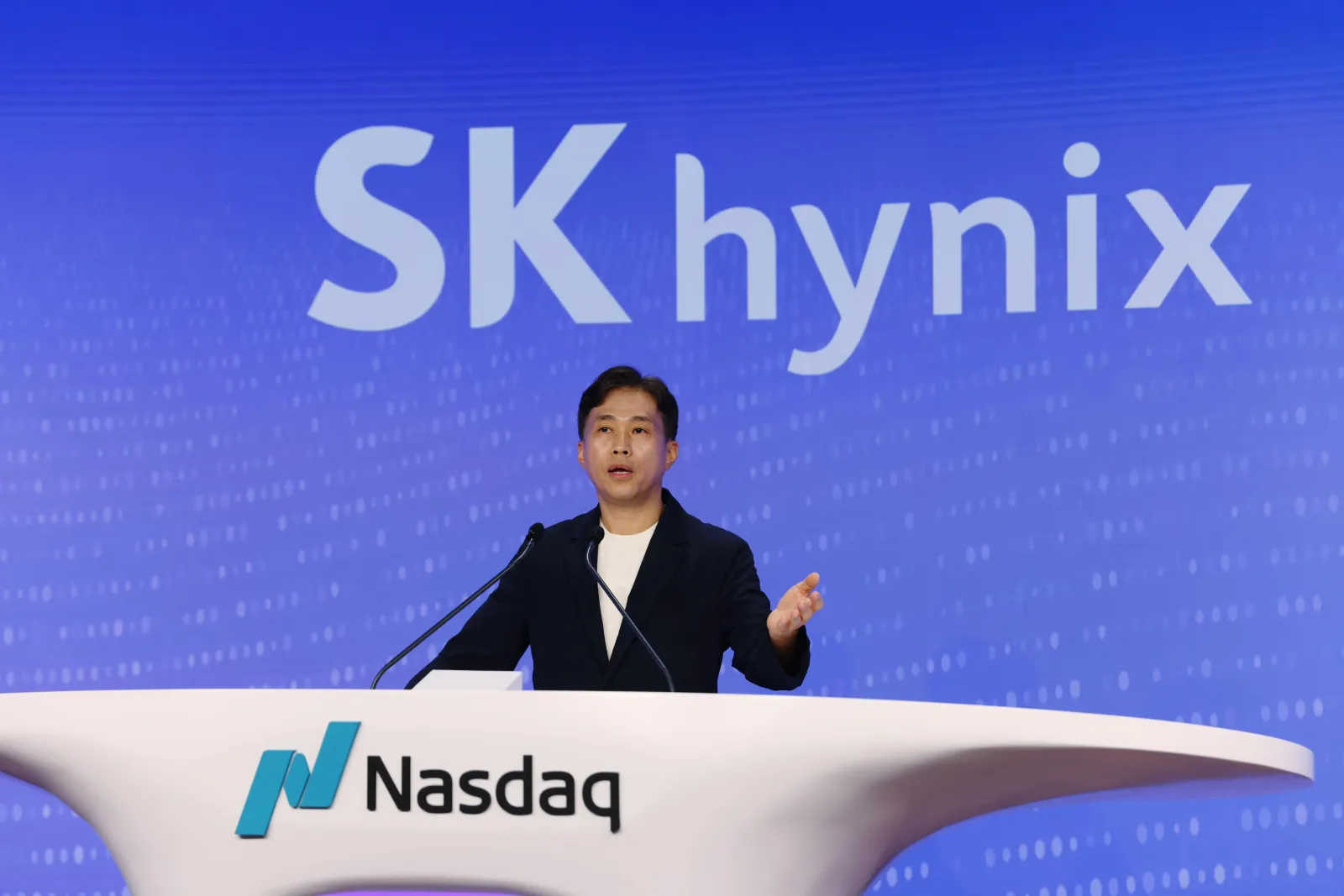
SK Hynix opens at $170, raises $26.5B, and tops foreign IPO records
In Friday's Wall Street debut, SK Hynix turns AI RAM demand into a $26.5B fundraising moment that rewrites comps.