

Lanmaoa asiatica spurs days of tiny-people hallucinations, not “magic mushroom” chemistry
Yunnan’s prized pine symbiont can cause vivid, multi-day visions, but it is unrelated to psilocybin.
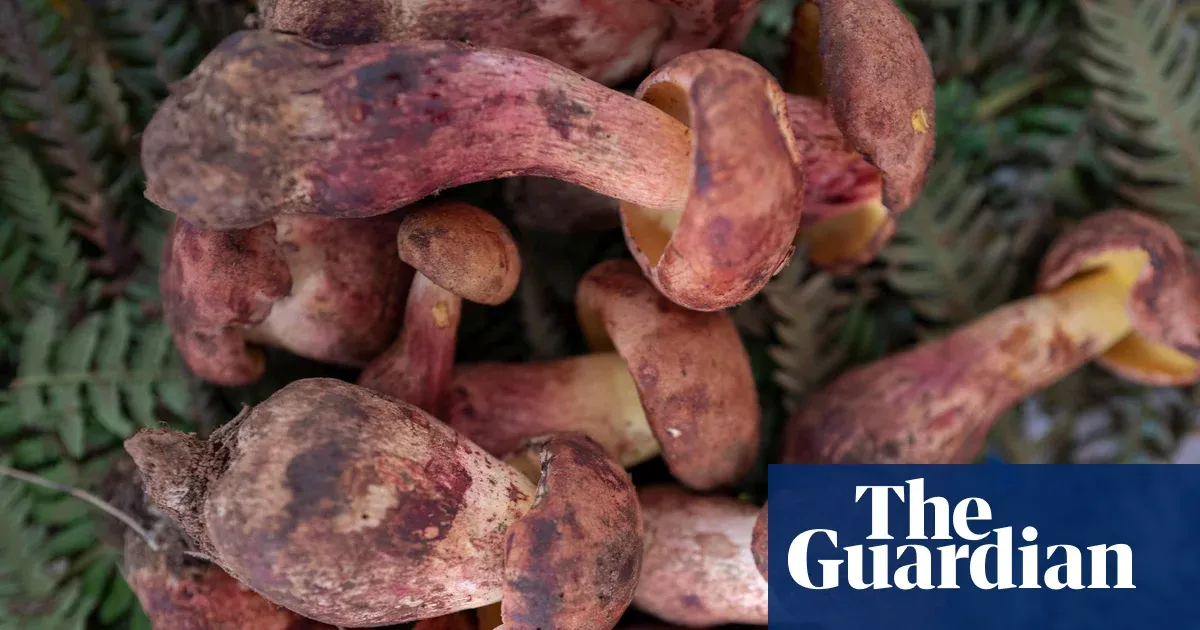
Lanmaoa asiatica, a bolete mushroom prized in Yunnan province, China, is widely consumed for its taste but can trigger hallucinations lasting for days. Decision-makers should treat it as a distinct risk profile, not as a substitute for “magic mushroom” discussions tied to psilocybin.
If you think hallucination risk only belongs to “magic mushrooms,” Lanmaoa asiatica is here to ruin that assumption. The bolete mushroom, prized for its delicious taste and hugely popular in Yunnan province, China, can produce visions that last for days. Not abstract patterns, not brief effects, but hallucinations of “lots of tiny people” about 2cm tall, wearing brightly coloured clothes, who run, jump, climb, and play in a scene that feels real enough to be alarming.
And the punchline is uncomfortable for anyone trying to lump drugs into neat buckets: Lanmaoa asiatica is completely unrelated to Psilocybes. The hallucinations it causes are not tied to psilocybin, the chemical in magic mushrooms that can trigger wide-ranging hallucinations for a few hours. In other words, the same headline-worthy outcome, hallucinations, comes from a totally different biological pathway and time course.
Let’s ground this in what the source actually says. Lanmaoa asiatica grows in a symbiotic relationship with pine trees. That matters because symbiosis is how certain mushrooms persist in particular ecosystems, and it also helps explain why the mushroom is “found” in a specific region rather than being a generic, everywhere food. In Yunnan, where it is “hugely popular,” people eat it and get a reward for the taste. But the mushroom also brings a very specific adverse effect: multi-day hallucinations centered on tiny, brightly dressed figures in an otherwise normal, real-world setting.
The source even adds a cultural reference that helps you picture the experience: the hallucinations are reminiscent of the small people in the BBC series Small Prophets, though without their psychic powers. That’s not just trivia. For product and public health framing, comparing effects to familiar media can make risk communication easier or, if handled poorly, misleading. The point is that the experience is vivid and structured, not a foggy dream. If you are a board member or regulator thinking about consumer harm, the descriptive detail is a reminder that “hallucinations” is too blunt a term. The content, duration, and realism all change the severity.
Now for the second-order implications, where decision-makers actually earn their titles. First, Lanmaoa asiatica complicates how stakeholders categorize “psychedelic” or “hallucinogenic” foods. The source explicitly contrasts Lanmaoa with Psilocybes and psilocybin. That means any policy, education campaign, or risk taxonomy that treats hallucination-causing mushrooms as interchangeable is likely to be wrong. In practical terms, a compliance team that assumes psilocybin-linked controls cover this mushroom could miss the distinct risk profile entirely, especially given that the time window described here is days rather than “a few hours.”
Second, the multi-day aspect changes operational considerations for healthcare systems. A short-lived episode might be managed as an acute intoxication event, but a prolonged course pushes different questions: follow-up care, the potential for persistent distress, and how emergency teams document and communicate what happened. The source does not provide medical guidance, so there are no prescriptions here, but it does establish a duration that is meaningfully longer than psilocybin-related hallucinations. For executives overseeing clinics, insurers, or public health resources in regions where foraging or specialty mushrooms are part of the culinary culture, “days” is the kind of word that affects staffing and protocols.
Third, from a market and reputational standpoint, “prized” and “dangerous” can coexist, and that is exactly where corporate oversight becomes necessary. Lanmaoa asiatica is described as hugely popular in Yunnan province and prized for its delicious taste. That combination often accelerates demand. When a culturally valued food has a known adverse effect, any downstream supply chain actor, from distributors to hospitality businesses, faces the reality that consumer complaints and safety narratives can spread fast. Even without new data in the source, the established facts here mean the risk is not speculative: the mushroom can cause vivid, multi-day hallucinations, and it can be eaten.
Finally, there is the strategic stake for peers in similar roles. Whether you are a regulator designing a framework, an investor looking at consumer health risk, or a board member overseeing a portfolio that touches food systems, the lesson is to resist convenient mental shortcuts. The headline-level similarity, hallucinations, is not enough. The source draws a clean line between Lanmaoa asiatica and psilocybin-containing Psilocybes. Treating them as the same could cause misclassification in policies, education, and risk models. Treating them as distinct is harder, but it is the only approach that matches the facts.
This story's Key Insights and Take-aways are locked.
Create a free account to unlock Executive Actions for one credit.
Register to UnlockAlways free for Executives Club members. Join the Club
More in Science

Alaska's 1,580-foot tsunami had warning signs. Scientists just found them.
Rapid glacier retreat, heavy rainfall, and thousands of tiny tremors preceded Alaska's 1,580-foot tsunami, a warning for every coastal community in a warming world.

The rare mutation that lets high-risk brains dodge Alzheimer's
Scientists found a natural defense against protein buildup, opening a new path to preventive treatments.

3,000 steps a day may halve Alzheimer's decline, study finds
New research links a modest daily walk to less tau buildup and nearly half the cognitive and functional decline, even for those with early signs.