
Larry Ellison’s $100B net worth plunge drops him below Zuckerberg after Oracle slide
Ellison’s tumble turns a headline ranking problem into a board-level signal about Oracle’s recent performance and investor expectations.
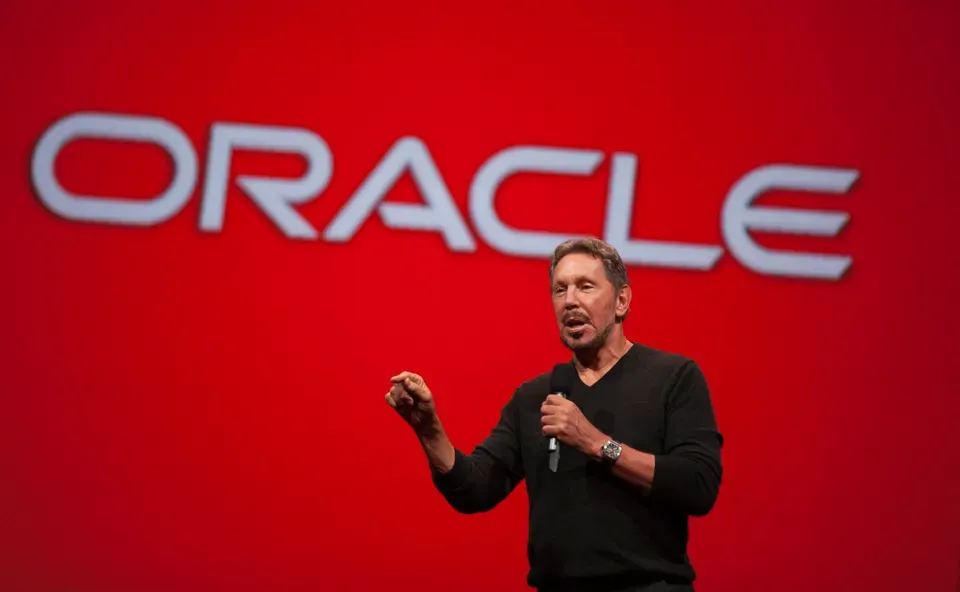
Forbes reports that Larry Ellison, Oracle’s chairman, has seen his net worth plunge by $100 billion amid an Oracle slide. The consequence is immediate for decision-makers watching how performance translates into wealth, ranking, and market confidence.
Larry Ellison, Oracle’s chairman, has had his net worth plunge by $100 billion, according to Forbes. The drop is being framed as a reversal in his standing, with Ellison falling below Mark Zuckerberg in the world’s richest rankings, landing at the seventh spot.
The key point for executives is not just the leaderboard. Forbes is tying the $100 billion plunge directly to an “Oracle slide,” and that connection matters because it reflects how markets value the business right now, and how that valuation flows into shareholder wealth concentrated around a single controlling figure.
When a company like Oracle sells, grows, or disappoints, the market reaction usually shows up quickly in the stock price. Even though wealth figures are downstream of many factors, this kind of reported $100 billion move highlights the simple reality investors live with every day: equity is not a concept, it is a daily mark-to-market. If the stock is down, the headline net worth follows. If the stock is steady or up, the ranking stabilizes or improves. Either way, the market is delivering a message, and wealthy insiders can become involuntary messengers.
For decision-makers, the “slide” framing should trigger a board and management question: what exactly is being repriced. Oracle is a mature, widely held enterprise software and cloud business, where investors typically scrutinize revenue durability, operating leverage, and the credibility of growth narratives. A slide can compress expectations across multiple quarters, which can then make new guidance harder, not easier. That is the compounding mechanism behind stock declines. It also helps explain why a wealth drop can look dramatic even when underlying business outcomes move more slowly than the market does.
There is also the governance angle. Ellison’s role as chairman means he sits inside the center of corporate gravity. Even when day-to-day execution is carried out by other leaders, the chairman position is often where oversight is concentrated. A sharp decline in a controlling insider’s reported wealth can intensify attention from shareholders and proxy observers, especially if the company is underperforming peers or missing strategic milestones. Nobody needs a Forbes rich-list to learn this, but rich-list coverage can accelerate scrutiny simply because it is legible to non-specialists. It is easier to care about billions than to parse a quarterly margin deck.
Regulatory and market structure also shape how quickly performance becomes a public narrative. Enterprise software and cloud companies operate within a complex environment of data governance, security expectations, procurement scrutiny, and contract terms that can vary by industry and geography. Those constraints do not typically change overnight, but investor confidence can. If guidance weakens or competitive pressure rises, markets tend to react faster than the company can operationally “fix” perception.
Second-order effects are where this gets interesting for executives at other firms watching Oracle from the outside. First, wealth concentration is a reminder that stock prices are not abstract. When a single leader’s net worth can move $100 billion in connection with a “slide,” it signals that the market is actively repricing enterprise value, not just trading around the edges. Second, rich-list rankings can become a proxy for credibility. If a company’s market story deteriorates, even good-faith strategic initiatives can face a skeptical audience. People interpret slowness as retreat.
Third, boards can learn from the timing of narrative. Forbes frames Ellison’s plunge as tied to “Oracle slide” and notes that he was ranked the world’s second-richest person earlier this month. That “earlier this month” detail matters. It implies the market shift happened quickly enough to change standing in a short window. For directors and CFOs, the lesson is uncomfortable but useful: the market can move ahead of the facts you want to emphasize. Your job becomes narrowing that gap through clarity, execution signals, and consistent communication.
Ultimately, the stakes for peers in similar roles are straightforward. Whether you are a CEO, a CFO, or a board member at a company where insider ownership and stock performance are tightly linked, the market will translate operational outcomes into valuations, then translate valuations into personal and reputational headlines. Forbes is reporting a $100 billion plunge for Oracle’s chairman and a fall below Zuckerberg. For decision-makers, that is the kind of external signal that should force an internal audit: performance drivers, expectations management, and what your next quarter must prove to reverse the slide narrative.
This story's Key Insights and Take-aways are locked.
Create a free account to unlock Executive Actions for one credit.
Register to UnlockAlways free for Executives Club members. Join the Club
More in Business

Comcast shares jump 25% as it plans to split NBCUniversal and Sky
The tax-free spin-off could reshape focus, funding, and competition across media and tech for years.

Bungie cuts most Destiny 2 staff as Sony says Marathon still matters
Herman Hulst confirms layoffs affecting most Destiny and some Marathon teams after Bungie admits Destiny fell short.

SK Hynix jumps 11% after seeking up to $29.4B in Nasdaq listing
The chip giant filed for a Nasdaq listing plan that could raise $29.4 billion, instantly reshaping investor expectations.