
Late-June sea surface temps near 70F shatter records and push oceans into uncharted territory
Climate scientists warn global ocean warming is entering “uncharted territory” after late-June readings nearly hit 70F.
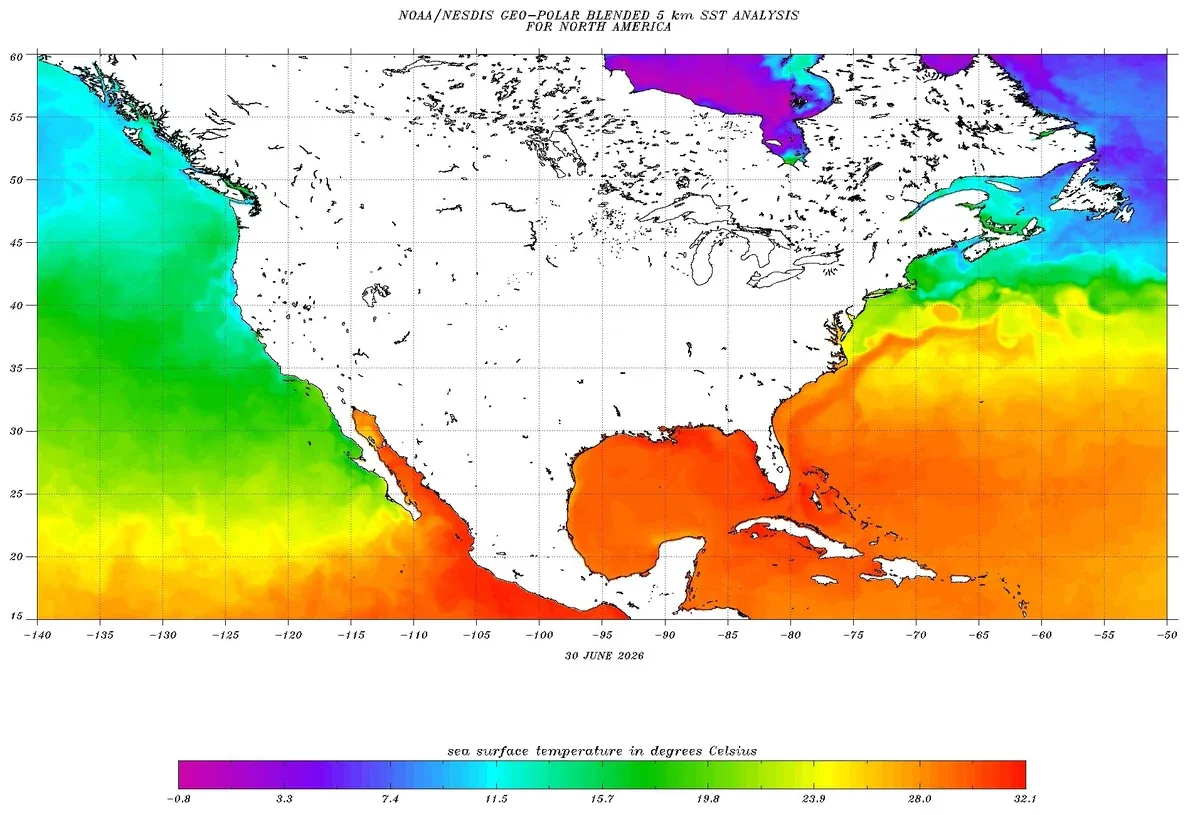
Climate scientists say global ocean temperatures are entering “uncharted territory,” after sea surface temperatures in late June reached nearly 70 degrees Fahrenheit on average. For decision-makers, the implication is straightforward: the baseline shifts, making risk models built on past climate assumptions increasingly fragile.
Sea surface temperatures in late June reached nearly 70 degrees Fahrenheit on average, shattering records. Climate scientists describe the situation as entering “uncharted territory,” which is a strong way of saying the ocean is moving outside the temperature range many systems were built for. When your baseline changes this abruptly, it is not just a science story. It becomes a planning story.
The key detail, right up front: it is the ocean surface, and it is the late-June average, and it is nearly 70F. That matters because sea surface temperatures influence weather patterns, including how much heat is available to drive storms and how the atmosphere behaves. In other words, the ocean is not sitting quietly in the background. It is actively setting the conditions for what comes next.
For executives, “uncharted territory” is a phrase you should treat like a board-level risk flag. Most risk and resilience planning uses historical records to estimate what is “normal,” what is extreme, and what is a once-in-a-while event. When records get shattered, those categories start to blur. The data point in this story is simple, but its downstream effect is not: if the ocean’s temperature regime is shifting, then the probability distributions behind underwriting, infrastructure design, and continuity plans start drifting.
There is also a regulatory and disclosure angle to this, even though the source is focused on climate science. Governments and regulators across jurisdictions have increasingly pushed climate-risk thinking into reporting, risk management, and financial supervision. While this particular Scientific American piece is not about a specific rule or filing, the underlying reality it describes feeds the same question decision-makers are facing: what happens to asset values, operating costs, and liabilities when the “historical” climate no longer holds.
Then there is the market context. Investors and lenders tend to ask for clarity on exposure: where are the hotspots, how sensitive are operations to climate extremes, and what plans exist if conditions worsen faster than expected. Sea surface temperature extremes are not just about temperature charts. They can translate into disruptions in shipping conditions, coastal impacts, insurance availability and pricing pressure, and supply chain stress when extreme weather reshapes demand and logistics. The second-order impact is that operational risk becomes financial risk, and it can do so quickly.
Boards should also notice what “shattering records” signals about organizational incentives. When the physical world is sending repeated out-of-range signals, internal “wait and see” behavior becomes harder to justify. Management teams are expected to respond with updated scenarios, tighter assumptions, and better contingency planning, especially where safety, facilities, or customer operations intersect with climate hazards. Even if no one can precisely forecast the next month, executives can still make decisions based on the direction of travel: conditions are moving beyond prior expectations.
Finally, this story lands differently depending on what your company does. A retailer with coastal distribution centers may focus on disruptions and insurance terms. A manufacturer may care about heat stress and power demand volatility during extreme conditions. A real estate operator may worry about cap rates and building resilience. Even companies far from the coast feel it indirectly through costs, logistics, regulation, and insurance markets. The ocean temperature number is a meteorological measurement, but the business translation is risk sensitivity.
So what is the strategic stake for peers in similar roles? It is that planning built on old boundaries is starting to look like planning for a different planet. When climate scientists say the ocean is entering “uncharted territory” after late-June sea surface temperatures reached nearly 70 degrees Fahrenheit on average, they are telling you the reference frame is changing. Your job, as a decision-maker, is to treat that not as background noise, but as a trigger to stress-test assumptions, tighten risk governance, and update how you price, insure, design, and operate for the world you are actually moving into.
This story's Key Insights and Take-aways are locked.
Create a free account to unlock Executive Actions for one credit.
Register to UnlockAlways free for Executives Club members. Join the Club
More in Science
Alaska's 1,580-foot tsunami had warning signs. Scientists just found them.
Rapid glacier retreat, heavy rainfall, and thousands of tiny tremors preceded Alaska's 1,580-foot tsunami, a warning for every coastal community in a warming world.

The rare mutation that lets high-risk brains dodge Alzheimer's
Scientists found a natural defense against protein buildup, opening a new path to preventive treatments.

3,000 steps a day may halve Alzheimer's decline, study finds
New research links a modest daily walk to less tau buildup and nearly half the cognitive and functional decline, even for those with early signs.