

LeBron, 41, says athletes shouldn't be forced to retire for age
He argues performance should matter more than a birthday, and points to Springsteen and the Rolling Stones.
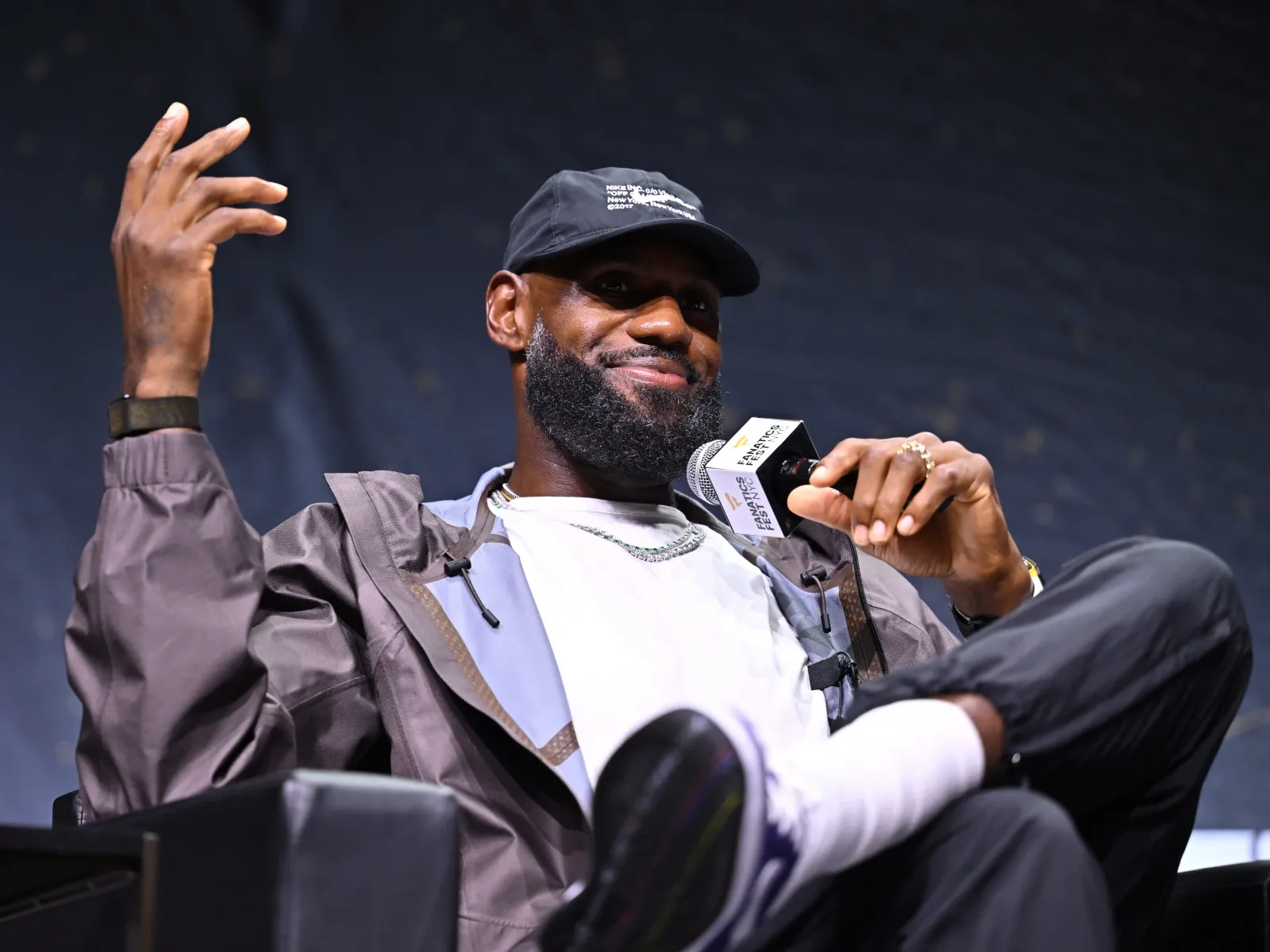
LeBron James, 41, made the case on a video released Monday from a live "The Shop" podcast panel at Fanatics Fest. The remarks matter for executives because they collide with how sports, music, and celebrity industries manage aging talent and revenue expectations.
LeBron James, 41, is pushing back on a cultural reflex that hits athletes as they get older: the expectation to retire simply because of age. In a video released Monday from a live "The Shop" podcast panel at Fanatics Fest, the NBA star said the idea that athletes should be forced to stop “needs to stop,” arguing that if a performer is still operating at a high level, age alone should not be the deciding factor.
His core logic is straightforward. If audiences still show up, if the performer is still delivering, and if the individual still wants to compete, why force an exit? James framed it against other entertainment industries where longevity is normal. He pointed to Bruce Springsteen and the Rolling Stones, saying there is no expectation that they should be told to stop touring even after decades. Then he applied the same logic to sports: if players are still dedicated to their craft and still contributing, they should not be expected to retire just because “he’s this age” or “he’s that age.”
That argument lands differently because the timing is pointed. James’ comments come just weeks after he became an unrestricted free agent, ending his eight-year stint with the Los Angeles Lakers. So while he was talking broadly about retirement culture, the subtext for everyone watching is the same as the question executives ask in every industry where human performance matters: when does the company decide someone is done, and when does the talent decide?
In James’ telling, motivation is a big piece of the answer. He said one of the deciding factors, among others, is the younger generation and the kids who have been following his career. Seeing young fans still treat him as “their superhero,” along with inspiring his own children, are among his motivations for continuing to play basketball. He also emphasized that he simply loves what he does, adding: “I love the game.” Put another way, his case is not only about output. It’s also about demand, identity, and how long an elite athlete can stay engaged when they still have a meaningful audience.
James’ “juice” line is the practical version of the same philosophy. He said he is “just trying to squeeze as much of the juice out of it as possible.” It is not a promise of forever, but it is a rejection of a predetermined clock. And from a business perspective, that matters because sports organizations do not just manage games, they manage narratives and revenue streams. Longevity talent can stabilize fan engagement, sponsorship value, ticket demand, and broadcast attention. But it can also increase pressure to justify roles, minutes, and on-court usage as performance trends change. When the public debate is “when is he going to retire?,” it becomes harder for teams to discuss value in more precise terms.
That’s why James’ comparison to musicians is more than a throwaway analogy. He explicitly said you see retirement talk in R&B artists and musicians, “and things of that nature,” and that similar conversations happen in sports. The through-line is the way public scrutiny turns aging into a countdown, even when the performer is still contributing. For decision-makers, this is a reminder that brand power and commercial output often move on overlapping timelines. Fan loyalty can lag or outlast physical decline, but media framing can compress the conversation into age-based expectations.
The article also points out that James is not the only high-profile athlete to challenge age-based speculation. Roger Federer, in a press conference after the 2018 US Open, said reporters had been asking him about retirement for “nine years,” and that “almost every interview” included questions about when he would call it quits. Federer said, essentially, that they seemed not to hear what he said the day before or what he said “two months ago.” Federer ultimately retired in 2022 after struggling with persistent knee injuries. Halle Berry, meanwhile, has said she does not understand why people think 60 is the age to stop working, saying, “Why should I now sit down and give that all away - and then what?”
Together, these examples underline a messy reality executives deal with constantly: markets want clean narratives, but careers are not clean. For sports teams and the broader ecosystem around them, the stakes go beyond “will this person keep playing?” They include how organizations plan contracts, handle succession messaging, build marketing calendars, and manage internal expectations among players, coaches, and fans. James is free to choose his next step, but the public conversation will keep trying to reduce it to age.
Even his agent’s comments on Monday’s episode of the “Game Over” podcast, which Rich Paul cohosts with Max Kellerman, reinforces that the decision is not supposed to be externally accelerated. “We’re not going to be rushed,” Paul said. “It’s his choice to make, and when he makes the choice, he’ll make it.” With James, the next team is still up in the air, but the philosophy is clear: retirement, in his view, should be driven by whether he can still perform at a high level and whether he wants to keep contributing, not by a calendar.
For executives watching from other industries, the takeaway is simple but uncomfortable: when the market insists on age as the primary variable, it can distort incentives and make real performance-based decisions harder to communicate. James is trying to reset that frame. And if the industry continues to treat longevity talent as optional rather than value-creating, it could end up cutting off the very revenue and attention that keeps these performers connected to culture long after most people would put them on the shelf.
This story's Key Insights and Take-aways are locked.
Create a free account to unlock Executive Actions for one credit.
Register to UnlockAlways free for Executives Club members. Join the Club
More in Entertainment

12TB Steam 'teraleak' goes beyond Valve: GTA 3, Mafia 2 prototypes exposed
A 12-terabyte dump of Steam data reveals prototypes and builds of third-party classics like GTA 3 and Mafia 2, plus unreleased Valve content, rewriting game history.

LinkedIn's romance problem: 1 in 4 workers say dating on it is fair game
A new survey shows a quarter of U.S. employees treat the professional network as fair game for romance, even as LinkedIn bans it and removes hundreds of thousands of offending posts.

Enhypen's first No. 1 album breaks K-pop's Billboard 200 streak
The K-pop group's 98,000-unit debut tops the chart while Dolly Parton's catalog reentry shows how death reshapes streaming.