

Lego and Pokémon launch “smart” Pikachu bricks that trigger battles with sound and lights
The toy giants are turning Pokémon fan fantasies into motion-sensitive Lego play, with interactive effects built into bricks.
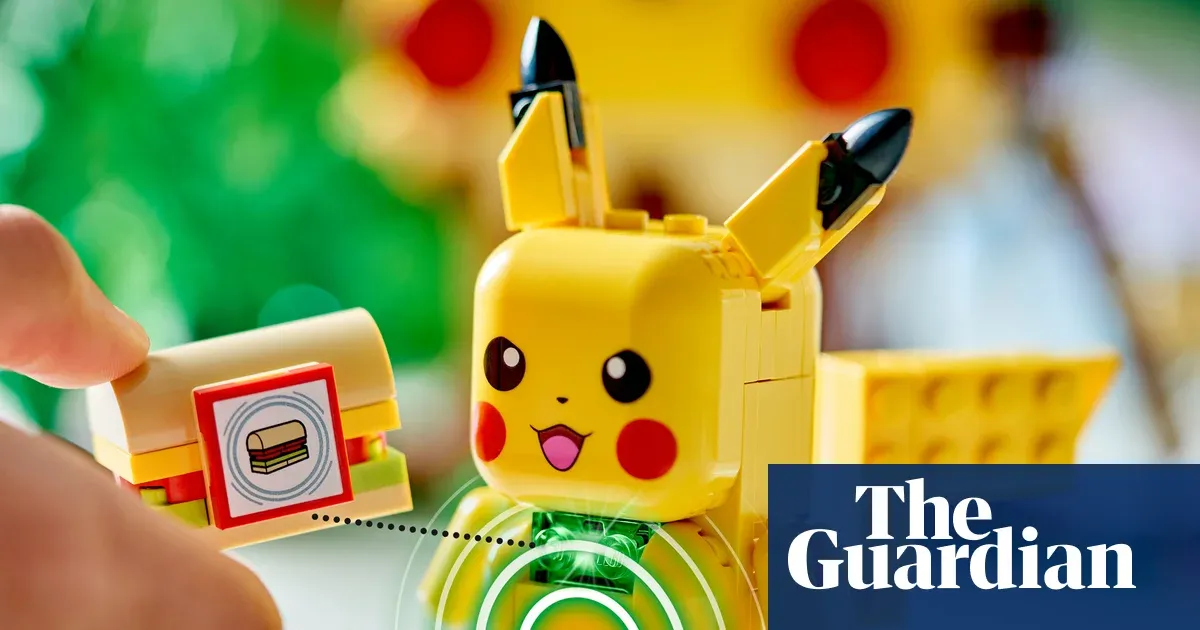
Lego is launching a Pokémon tie-up featuring motion-sensitive “smart” bricks that bring Pikachu to life for interactive battles. For decision-makers, the rollout signals how major toy brands are using embedded tech to defend engagement as expectations rise.
Lego is taking its Pokémon partnership from “collect them” to “battle like you mean it,” by launching hi-tech Lego bricks that bring Pikachu to life. The Guardian describes play sets equipped with motion-sensitive “smart” bricks that produce sound effects and flashing lights when paired with different sets, letting fans feel like the trainer and stage epic battles.
That “interactive battle” promise is the whole point. In the source, many Pokémon fans “secretly fantasise” about being a trainer, and these bricks are positioned as a closer, more physical way to live that fantasy. The interactivity is not just cosmetic. Because the bricks are motion-sensitive and respond with an array of sound effects and flashing lights depending on which sets they’re paired with, the play experience is designed to change as the user moves and combines the system.
This matters because it is exactly the direction where traditional toy categories start competing with digital experiences. Pokémon has always been about more than one format, it is a universe built across games, cards, TV, and now branded physical play. Lego, meanwhile, has spent years making the leap from brick-only creativity toward electronics-adjacent experiences. This partnership fits that broader arc: it takes a beloved IP and layers in a “responsive” mechanic so play becomes an event, not just a build.
From an operator perspective, “smart” bricks also offer a commercially interesting lever: system behavior. When effects are triggered based on pairing and motion, you are not only selling a single toy. You are nudging consumers toward collecting multiple sets to unlock more combinations and reactions. The Guardian frames the sets as producing “an array of sound effects and flashing lights when paired with different sets,” which is effectively a modular engagement strategy. The more ways a child can recombine parts, the more reasons they have to keep expanding the ecosystem.
Now zoom out to why boards and leadership teams care. The toy market is not just about unit sales, it is about lifetime value from repeat purchases, and it is about keeping a brand relevant to kids whose attention is constantly tugged by phones, tablets, and streaming. When major players like Lego attach themselves to blockbuster franchises like Pokémon, they get instant cultural gravity. And the embedded interactivity, as described in the source, raises the stakes because it is harder for casual buyers to see the product as “just another figure.” It is framed as interactive battles you can stage, where Pikachu is the star.
There is also a regulatory and safety subtext, even if the source does not go deep. Any time consumer products add motion-sensing electronics and light or sound effects, companies must ensure age-appropriate safety, durability, and compliance with applicable toy standards. For executives, this means that product planning cannot treat the “tech” as a bolt-on. It must be engineered, tested, and supported as part of the overall product lifecycle. The Guardian’s emphasis on motion-sensitive “smart” bricks and responsive effects suggests Lego is treating the electronics behavior as core to the experience, not a novelty.
Second-order implications are likely to show up in merchandising strategy and operational planning. If effects depend on how bricks are paired across sets, then supply chain decisions and assortment planning get more complicated. You need consistent compatibility, clear product families, and packaging that communicates what works with what. That is an operational burden, but it can also raise switching costs. Once a customer owns part of a responsive system, the logical next step is expanding the catalog to trigger more “battles” and new effect combinations.
Strategically, the headline stake is simple: Lego and Pokémon are trying to lock in engagement with hi-tech play that feels like the trainer. For peers, the takeaway is that IP tie-ups alone are no longer enough. In a world where children expect the product to respond, companies will increasingly compete on interactivity. Lego’s latest “smart” brick approach, with Pikachu at the center and motion-triggered sound and flashing lights as the mechanic, is a clear signal that the future of blockbuster toy partnerships is experiential, not just collectible.
This story's Key Insights and Take-aways are locked.
Create a free account to unlock Executive Actions for one credit.
Register to UnlockAlways free for Executives Club members. Join the Club
More in Entertainment

Christopher Nolan’s “The Odyssey” posts his biggest Tuesday haul, surpassing “The Dark Knight’s” record
The film’s Tuesday breakout reframes Nolan’s box-office ceiling and forces competitors to rethink timing, budgets, and release strategy.

Kacey Musgraves cancels Aug. 20, 29, Sept. 2 Middle of Nowhere shows
Ticketmaster emails are telling fans refunds are coming, while the tour still starts Aug. 21 in Chicago.

Billie Joe Armstrong launches Epiphone Les Paul Junior and Marshall 1959BJA signature gear
Two limited releases turn decades of Green Day’s tone into branded hardware, including Marshall’s first artist amp in 14 years.