
LEGO locks in Donkey Kong Arcade for August 1, 2026 at $199.99
An 1,367-piece, 18+ interactive cabinet set turns 1981 gameplay into a physical machine, with 21 barrel drops.
LEGO has officially announced LEGO Donkey Kong Arcade, launching August 1, 2026 with an MSRP of $199.99. For decision-makers, it signals how fast Nintendo nostalgia is becoming premium, adult-targeted, build-and-play revenue.
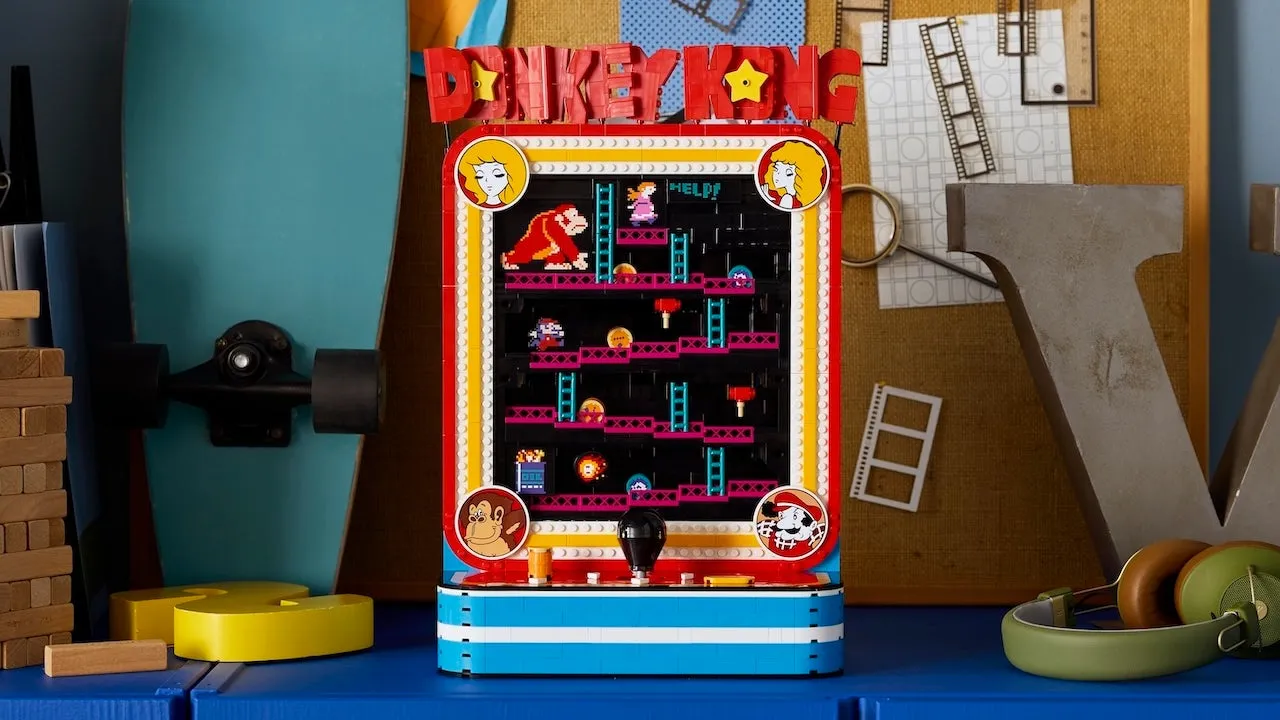
LEGO Donkey Kong Arcade is official, and the calendar is already set: August 1, 2026. LEGO is pricing the set at $199.99, with 1,367 pieces, and it is built for adults at age 18+. The set number is 72051, and it is not a simple display model. It is an interactive recreation of the classic Donkey Kong arcade cabinet, designed so the cabinet itself is part of the play.
What you are buying is basically an arcade that lives on your shelf. LEGO has recreated the cabinet with the big Donkey Kong logo at the top and character images on all four corners of the “display.” Below that “display,” there is a barrel-release lever, plus a joystick and a Jump button. The screen shows a simplified version of the game’s first level, featuring Donkey Kong, Lady, and Jumpman on a construction site. And yes, it includes a flaming oil drum and hammer power-ups. The key detail, though, is the interaction loop: pull the lever to release barrels, use the joystick to move Jumpman, and press the button to make him jump.
This is not just “another LEGO Nintendo set.” It is part of a broader trend where nostalgia gets packaged into high-ticket, high-effort physical experiences. The Donkey Kong arcade game originally came out in 1981, and it was a huge hit, positioned as a precursor to the Mario series that followed. LEGO’s set leans into that legacy by centering Jumpman, an early version of Mario, and Lady, an early version of Pauline. That matters commercially because it gives adult builders something they can recognize instantly, then spend time with in a way that feels like ownership, not just collection.
LEGO Donkey Kong Arcade is also unusually mechanical for a theme product. The set includes many moving parts, and LEGO explicitly aims it at the 18+ bracket because of the build complexity and the retro subject matter. Once assembled, it becomes a real “machine” experience: there are 21 barrels in the set, and when you release them, they roll down through the level. In the real arcade game, barrels and platform actions define the rhythm. LEGO translates that rhythm into a physical interaction, then adds a behind-the-set mechanism that moves the barrels at the bottom back to the top. That is the kind of design choice that takes a normal build and turns it into something that can repeatedly run through its own mini-workflow.
For executives and boards, the question is what this kind of product says about positioning and product economics. A $199.99 MSRP with 1,367 pieces and an 18+ target is a premium lane. It tells you LEGO is willing to price for complexity and adult appeal, not just for kids who want characters. That also means inventory risk and demand planning get more serious, because premium sets tend to have narrower audience pools than mass-market items. But when the product is engineered as an interactive cabinet, it gives LEGO a stronger “keep it, use it” story. Buyers are not only purchasing a theme; they are purchasing a system.
It also matters that LEGO built this set around an “interactive game” concept that mirrors the cabinet’s actual gameplay elements. The joystick, the Jump button, the barrel-release lever, the barrel count, and the level depiction are all specific, not vague nostalgia nods. LEGO even recreates the behind-the-set barrel return, which is the sort of detail that can delight hobbyists and hobby-adjacent consumers who care about functional design. That is how a product justifies premium pricing beyond branding: it creates a durable use-case.
There is also an ecosystem signal here. This is the latest in a long line of LEGO Nintendo sets. LEGO is clearly threading Nintendo IP into a coherent adult-building strategy, where recognizable characters and game mechanics become physical experiences. As LEGO continues to expand this category, decision-makers across retail, consumer hardware, and licensing should watch how audiences respond to “adult interactive build” formats. These products are effectively competing with other premium hobby experiences, and the winners tend to be the ones that deliver a convincing loop, not merely a static replica.
This story's Key Insights and Take-aways are locked.
Create a free account to unlock Executive Actions for one credit.
Register to UnlockAlways free for Executives Club members. Join the Club
More in Entertainment

12TB Steam 'teraleak' goes beyond Valve: GTA 3, Mafia 2 prototypes exposed
A 12-terabyte dump of Steam data reveals prototypes and builds of third-party classics like GTA 3 and Mafia 2, plus unreleased Valve content, rewriting game history.

LinkedIn's romance problem: 1 in 4 workers say dating on it is fair game
A new survey shows a quarter of U.S. employees treat the professional network as fair game for romance, even as LinkedIn bans it and removes hundreds of thousands of offending posts.

Enhypen's first No. 1 album breaks K-pop's Billboard 200 streak
The K-pop group's 98,000-unit debut tops the chart while Dolly Parton's catalog reentry shows how death reshapes streaming.