

Leon Thomas tells songwriters to stay unboxed at ASCAP Vanguard Awards, June 25
The Vanguard Award speech, plus Kendrick Lamar and SZA's “Luther,” shows how PRO politics shape creative control.
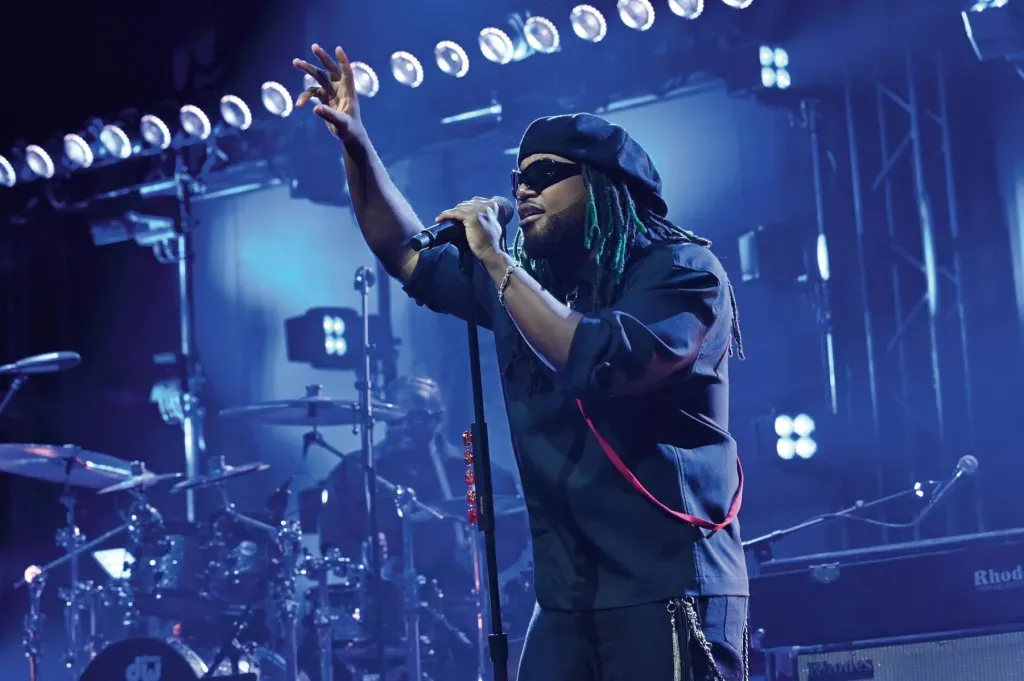
Leon Thomas accepted the ASCAP Vanguard Award at the 2026 ASCAP Rhythm & Soul Awards on Thursday, June 25, backed by a lineup of industry heavyweights and a message aimed at songwriters. The consequence for decision-makers: PRO recognition and boardroom “box-building” directly influences who gets to keep their creative leverage and IP.
Leon Thomas used his 2026 ASCAP Vanguard Award moment to deliver a blunt reminder to the songwriting world: don’t let companies “put you in a box.” He accepted the honor Thursday, June 25 at the 2026 ASCAP Rhythm & Soul Awards, stepping onto the stage with Grammy and Oscar winner Paul Williams leading the presentation, plus ASCAP executive vice president and head of creative membership Nicole George-Middleton. Ty Dolla $ign closed out the presentation via a video message recorded from Paris Fashion Week.
That June 25 acceptance is not just a trophy photo op. It lands right before Thomas is back in the spotlight at the 2026 BET Awards on Sunday, June 28, where he will compete for album of the year (Mutt Deluxe: Heel) and best male R&B/pop artist. In other words, the industry is handing him visible platform power, and he is using it to talk about the invisible stuff that determines careers: how creators get managed, marketed, and protected when money and control show up.
The speech itself ties the “don’t get boxed” theme to a hard truth about the creative journey. Thomas pointed back to his origin with ASCAP, saying “At 16 years old, ASCAP was my choice,” and reflecting on “ups and downs” over the ensuing 16 years. He described periods where, as a songwriter and producer, you might need to “dim your light” to get where you “wanna go,” then framed his path as one of “self-reflection and confidence” powered by the people who helped him take his own music as an artist to the “T-O-P.” He also thanked a chain of support roles that are often invisible to audiences but crucial to executives and boards: Shawn Barron at EZMNY, the move to Capitol Music Group, Culture Collective (Jonathan Azu and team), his legal team at Eisner Law led by Dan Shulman, and Grant Financial Management for getting royalty checks on time.
All of that matters because ASCAP’s own awards spotlight what the infrastructure rewards. The ASCAP Rhythm & Soul Music Awards recognize the songwriters and publishers of the most-performed songs of the past year, based on Luminate data for terrestrial and satellite radio and streaming services, as specified by the ASCAP Rhythm & Soul Music Awards rules. That means PRO and publisher systems are not abstract background noise. They are ranking machines that translate performance into recognition. When Thomas argues against being boxed in, he is also protecting the creator upside that comes from being correctly credited, correctly administered, and correctly positioned.
And ASCAP’s scoreboard this year is loaded. “Luther,” the doe-eyed Hot 100-topping duet between Kendrick Lamar and SZA, took home the 2026 Grammy for record of the year and was named the ASCAP R&B/Hip-Hop and Rap Song of the Year. ASCAP credits its co-writers as Lamar and SZA, alongside ASCAP winners Marvin Gaye, Kamasi Washington, Scott Bridgeway, and Jack Antonoff. The song also broke the record for the longest-running No. 1 hit in Hot R&B/Hip-Hop Songs history at 31 weeks. Mustard won ASCAP Rhythm & Soul Songwriter of the Year for contributions to Lamar’s “TV Off” and Ella Mai’s “Little Things,” with “TV Off” reaching No. 2 on the Hot 100 and “Little Things” hitting No. 4 on the R&B/Hip-Hop Digital Song Sales Chart.
Thomas’s own breakout numbers show why executives should care about these ceremonies beyond branding. With “Mutt,” he had a slow-burning smash that conquered both R&B and pop radio on its way to a No. 6 peak on the Billboard Hot 100. Earlier this year (Feb. 1), he collected best traditional R&B performance for “Vibes Don’t Lie” and best R&B album for Mutt, which reached No. 35 on the Billboard 200, with six total Grammy nods including album of the year and best new artist. Since February’s ceremony, where he also played in best new artist and D’Angelo tribute medleys, Thomas has been wrapping up the European and Australian legs of his Mutts Don’t Heel World Tour, plus assisting Bruno Mars on his Romantic Tour across stadiums in the United States. That kind of visibility feeds back into the business side, because touring scale and mainstream attention tend to amplify catalog value and the leverage creators have in negotiations.
ASCAP’s publisher and songwriter sweep underlines another point: “box-building” can happen through deal design as much as messaging. Sony Music Publishing earned ASCAP Rhythm & Soul Publisher of the Year honors for a roster of Hot 100-charting hits, including “Push 2 Start” (Tyla, No. 88), “Went Legit” (G Herbo, No. 70), “Folded” (Kehlani, No. 6), “Man I Need” (Olivia Dean, No. 2), “WHATCHU KNO ABOUT ME” (Glorilla & Sexyy Red, No. 17), “Mutt” (Leon Thomas, No. 6), “Shake It To The Max (Fly) Remix” (MOLIY, Silent Addy, Skillibeng & Shenseea, No. 44), and “Rather Lie” (The Weeknd & Playboi Carti, No. 4). Additional 2026 ASCAP Rhythm & Soul award-winning songwriters included Cardi B (“Outside”), Justin Bieber (“Yukon”), Partynextdoor (“Somebody Loves Me”), Kali Uchis (“Is It A Crime”), Usher (“It Depends”), and Summer Walker (“Heart of A Woman”). On the faith-based side, Maverick City & Upperoom’s “Rest On Us,” co-written by Brandon Lake & Harvest Grapevine, was named ASCAP Rhythm & Soul Gospel Song of the Year.
So what is the strategic stake for executives and boards? It is not just whether a creator wins an award. It is how the system that tracks performance (Luminate data through ASCAP rules), funnels credit, and reinforces mainstream legitimacy can either widen a creator’s lanes or narrow them. Thomas ended with a direct address to collaborators chasing artistic dreams: don’t give up, get a solid team around you so you “can be heard,” and “don’t let any of these companies put you in a box and tell you what you can’t do.” In 2025-2026, the industry’s winners are increasingly the artists who can translate behind-the-scenes authorship into front-facing control, without losing the legal and operational scaffolding that keeps royalties and IP intact.
This story's Key Insights and Take-aways are locked.
Create a free account to unlock Executive Actions for one credit.
Register to UnlockAlways free for Executives Club members. Join the Club
More in Entertainment

Russell Brand's accuser 'bewildered and confused' as he denies 7 sex charges
The criminal case against the comedian is a live test of how media companies manage talent risk when serious allegations go public.

'It's a Magic Trick': Ballet Experts Say Rosalía's SNL Pose Is Impossible
Three ballet experts tell Rolling Stone Rosalía's gravity-defying SNL stillness shouldn't be possible - and why the debate is now part of the show.

Activision CMO: GTA 6 Will Boost Call of Duty, Not Bury It
Activision's top marketer says Rockstar's blockbuster will drive players back to consoles and into Modern Warfare 4, even as the company admits its recent strategy failed.