

Leonhard Soenke quit Throne for TAR after a $27M seed at a $500M valuation
A creator-economy founder is betting data-center power efficiency becomes AI's real bottleneck.
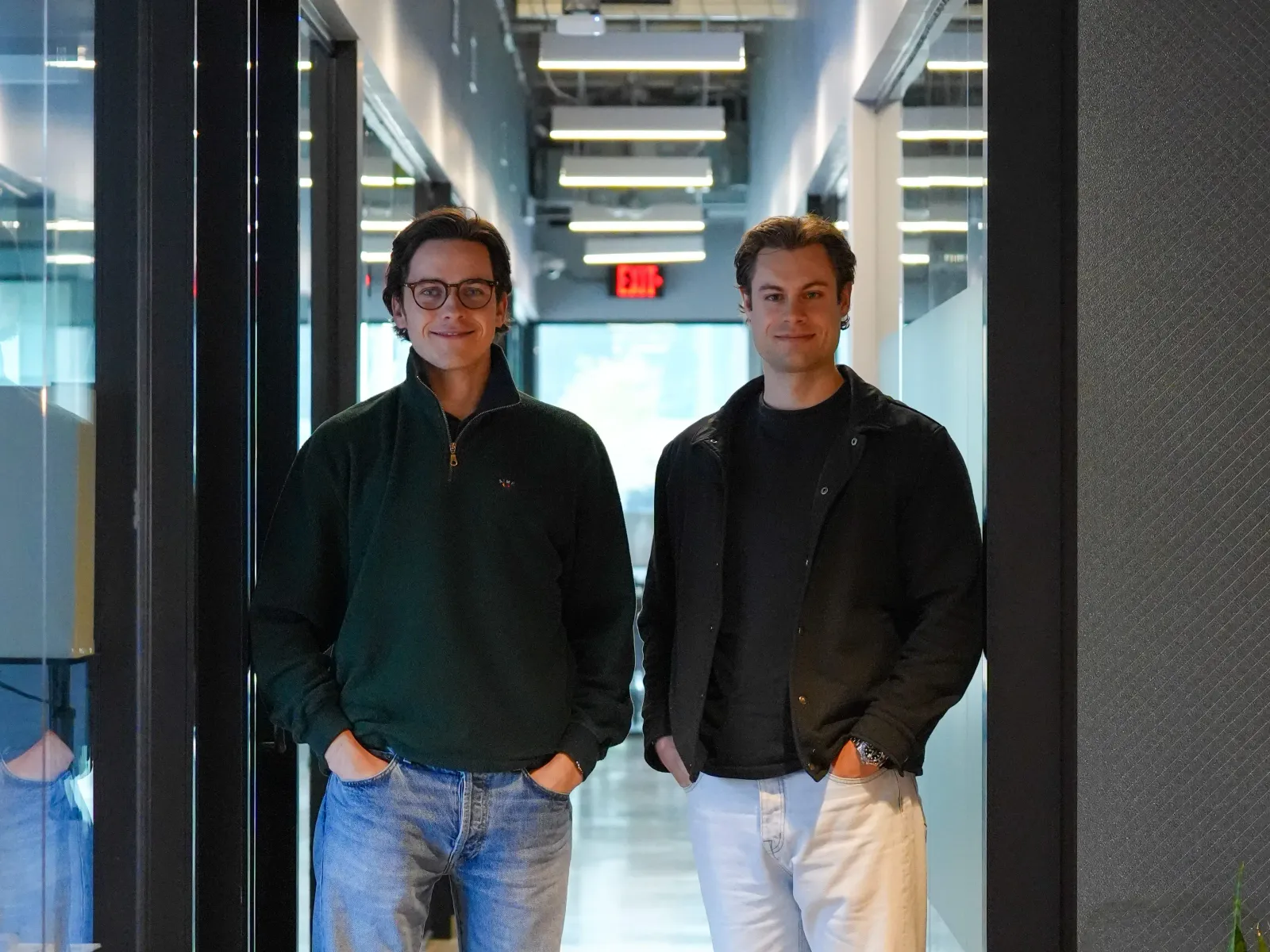
Leonhard Soenke, cofounder of the creator economy startup Throne, left that world to cofound a new energy company, TAR (Transformative American Resources). He told Business Insider TAR raised a $27 million seed round at a $500 million valuation, signaling a shift in where AI infrastructure ROI may land first.
Leonhard Soenke is making the kind of pivot founders only attempt when they think the bottleneck is about to change. After cofounding Throne in 2021 to help influencers create wishlists for fans, he and his cofounder Patrice Becker left the creator economy and launched TAR, an energy startup aimed at making data center power more efficient. In a conversation with Business Insider, Soenke said TAR recently raised a $27 million seed round at a $500 million valuation from an undisclosed strategic investor.
Soenke is not framing it as “AI needs more compute.” He is framing it as “AI needs better power.” TAR stands for Transformative American Resources, and the company is focused on energy efficiency in data centers. That may sound like infrastructure busywork until you connect the dots: the cost and complexity of power delivery are becoming front-and-center as chips and power become more acute problems as models become more useful and permeate society. In other words, the bottleneck may not be training access or even GPU availability. It may be the ability to reliably deliver power where data centers (and AI workloads) can actually run.
The pivot starts with a founder psychology problem, not a spreadsheet problem. Soenke and Becker left New York for San Francisco, after saying they wanted to get away from running something “very stable,” and they viewed the creator economy as having matured and become crowded. Throne had grown into a large organization, including partnerships with major vendors and work with Amazon. But Soenke describes their decision as a two-part reevaluation: they wanted something new, and they asked where they could “really make a large impact.” For them, that answer was not in the application layer of social platforms. It was in the AI infrastructure stack, specifically around where problems lie after spending time with labs and major compute providers.
TAR’s strategy is a mix of modular systems and deployment speed. Soenke says TAR reduces time-to-token by building modular, scalable, behind-the-meter energy systems with a mix of generation sources. He is careful to position this as deployment innovation rather than a reinvention of physics: most of the systems will consist of solar, batteries, wind energy, and natural gas. “We’re not inventing a new way to produce energy,” he told Business Insider. “We are focused on innovating the way we deploy these existing technologies faster.”
That phrase matters for executives because it implies two different cost curves than typical software infrastructure startups. Soenke notes that TAR is “a lot more capex-intensive compared to building a software platform,” including procuring heavy equipment, building a warehouse, and developing land. That changes everything about risk, runway, and execution. Software can often iterate on demand and margin; energy systems are constrained by equipment lead times, site constraints, and interconnection realities. And because TAR is focused on behind-the-meter systems for data centers, the “customer” is not just an end user. It is the operator coordinating site decisions, contractors, and power delivery constraints.
The founder experience also shifts when you move from digital ecosystems to physical ones. Soenke said the biggest difference is working with more legacy players in the energy space. Founders from software backgrounds, he said, often sit in offices and talk to users. TAR’s approach requires more on-site engagement, including talking to contractors and “blue-collar crews.” From a leadership standpoint, that is a different relationship map: empathy and credibility become operational assets, not just culture values.
Geography is part of the operating model too. Soenke says they maintain a San Francisco office for engineering, but they recently moved to Austin, Texas. He frames it plainly: “If you’re building energy for data centers, it’s good to be in Texas.” Texas has become a hub for data centers, and energy capacity, construction timelines, and supply chains tend to be where strategy turns into execution. The company’s pivot also includes governance and handoff mechanics. Soenke called the hardest part “giving away your baby,” especially because he described himself as a “control freak.” The transition, however, was eased by handing Throne to trusted team members, and he said the handoff process took about six months, with him still participating in Slack when bugs came up.
For decision-makers, the second-order implication is that energy efficiency is starting to look like a competitive advantage in AI infrastructure, not a compliance footnote. TAR’s fundraising signal, paired with its modular behind-the-meter approach and its focus on deployment speed, suggests investors and operators are rethinking where bottlenecks show up first. If chips and power are becoming more acute as models spread, then board-level questions shift from purely “how do we scale inference” to “how do we scale power reliably, quickly, and at reasonable cost in real-world geographies.” In the same way early cloud winners obsessed over uptime and data pipelines, this wave may reward teams that treat power delivery as a product with measurable performance, not just a utility bill.
This story's Key Insights and Take-aways are locked.
Create a free account to unlock Executive Actions for one credit.
Register to UnlockAlways free for Executives Club members. Join the Club
More in Business

Comcast shares jump 25% as it plans to split NBCUniversal and Sky
The tax-free spin-off could reshape focus, funding, and competition across media and tech for years.

Bungie cuts most Destiny 2 staff as Sony says Marathon still matters
Herman Hulst confirms layoffs affecting most Destiny and some Marathon teams after Bungie admits Destiny fell short.

SK Hynix jumps 11% after seeking up to $29.4B in Nasdaq listing
The chip giant filed for a Nasdaq listing plan that could raise $29.4 billion, instantly reshaping investor expectations.