
Lesley Stahl calls 60 Minutes firings “the hardest chapter” after Scott Pelley exit
CBS News leadership overhauled “60 Minutes,” and Stahl says it was the toughest moment of her 50+ year career.
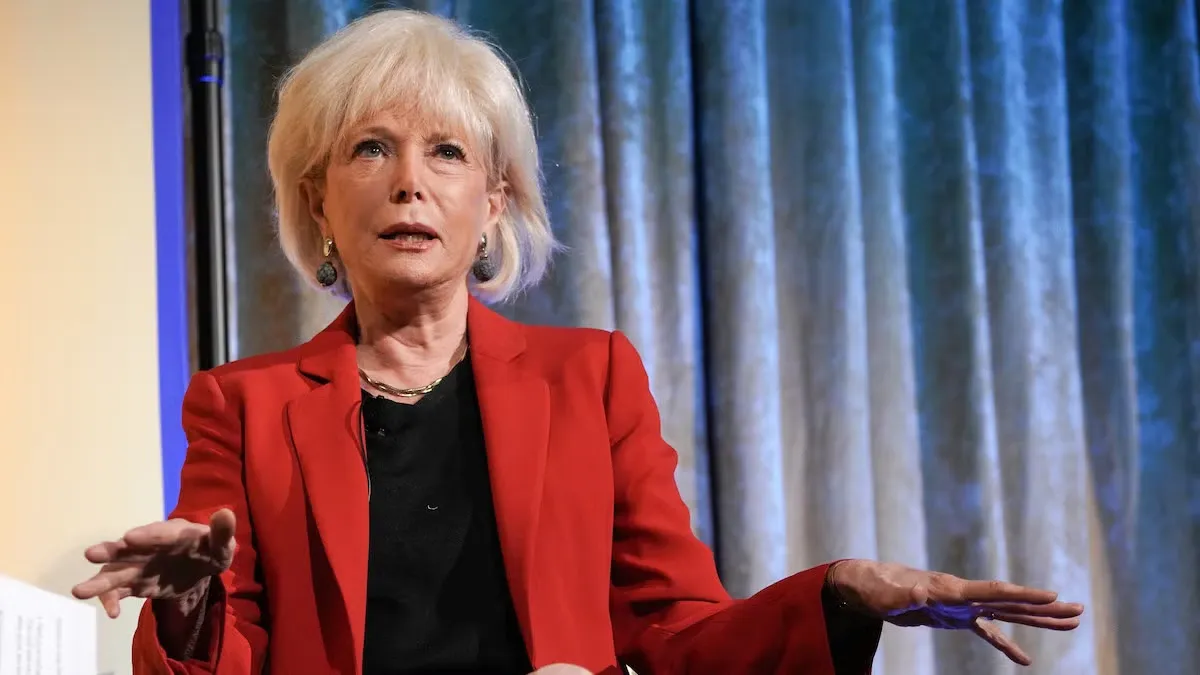
Lesley Stahl, the veteran CBS News correspondent, said the firings at “60 Minutes” under CBS News editor-in-chief Bari Weiss mark “the hardest chapter of my career.” The reshuffle included the dismissal of executive producer Tanya Simon, correspondents Sharyn Alfonsi and Cecilia Vega, and Scott Pelley, creating a governance and editorial independence flashpoint for decision-makers.
Lesley Stahl did not mince words about the chaos at “60 Minutes.” Speaking about the recent firings, the veteran correspondent told Puck that the turmoil marks “the hardest chapter of my career.” Stahl is not talking in generalities either. She called it “by far the worst experience I’ve been involved in, or even witnessed,” adding that it included “firing seven people, including the entire management team over here, plus reporters and producers.”
Those firings did not happen quietly in the background. Under CBS News editor-in-chief Bari Weiss, “60 Minutes” dismissed executive producer Tanya Simon, correspondents Sharyn Alfonsi and Cecilia Vega, and last Tuesday Scott Pelley after he objected to the firings. And by Friday, Stahl and fellow correspondents Bill Whitaker and Jon Wertheim publicly said they are staying with the program. They said they did not want to see it “die.” So if you’re a leader in media, the uncomfortable question is obvious: how does a flagship news brand try to “stay alive” while the newsroom leadership and even on-air voices are being cut loose at speed?
To understand why this matters far beyond one show, zoom out to how institutional journalism typically works. “60 Minutes” is built on trust, and trust depends on continuity of editorial standards. When management teams and correspondents get removed quickly, it doesn’t just change who writes scripts. It changes how producers and reporters decide what stories to pursue and how hard to push. Stahl’s description of “the hardest chapter” is personal, but it also signals a structural shock inside a high-stakes environment where editorial independence is the product.
The other leadership name in this story is “60 Minutes” new executive producer Nick Bilton. Late last week, Bilton reaffirmed his commitment to independent journalism and said he consulted with Stahl, Whitaker, and Wertheim on next steps. Bilton’s message, as reported by TheWrap, emphasized that those correspondents were “core to this show’s success,” and said he has spent time talking with many of them, “especially in consultation with Lesley, Bill and Jon.” He outlined a dual focus: preserving “the traditions and legacy of the past” and also addressing change, including “new audiences, new platforms, and new ways of storytelling that these new audiences need.”
That tension is at the heart of the decision-making problem here. Big legacy brands can talk about innovation without breaking their own legitimacy, but only if the internal governance is credible. When firings are already underway, every subsequent message about independence becomes part reassurance, part pressure test. Bilton’s note about change reads like a roadmap, but the timing matters because Stahl and others just described an event that felt, in her words, uniquely severe.
The sharpest flashpoint, according to TheWrap, came when Pelley was terminated. TheWrap reports that Pelley was fired after a clash with Bilton in which he accused Weiss of “murdering” the program. In response, Bilton wrote a letter sent to Pelley, reviewed by TheWrap. Bilton’s letter told Pelley that his “antipathy to the future of the show has come through loud and clear,” and then informed him that his CBS employment was terminated for cause effective immediately.
From a governance standpoint, that “for cause” language is not a throwaway detail. It turns a disagreement about direction into a personnel and compliance frame. And then Pelley responded with a lengthy statement that shifts the stakes again. He suggested Paramount Skydance CEO David Ellison was “casting aside” the news program to curry favor with Donald Trump. He also reiterated accusations he made to The New York Times earlier on Tuesday that “new management [had] instructed me to inject falsehoods and bias into a politically sensitive story.” He further alleged that politicians had been given “control over ’60 Minutes’ interviews.” Even if you never met Pelley, those claims are consequential because they go directly to the credibility of interviews and the perceived separation between editorial decisions and political influence.
So what happens next, strategically, for the people still holding the microphones? Stahl, Whitaker, and Wertheim said they’re staying because they do not want the program to die. Bilton said he will speak more about next steps “in the weeks to come,” including how the show will handle change for “new audiences” and “new platforms.” But for executives and board members across media, the second-order question is tougher than “who got fired.” It is: can a newsroom recalibrate quickly without signaling that editorial independence is negotiable? In the short term, stakeholders will watch whether new leadership processes produce fewer internal ruptures and clearer story guardrails. In the long term, they will measure whether audiences still feel the show is doing journalism, not performing survival.
If you’re a decision-maker at a publisher, broadcaster, or platform, this is the kind of event that becomes a case study. It’s a reminder that brand trust is not just built on content. It is built on internal stability, coherent governance, and a credible defense of editorial independence. When the inside of the machine looks like a purge, every future editorial choice will carry extra scrutiny, from staff morale to viewer skepticism to political actors sniffing around the seams.
This story's Key Insights and Take-aways are locked.
Create a free account to unlock Executive Actions for one credit.
Register to UnlockAlways free for Executives Club members. Join the Club
More in Entertainment

Entertainer Russell Brand denies 7 sex charges amid accuser's 'couldn't breathe' claim
The alleged victim's account sharpens the reputational and legal stakes for Brand, his platforms, and any business tied to a public figure under criminal scrutiny.

Russell Brand's accuser 'bewildered and confused' as he denies 7 sex charges
The criminal case against the comedian is a live test of how media companies manage talent risk when serious allegations go public.

'It's a Magic Trick': Ballet Experts Say Rosalía's SNL Pose Is Impossible
Three ballet experts tell Rolling Stone Rosalía's gravity-defying SNL stillness shouldn't be possible - and why the debate is now part of the show.