
Leviticus turns church homophobia into a supernatural stalking threat, June 19, 2026
Adrian Chiarella’s Sundance buzz debut makes conversion cruelty literal, and the cure might be worse than the curse.
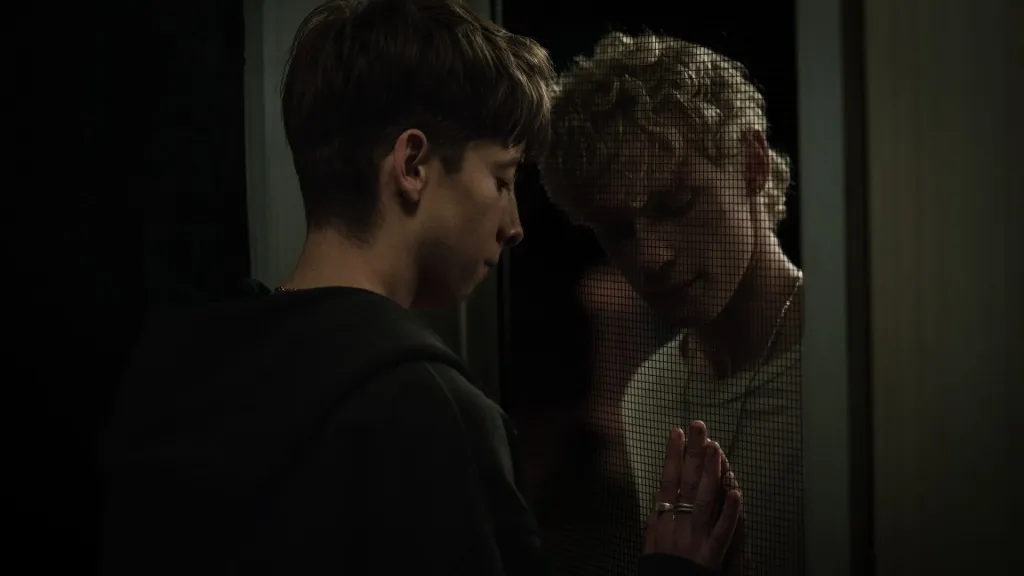
Adrian Chiarella wrote and directed the Australian horror feature Leviticus starring Joe Bird and Mia Wasikowska, premiering June 19, 2026. For decision-makers watching culture and media risk, it is a reminder that intolerance is not just theme, it is plot, and it lands hard.
Adrian Chiarella's Leviticus, one of the most buzzed-about movies out of Sundance this year, is built to move fast. It wastes no time dragging you from industrial-town normal into a supernatural system where religious fanaticism and homophobia do not stay metaphorical. The curse does not just punish. It stalks, mimics, and escalates until it gets the final, bloody outcome it seems determined to reach.
That core mechanism is what the film does with terrifying precision. Set in an industrial town in Australia, Leviticus follows Naim (Joe Bird) and his mother Arlene (Mia Wasikowska) as they settle somewhere she can feel closer to her spiritual home. Naim initially feels like an outsider, then befriends Ryan (Stacy Clausen). Their teasing turns into kissing, and that single shift from closeness to public “accusation” kicks off the story’s supernatural violence: Naim sees Ryan kissing another male classmate, tells on them to the church's pastor, and the pastor brings in a mysterious elder who curses the pair and sends them into convulsions. What matters is the sequel to that moment, revealed later: the curse creates unseen supernatural versions of their lovers that only the victim can see, and those entities are hellbent on killing them as the only way the curse subsides.
If that sounds like a remix of It Follows, that is because the film is clearly playing in that lane, but with a queer specificity that makes the fear feel personal rather than generic. Like It Follows, the threat is persistent, and like The Witch, the “believe hard enough and punish harder” energy suffocates the family in the center of it. In Leviticus, the killers look just like the people you love, which means the horror is not only about danger. It is about doubt. Even when you are sure the person in front of you is “real,” the curse is quietly training you to second-guess. In the film’s logic, separation becomes a survival strategy, because closeness makes the mimicry better and the hunters more lethal.
The most brutal second-order move the movie makes is to show that the community’s harm is not accidental. Nothing is really spoken aloud about the church's homophobia until it is time to punish “the accused” boys, and they are very much still children. The film frames the “justification” as law and order: Leviticus is one of the earliest books in the Old Testament, focused on what can and cannot be done, and what atonement should follow if some sin is committed. Forgiveness is not for the congregation to bestow, that's God's job, but punishment is theirs to administer. That justification is what the conversion counselor uses, first as something that looks like a scare-straight plan, but then as something the zealots cannot stop escalating.
For executives and investors, the interesting part is not the supernatural layer. It is the way the film connects systems of belief to systems of behavior that move like machinery. The boys sound the alarm about the process. Their parents do not believe the punishment is costing the children their lives or putting them in danger; they see it as a justified means of purification. That mismatch between what the harmed people say and what the institution decides is the engine of the story. The violence starts at home, with parents who “love their kids” while rejecting them for loving the wrong person. Then it expands outward into a community that is supposed to keep them safe but puts them in the line of hellfire. In other words, the horror is structural, not only personal.
Leviticus also leans into a broader historical register. The film’s embodied terror and confusion references the HIV/AIDS epidemic, which came at a heightened time of intolerance and disproportionately affected the LGBTQ community. The threat is palpable that every stolen kiss and moment of affection brings the deadly succubus closer to its targets. That is why the suspense tightens the more time the cursed couple spends together: the curse is not static. It adapts. It becomes more efficient at disguise, which turns romance into a risk assessment you cannot fully complete.
Stylistically, the movie supports that logic. Chiarella uses an industrial setting that feels remote enough that escape feels like hundreds of miles away, while still letting the boys sneak off into rural areas and abandoned factories for privacy. It is a claustrophobic small town, isolating and vulnerable, and the drab palette reinforces the world’s demand for monotony and conformity. It is unclear how extremist the Christian sect goes beyond virulent homophobia, but the visual shorthand is consistent: religious beliefs prevent bright shades, creating a concrete-colored aesthetic for a purgatory where “normal” is enforced by pressure.
Compared to other queer horror classics like Nightmare On Elm Street 2: Freddy's Revenge or the neo-giallo Knife + Heart, Leviticus chooses a different terror shape. It is not limited to a serial killer with a penchant for violence. The danger begins in the home and is administered through belief, interpretation, and punishment. To survive, the boys try repressing their crushes and themselves, because embracing intimacy may directly lead to death. And still, Chiarella gives the story at least one glimmer of hope: despite the terrors, including ones that wear their own faces, they still at least have each other.
For peers who build, fund, or distribute work in culture and media, Leviticus is a reminder that themes like intolerance are not “just content.” They become narrative physics. And when a film like this lands on June 19, 2026, the market conversation will not just be about scares. It will be about the stakes audiences recognize immediately: how institutions decide who is allowed to love, and what happens when love is treated like a punishable offense.
This story's Key Insights and Take-aways are locked.
Create a free account to unlock Executive Actions for one credit.
Register to UnlockAlways free for Executives Club members. Join the Club
More in Entertainment

Russell Brand's accuser 'bewildered and confused' as he denies 7 sex charges
The criminal case against the comedian is a live test of how media companies manage talent risk when serious allegations go public.

'It's a Magic Trick': Ballet Experts Say Rosalía's SNL Pose Is Impossible
Three ballet experts tell Rolling Stone Rosalía's gravity-defying SNL stillness shouldn't be possible - and why the debate is now part of the show.

Activision CMO: GTA 6 Will Boost Call of Duty, Not Bury It
Activision's top marketer says Rockstar's blockbuster will drive players back to consoles and into Modern Warfare 4, even as the company admits its recent strategy failed.