

Lewis Capaldi tells TRNSMT crowd: after summer, he’ll step away to write an album
The Glasgow headliner confirms a new full-length is in motion and explains the health crunch that kept him off tour.
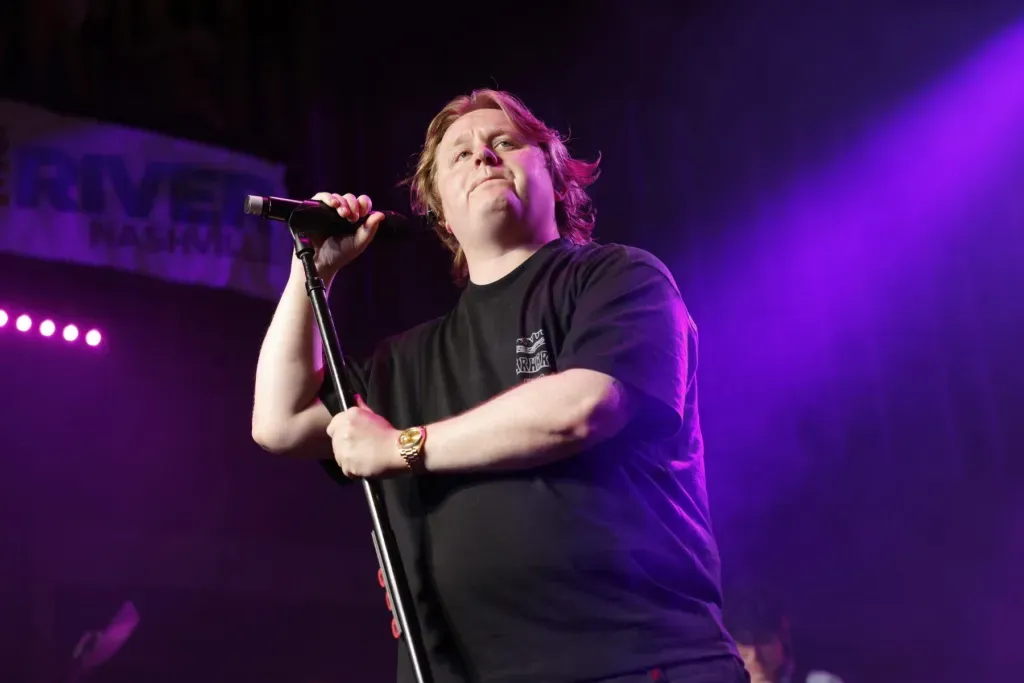
Lewis Capaldi used his TRNSMT Festival headlining set in Glasgow on Sunday night (June 21) to tell fans that after his remaining summer shows, he plans to step away again to focus on writing an album. For decision-makers tracking music careers, this signals both a near-term roadmap and the operational reality of protecting mental and physical health while building momentum.
Lewis Capaldi closed TRNSMT Festival in Glasgow on Sunday night (June 21) with a simple message that matters more than it sounds: after this summer, he is stepping away again to make an album. He told the crowd that “after this summer” he will “go away for a bit and make an album,” turning a headlining slot at Glasgow Green into a direct update on what is next for his catalog.
That confirmation lands in the middle of a comeback that has not been subtle. During an emotional set, Capaldi also spoke candidly about the difficult period that followed his last TRNSMT appearance in 2022, including the health struggles that pushed him back from touring and public performance. He said, “My mental health took a beating,” and added that he is now “back” and “feeling better.” Translation: the album news is real, but so is the reason it needed time.
To understand why this is strategically important for anyone operating in music, media, or live entertainment, it helps to look at how Capaldi’s last era unfolded. His second album, Broken by Desire to Be Heavenly Sent, arrived in 2023, and then he stepped back from the road after struggling with his mental and physical health. The headline promise here is not just “new music is coming,” it is the operational choice to pause touring while he writes, which is the unglamorous engine of longevity for artists who rely on live performance.
The proof points are specific. In 2023, Capaldi cut short his Glastonbury Pyramid Stage performance while dealing with tics caused by Tourette’s syndrome. The crowd famously helped him through “Someone You Loved,” and after that moment he announced that he would take an extended break to focus on his health. Since then, he has eased back into public life and live performance, including a surprise Glastonbury appearance last year and the release of “Survive,” his first new music since Broken by Desire to Be Heavenly Sent.
Now he is scheduling more summer dates, including major outdoor shows at BST Hyde Park and Roundhay Festival in July, plus performances in Liverpool, Newcastle, and at Sziget Festival. He has not yet announced a title, release date, or tracklist for the next album. Even without the usual rollout details, the TRNSMT comments function like an early signal to the market: the writing phase is the next milestone, and the touring phase is temporary.
For executives, the second-order implication is that planning for releases has to match the human calendar, not the calendar the business wishes it had. Capaldi’s earlier commercial run illustrates the stakes. “Someone You Loved” spent three weeks at No. 1 on the Billboard Hot 100 in 2019, earned a Grammy nomination for song of the year, and helped drive his debut album, Divinely Uninspired to a Hellish Extent, into global breakthrough territory. That kind of mainstream peak is rarely sustained by luck alone. It is sustained by an artist staying both creatively productive and operationally able to perform.
This is also why the story is bigger than one artist’s feelings. Live entertainment is a high-cadence industry where touring capacity, production timelines, and promotional windows are tightly coupled. When an artist steps back for mental and physical health reasons, it can ripple through venues, promoters, marketing schedules, and downstream partners who budget around tour momentum. Capaldi is not disappearing; he is redirecting. The message is not “no album,” it is “album after summer, after a writing pause.” That framing matters to anyone building plans on the assumption that visibility equals output.
There is no regulatory angle in the source that expands beyond health-related realities, but health constraints are a real constraint in practice. If you operate in live music, you have seen how quickly an artist’s condition can force last-minute changes, audience-facing edits, or altered set lengths. Capaldi’s Glastonbury incident and later extended break show what happens when health takes precedence, and his return shows what happens when the protective period does what it is supposed to do. In that sense, TRNSMT was not only a comeback stage, it was a credibility stage. “Back” and “feeling better” is a status update, but it is also the prerequisite for every other business decision that follows.
So the strategic takeaway for peers is straightforward. Capaldi’s clearest signals so far are: he has a new album in mind, he is using the remaining summer shows as a bridge, and he is willing to protect writing time by stepping away from constant touring. For executives watching how talent teams manage career durability, this is a reminder that the best long-term plan is not always the loudest one. Sometimes the plan is quiet, scheduled, and built around health. And sometimes, that plan still ends in an album announcement during a festival closer.
This story's Key Insights and Take-aways are locked.
Create a free account to unlock Executive Actions for one credit.
Register to UnlockAlways free for Executives Club members. Join the Club
More in Entertainment

Russell Brand's accuser 'bewildered and confused' as he denies 7 sex charges
The criminal case against the comedian is a live test of how media companies manage talent risk when serious allegations go public.

'It's a Magic Trick': Ballet Experts Say Rosalía's SNL Pose Is Impossible
Three ballet experts tell Rolling Stone Rosalía's gravity-defying SNL stillness shouldn't be possible - and why the debate is now part of the show.

Activision CMO: GTA 6 Will Boost Call of Duty, Not Bury It
Activision's top marketer says Rockstar's blockbuster will drive players back to consoles and into Modern Warfare 4, even as the company admits its recent strategy failed.