
Linus Torvalds tells Linux “not anti-AI,” then warns critics to fork or walk away
As Torvalds backs AI tools in Linux development, executives should read the message for how OSS governance handles cultural backlash.
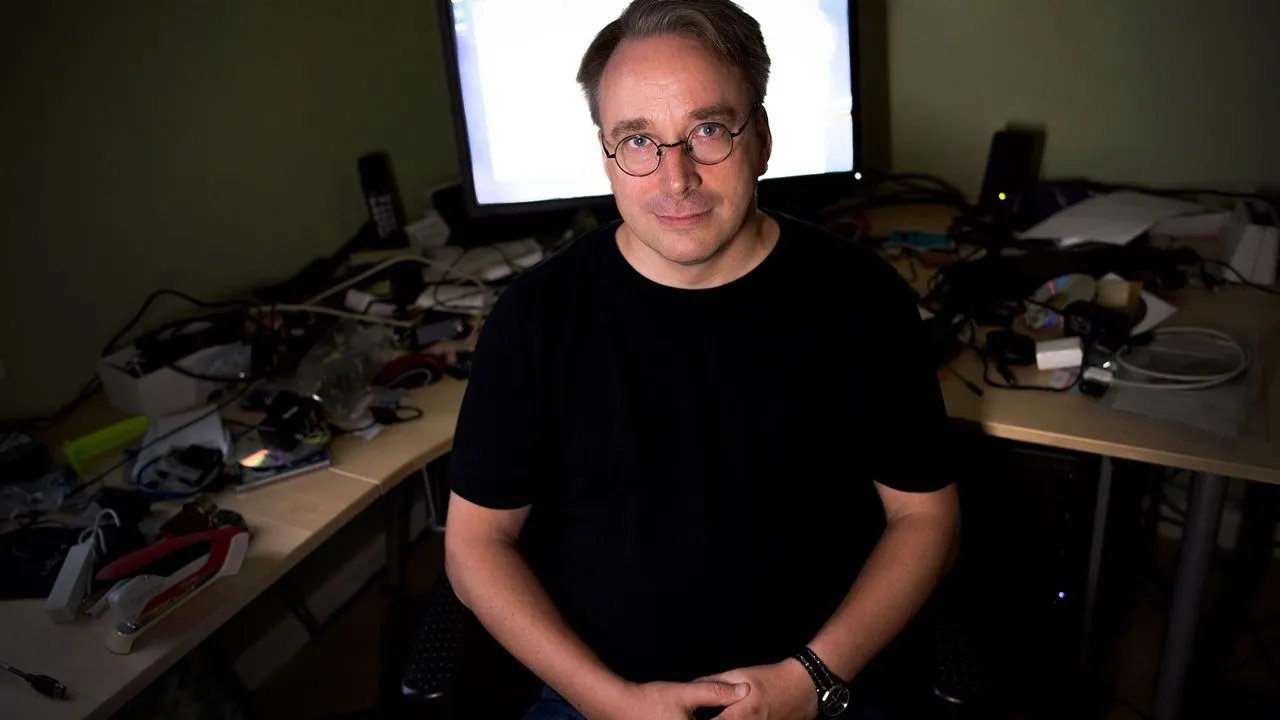
Linus Torvalds, top-level maintainer of the Linux kernel project, responded to discussion about Sashiko, an agentic Linux kernel code review system, and said Linux is not “one of those anti-AI projects.” His stance frames AI as a technical tool, while acknowledging costs and arguing decisions should follow technical merit, not fear.
Linus Torvalds did not mince words. In a response preserved for Linux kernel mailing lists via lore.kernel.org (reported by The Register), he said Linux is “not one of those anti-AI projects,” and he told people who dislike it to either fork their distro or “just walk away.” For anyone watching the AI debate spill into open source, that is a governance shockwave: the person who can set direction for one of the world’s most consequential codebases is explicitly rejecting the idea that Linux is anti-AI.
Torvalds’ argument is bluntly pragmatic. “We make decisions primarily based on technical merit. Not fear of new tools,” he wrote, also adding that he will “very loudly ignore people who try to argue against other people from using it.” The headline stake is real, because “ignore” is not passive neutrality in a maintainer’s world. It signals how disputes get resolved when technical leadership decides the cultural temperature is being used as a veto tool. And he does not pretend AI is flawless: he says it can be “a somewhat painful tool,” including from a maintainer workload perspective, and because it “keeps finding embarrassing bugs.”
To understand why this matters beyond the Linux fandom, it helps to see what AI adoption actually does to open source operations. Kernel maintenance is an exhausting pipeline: security reports, bug triage, patch review, and the constant need to separate genuine issues from noise. Torvalds previously lamented that using large language models to find bugs was wasting the Linux team’s time, describing the “continued flood of AI reports” that made the security list “almost entirely unmanageable,” with “enormous duplication” because different people were finding the same things with the same tools. That earlier criticism, plus today’s “not anti-AI” stance, is the through-line: Torvalds is not declaring AI always good. He is saying AI is a tool like any other, and the project will judge it on outcomes.
In his Sashiko exchange, Torvalds explicitly ties his new openness to how AI’s usefulness has changed over time. He wrote that AI “is a tool, just like other tools we use,” and that it may not have been “clearly” useful “even just a year ago,” but it is “no longer in question today.” That is an important nuance for executives. A lot of companies treating AI as a moral category instead of an engineering category get stuck: they either ban it as “unsafe” or shove it everywhere as a hype story. Torvalds is effectively running the boring, hard test: does it help? When it hurts, it hurts. When it helps, it helps. The maintainer job is to keep the system running, not to keep a cultural narrative clean.
This approach is also a strategic signal to anyone building developer infrastructure. The mention of Sashiko matters because the kernel ecosystem is not just about code. It is about workflows that help humans scale: code review support, security triage, and faster feedback loops. Torvalds notes the kernel project “has been and will continue to be about the technology,” which is a governance philosophy as much as it is a statement of focus. In open source, “technology-first” often becomes a proxy for “decision-making based on evidence,” but the friction comes when community members try to shift the frame from engineering results to ethical or political objections. Torvalds is drawing a line and then drawing a map: you can fork, or you can leave, but you cannot turn opposition into a controlling veto.
There is also a longer arc here. During the Open Source Summit in 2024, Torvalds described AI as “90 per cent marketing and ten per cent reality,” and he urged people to “wait 10 years and see where it actually goes before we make all these crazy announcements.” In the newest missive, that patience has compressed. He argues that today it is “clearly” useful, and he frames objections as needing self-reflection, writing: “Christ, anybody who points to the problems at AI had better be looking in the mirror and pointing at themselves at the same time. Because it's not like natural intelligence is always all that great either.” Even if you are not a kernel person, that line tells you how he sees the argument: critiques about AI are often really critiques about people, incentives, and quality control.
For executives and boards, second-order implications show up in three places. First: governance. When a maintainer or platform owner decides “technical merit” beats “fear of new tools,” the community learns how future disputes will be resolved. That can reduce uncertainty and speed adoption, but it can also raise the stakes for how you communicate. If stakeholders expect moral consensus but get engineering triage instead, expect fork dynamics. Second: workload and signal quality. Torvalds is candid that AI can create pain, including duplication and noise, which means AI strategies need filtering, tooling design, and operational discipline, not just procurement. Third: regulatory and reputational framing. Regulators often push toward safety and transparency, while platform leaders push toward pragmatism and outcomes. Torvalds’ stance is a reminder that in the real world, “AI governance” is not just about compliance. It is also about who gets to steer, and what criteria they apply when culture gets loud.
So what should decision-makers take from this? If you are leading a software org, an investment portfolio touching developer platforms, or a company that relies on open source supply chains, the kernel world is telling you something concrete: AI debates will not stay in theory. They will land in workflows, review queues, and security lists. Torvalds’ bottom line is a call to action, even if it is delivered as a challenge: AI is here to be used, measured, and improved. And if you try to block other people from using it, you should expect to be ignored or overtaken. Linux will not freeze over cultural controversy. It will keep moving, and it will judge the result, not the rhetoric.
This story's Key Insights and Take-aways are locked.
Create a free account to unlock Executive Actions for one credit.
Register to UnlockAlways free for Executives Club members. Join the Club
More in Technology

Google quietly links your phone number to every Android account on your SIM
Adding a SIM now ties your phone number to all Google accounts - and future accounts inherit it. Here's the security and privacy stakes.

Hijacker AI 'Skynet mode' runs 100,000 attack steps against exposed models
Symantec caught a criminal AI agent that borrows other models, steals data, and mines crypto; the only relief is no confirmed victims yet.

Nvidia's AI-financier shift faces its first big test as neoclouds stumble
A rout in neocloud stocks is forcing investors to weigh Nvidia's hidden exposure as both supplier and lender to the AI buildout.