

Living plastic self-destructs in 6 days, engineered bacteria break it down fully
Single-use plastic waste gets a potential new exit route, and it avoids microplastics during the process.
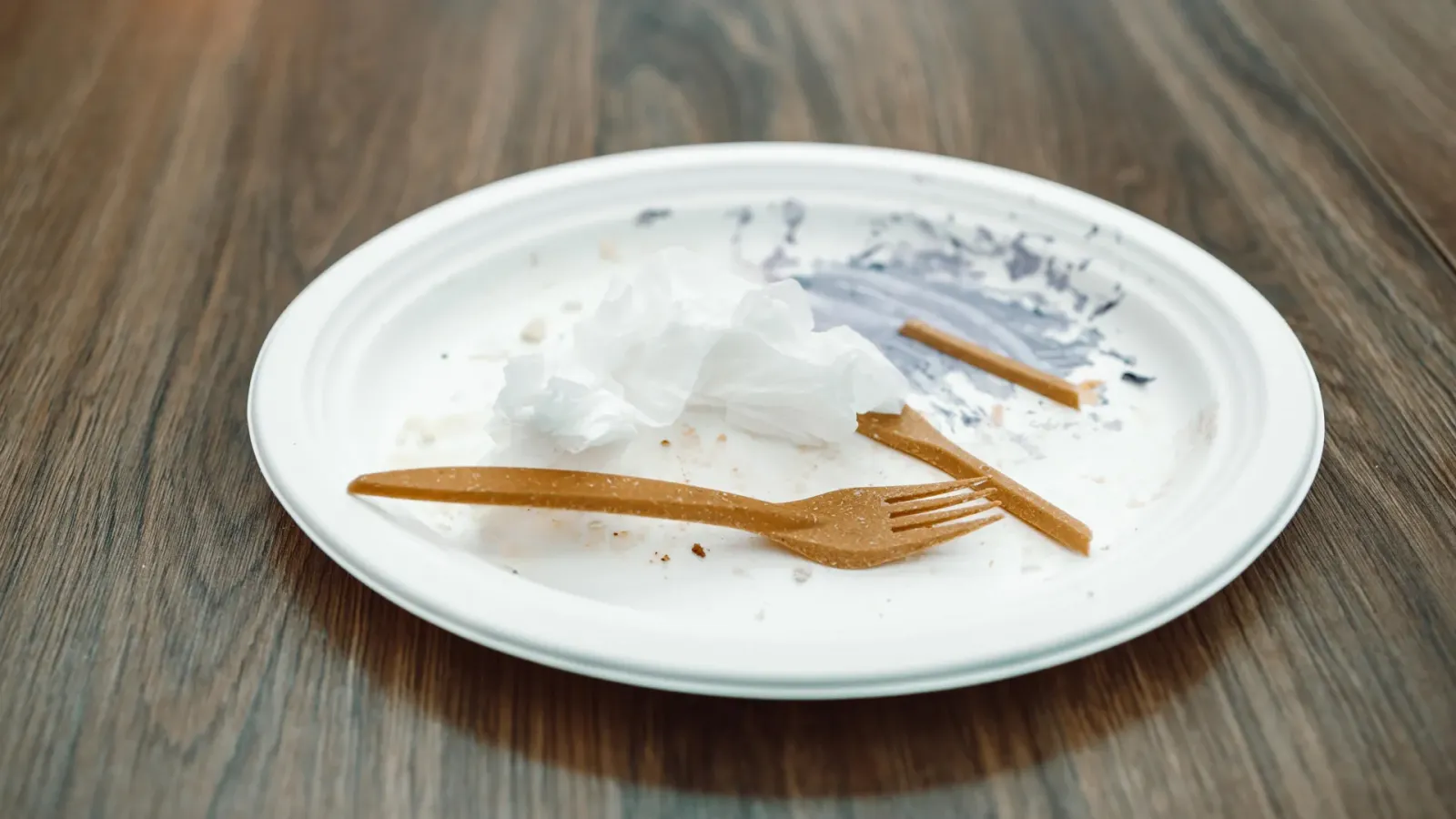
Researchers created self-destructing living plastic that uses engineered bacteria to completely break itself down when activated. The material degrades in just six days without creating microplastics, pointing to a potential new solution for single-use plastic waste.
A team of researchers says it has built a new kind of material: “self-destructing living plastic” that breaks down after activation, and it does that fast. The key claim is blunt. It degrades in just six days, and it does not create microplastics in the process. Instead, engineered bacteria do the heavy lifting by consuming or breaking the material until it is gone.
That combination, six days plus no microplastics, is the reason this matters for decision-makers. In most plastic “end-of-life” thinking, the problem is not that plastic never disappears. The problem is that it usually doesn’t disappear cleanly. It fragments into smaller pieces, and those fragments are the microplastics that regulators, researchers, and the public keep circling back to. This new approach is trying to solve the “fragmentation” failure mode by having the material self-destruct completely after activation.
So what is “living plastic,” in practical terms? According to the source, it is a plastic that uses engineered bacteria. The bacteria are integrated into the material so that once activated, the system degrades the plastic fully. The important part for commercial and regulatory audiences is not the poetic framing. It is the measurable outcome the researchers are emphasizing: degradation in six days, and no microplastics left behind. If those claims hold up under broader testing and scaling, the technology targets one of the biggest gaps in single-use plastics, which are designed to be used once and then discarded.
To understand the stakes, zoom out to how single-use plastic has been managed for years. Most of the ecosystem is built around collection, sorting, recycling, and disposal. Even where recycling works, it has limits. Contamination, economics, and polymer complexity reduce what can realistically be reprocessed. Landfilling and incineration avoid some of the recycling constraints, but they come with their own concerns, including environmental persistence and emissions tradeoffs. In that context, a material that can fully break down without producing microplastics is not just “a better plastic.” It is a potential redesign of the entire end-of-life equation.
There is also a regulatory dimension. Microplastics have become a focal point in policy discussions because they are hard to contain once they enter air, water, soil, and food systems. That means any credible alternative that reduces microplastics formation can look attractive to regulators and risk managers. The source does not mention specific regulators or dates, but the underlying logic is straightforward for executives: if a technology can reduce the likelihood of microplastic generation, it may face fewer compliance headaches than materials that fragment during degradation.
Boards and investors should also think about second-order implications for product strategy and disclosure. Single-use categories, especially packaging, have been under pressure from both regulation and brand scrutiny. If a “self-destructing” material truly avoids microplastics, companies could reposition the narrative from “we recycle when possible” to “the product is engineered to stop being a pollutant after activation.” That shift can influence how leadership structures sustainability targets, how they price externalities into product decisions, and how they communicate environmental performance to customers and regulators.
Finally, there is a deployment question hiding under the excitement: activation. The source says the material breaks down when activated, but it does not specify activation conditions in the provided text. For executives, that is a critical detail because real-world waste streams are messy. A successful company-level rollout would need activation to reliably occur in relevant disposal or recovery environments, not in the middle of normal use. Still, the researchers' central claim is the starting point: a living plastic that degrades in six days and does not create microplastics. If subsequent work validates the mechanism at scale, it could become a meaningful lever for reducing the footprint of single-use plastics.
In short, this is a technology that tries to solve two problems at once: speed and completeness of breakdown. Six days is fast enough to suggest operational viability, at least in principle. And “without leaving microplastics” is the line that changes the compliance math. For leaders across consumer goods, packaging, materials science, and sustainability, that combination is worth close attention because it could reshape what “end-of-life responsibility” even means for single-use products.
This story's Key Insights and Take-aways are locked.
Create a free account to unlock Executive Actions for one credit.
Register to UnlockAlways free for Executives Club members. Join the Club
More in Science

Scientists confirm a habitable-zone, rocky exoplanet atmosphere like Earth’s
A new Earth-like discovery sharpens the roadmap for future telescopes, funding, and standards for what “habitable” really means.

Nickel isotopes pin down the “oddball” CO meteorite tied to the dinosaur-kill
Researchers narrowed the 66-million-year-old impactor’s composition using advanced nickel isotope analysis, with Science Advances as the paper.

Alberto Borges finds methane-eating river bacteria help, but global warming still wins
Study compares Belgium and African rivers: microbial oxidation reduces methane, yet falls short against rising emissions and nitrate pollution.