

Local composters turn food waste into bedding, keeping waste like water in communities
A BBC look at compost champions shows why treating food waste as a community resource beats exporting the problem.
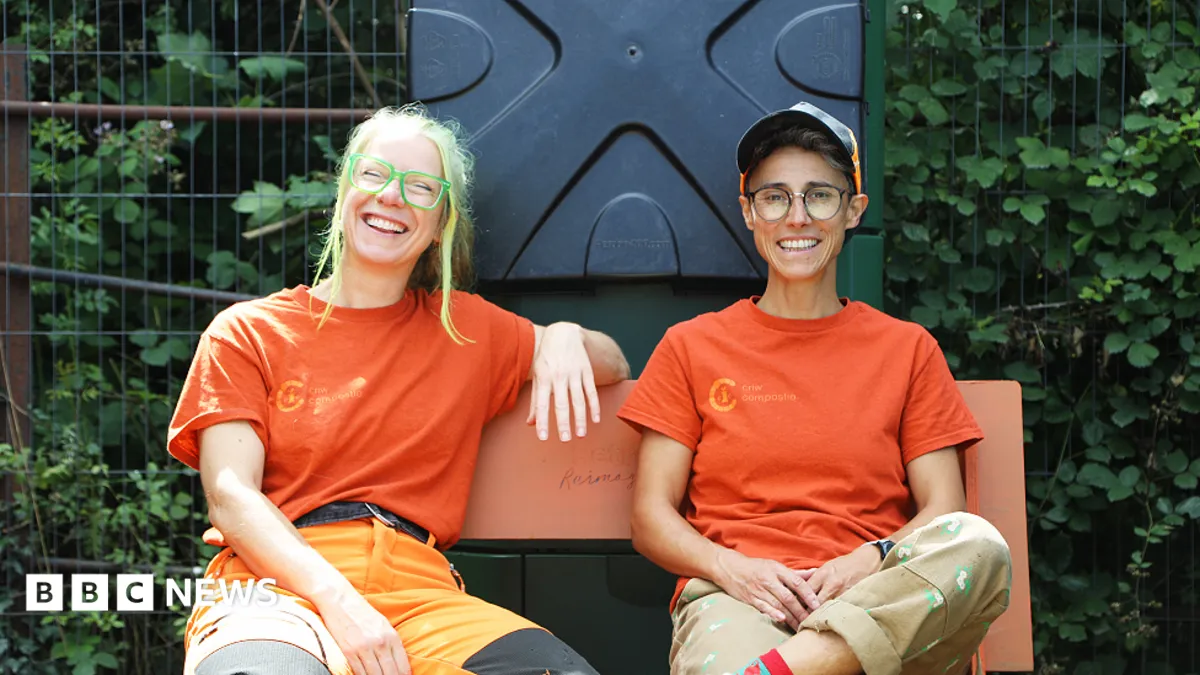
Compost champions featured by BBC News argue that food waste should be treated as a resource, “like water,” and kept local through community composting. For decision-makers, the core consequence is operational and regulatory: where waste goes shapes costs, compliance, and local resilience.
Food waste is not just trash, compost champions say. It is a resource like water, and it should stay in communities instead of being shipped away and handled at arm's length. That framing is the through-line of the BBC News feature on “composters keeping it local,” including creative uses like turning coffee grounds into guinea pig bedding.
The point is practical. The story highlights how local composters can convert everyday scraps into usable outputs, rather than treating waste as a one-way trip to disposal. Coffee grounds, for example, are not just the end of the line. In this local model, they become input for composting systems that produce bedding, helping keep materials in circulation where they are generated.
This matters because food waste behaves differently than many other categories of waste. Food waste is wet, bulky, and often expensive to move and process. When communities handle it locally, the incentives can shift from pure disposal cost minimization to resource recovery. In plain English, that means the local compost chain becomes less like “collect and remove” and more like “collect and convert.” Outputs like compost can also support local gardening, soil health, and practical uses inside community networks, which strengthens the case for systems that do not externalize the messy parts of the problem.
There is also a regulatory and policy backdrop that keeps showing up around waste. Across many places, regulators push for waste reduction and diversion from landfill. They also tend to encourage higher-value treatment routes when they can be monitored and managed safely. Even when the policy language varies, the direction is consistent: less landfilling, more recovery, more accountability. Community composting is one of the approaches that can align with those goals, because it can be designed to capture materials that otherwise disappear into disposal streams.
The BBC feature positions “keeping it local” as an ethical and operational stance at the same time. Calling food waste a resource “like water” is a deliberate comparison: water is managed, reused when possible, and treated as a shared asset rather than a nuisance to be dumped. Applying that logic to food waste implies that communities should build capacity to handle the resource locally, rather than relying on distant processors or infrastructure that may be overburdened.
For executives and boards, this kind of framing is not just a feel-good slogan. It signals a risk shift in how organizations think about waste programs, vendor relationships, and the resilience of sustainability plans. If food waste is treated as a commodity-like input, then the operational question becomes: do you have a local pathway that is reliable, safe, and scalable enough to handle your volume? Do you have the partnerships and systems to keep that loop intact, especially during disruptions? Companies that treat waste purely as an external cost may find themselves exposed to changes in policy, pricing, or service availability.
There is a second-order effect too, one that shows up in how initiatives get approved. Local composting often requires coordination at the community level, which can create friction between stakeholders who each control different pieces of the process, from collection to processing to permitted use of outputs. Boards and leadership teams can use that reality as a diagnostic tool. When a waste initiative relies entirely on outsourced disposal, it can look simple on paper. When it depends on a local ecosystem, it becomes a governance problem as well as an operations project, which means it needs clearer ownership, performance measures, and contingency planning.
Ultimately, the strategic stakes are simple. In a world where regulators, customers, and internal targets are increasingly focused on what happens after materials are generated, “keeping it local” offers a model for turning waste into something communities can use. The BBC story is, in that sense, a blueprint for how compost champions are trying to shrink the distance between creation and recovery. And for peers trying to build durable sustainability programs, it raises the question: are you treating food waste as a dead end, or as a resource that can strengthen local systems?
This story's Key Insights and Take-aways are locked.
Create a free account to unlock Executive Actions for one credit.
Register to UnlockAlways free for Executives Club members. Join the Club
More in Science

Alaska's 1,580-foot tsunami had warning signs. Scientists just found them.
Rapid glacier retreat, heavy rainfall, and thousands of tiny tremors preceded Alaska's 1,580-foot tsunami, a warning for every coastal community in a warming world.

The rare mutation that lets high-risk brains dodge Alzheimer's
Scientists found a natural defense against protein buildup, opening a new path to preventive treatments.

3,000 steps a day may halve Alzheimer's decline, study finds
New research links a modest daily walk to less tau buildup and nearly half the cognitive and functional decline, even for those with early signs.