
London mathematicians formalize Fermat's last theorem with AI, faster than expected
An event in London says AI is accelerating proof formalization, raising questions for how we validate math and software.
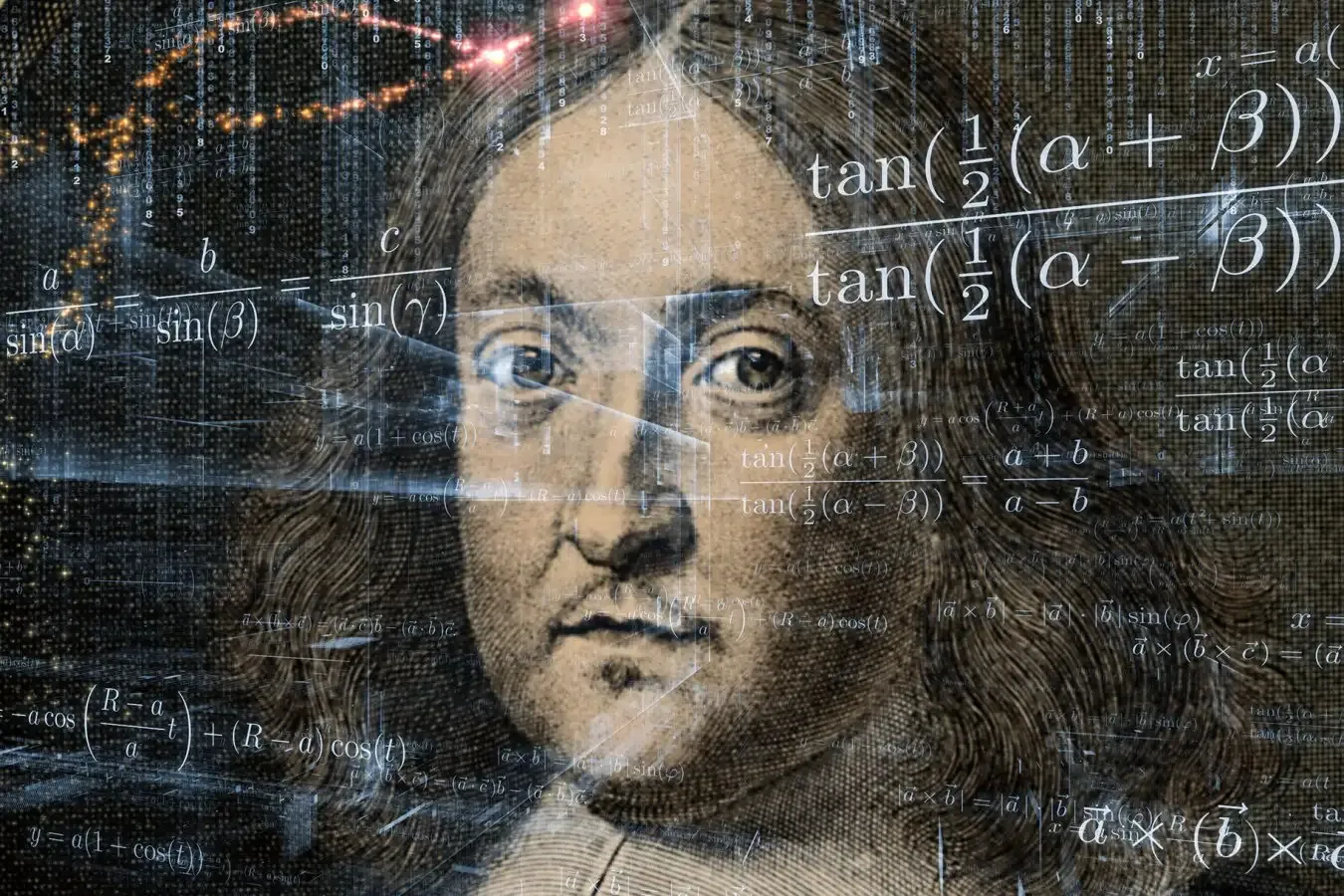
Mathematicians at an event in London reported unexpectedly fast progress formalising Fermat's last theorem using AI. For decision-makers, the shift matters because proof-checking is the same cultural muscle behind high-stakes software and regulated systems.
At an event in London, mathematicians said they have made unexpectedly fast progress formalising Fermat's last theorem using AI. “Formalising” is the key word. It means not just arguing that the proof is correct, but translating the argument into a form that a computer system can check. In other words, AI is being used to help turn a famous human proof milestone into something closer to an auditable artifact.
This is why the speed matters. Traditional math proof work, especially proof formalisation, is often painstaking, with enormous amounts of detail that humans and proof assistants must line up perfectly. The claim here is that AI is compressing that timeline, and doing so quickly enough to be described as unexpectedly fast by the organisers and participants reported by New Scientist. For executives watching automation trends, that is a big signal: the frontier is moving from “AI writes content” to “AI helps produce verifiable correctness.”
To understand the stakes, you have to know what proof formalisation represents in the real world. Proof assistants and formal methods are not just academic toys. They are the backbone of a culture shift toward machine-checkable guarantees, the sort of thing that can reduce ambiguity in domains where errors are expensive. Think safety-critical software, cryptographic protocols, and other areas where “we think it works” is not a compliance strategy. AI-assisted formalisation is, in effect, an attempt to lower the cost of correctness, not just increase the output of human thinkers.
There is also a governance angle. When work becomes machine-checkable, the standards for review change. Boards and risk committees tend to ask: who is accountable if the model made the first draft? In formalisation, the workflow still has checkpoints, but the bottleneck shifts. Instead of spending all the time on the most tedious logical plumbing, teams can spend more time on verifying that the AI-assisted proof scripts align with the intended mathematics. That is a subtle but meaningful change in incentives. It can speed up progress, but it also increases the importance of auditability, traceability, and reproducibility.
Regulatory framing, even when it is not explicitly mentioned in the report, is hard to ignore once you think about what formal proofs try to achieve. Regulators and standards bodies increasingly care about evidence and repeatability, not just claims. In that sense, an AI tool that helps formalise a landmark theorem hints at how compliance could evolve for software systems: less reliance on human intuition, more reliance on machine-checked artifacts. That does not automatically make outcomes safer, but it creates a pathway where “verification” is more than a checkbox.
The second-order implication for executives is that this could change who wins in tech adjacent to math. Formalisation is one of those underappreciated layers where engineering maturity shows. If AI reduces the time to produce checked proofs, then teams with strong verification infrastructure could get disproportionately better results, faster. That can widen the gap between organizations that treat correctness as a first-class engineering concern and those that treat it as a later-stage quality activity.
And because this story is about Fermat's last theorem, it carries extra symbolic weight. The theorem is one of the best-known examples of difficult, long-form mathematical reasoning. If AI can help accelerate formalisation here, it suggests AI can tackle the hard parts of converting reasoning into structured, checkable steps. That is not a guarantee that every theorem will be easy, or that AI will always produce usable proof scripts on the first attempt. But the reported “unexpectedly fast progress” is exactly the kind of signal that tends to ripple through research, tooling, and eventually product roadmaps.
So what should leaders do with this? First, recognize that the narrative is shifting. The future is not only AI generating answers, but AI contributing to validation pipelines. Second, treat formalisation and proof-checking as a bellwether for how correctness can be operationalized. For boards and executives in the AI era, the question is no longer “can the model solve problems?” It is “can the organisation build systems where correctness is demonstrable, reviewable, and resilient when the model is part of the process?”
This story's Key Insights and Take-aways are locked.
Create a free account to unlock Executive Actions for one credit.
Register to UnlockAlways free for Executives Club members. Join the Club
More in Science

Alaska's 1,580-foot tsunami had warning signs. Scientists just found them.
Rapid glacier retreat, heavy rainfall, and thousands of tiny tremors preceded Alaska's 1,580-foot tsunami, a warning for every coastal community in a warming world.

The rare mutation that lets high-risk brains dodge Alzheimer's
Scientists found a natural defense against protein buildup, opening a new path to preventive treatments.

3,000 steps a day may halve Alzheimer's decline, study finds
New research links a modest daily walk to less tau buildup and nearly half the cognitive and functional decline, even for those with early signs.