

Los Cocos housing collapses after double quakes, engineers urge audits of all similar public buildings
Two earthquakes flattened parts of a 1,100-unit complex. The missing piece is what happens next: fast, broad structural audits.
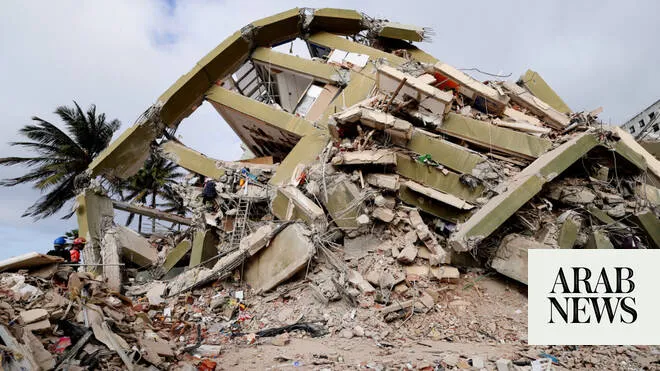
After two back-to-back earthquakes flattened parts of the 1,100-unit Los Cocos complex in La Guaira, engineers urged the Venezuelan government to audit similar public housing still standing. For decision-makers, the catastrophe spotlights weak enforcement, risky geography, and delayed assessments that can turn recovery into a long tail of preventable failures.
LA GUAIRA, Venezuela: After two back-to-back earthquakes flattened parts of the 1,100-unit complex known as Los Cocos, engineers are urging the Venezuelan government to swiftly audit similar public housing that is still standing.
The stakes are immediate, not theoretical. Residents described a scene where building safety turned into a question of who happened to be home. Yelsa Rojas, who has lived since 2015 on the second floor of the building called ‘Los Cocos’ for its proximity to a nearby beach, said she lost her whole apartment and believes “everyone on the second floor is dead,” adding that she survived only because she was at a medical appointment when the quakes hit.
Engineers and construction specialists said it is too soon to declare exactly why individual buildings collapsed. But they pointed to a blend of factors that, together, increase the odds of failure: decades of neglect, a lack of enforcement of building codes, and shoddy licensing practices during the presidencies of late Hugo Chávez and his successor, Nicolás Maduro. The location itself is part of the risk profile. Los Cocos is in La Guaira, where soil instability makes the geography especially hazardous for construction.
And the audit question is stuck on an uncomfortable timing problem. As rescuers race to find those buried in rubble, civil engineers fear other buildings might still be vulnerable after the quakes. They want the government to ensure structures are structurally sound so residents can safely live there. So far, the government has met with the country’s main professional engineer association, but has not begun assessments, frustrating some volunteer engineers.
“It’s criminal that the government is not taking up offers from engineers and universities more quickly,” said Enrique Larrañaga, an architect and urban planner at Simon Bolivar University, who said he has provided guidance to the government on national development. Venezuela’s Communication Ministry did not respond to a request for comment. On Sunday, interim President Delcy Rodriguez announced she was putting together a commission to evaluate damaged housing structures, but she did not say when evaluations would begin. Meanwhile, criticism has already focused on slower-than-needed deployment of heavy equipment and search-and-rescue teams earlier, leaving residents to use their hands, shovels, and ropes in the crucial first days.
By Saturday, state TV showed heavy construction equipment sorting through crushed brick and concrete. Residents said foreign rescue teams helped pull out bodies, and called for reinforcements. Engineers like Glennys Gonzalez, an architect and civil engineer coordinating dozens of professionals, said volunteer groups have stepped in because the government had not yet begun its own assessments. Her group’s initial assessment suggests that codes were not adhered to in many cases, but she said studies still must be done to determine why some structures held up while others completely collapsed.
Part of why this disaster carries a long operational tail is that La Guaira has a history of extreme ground failure. The region was the site of another of Venezuela’s worst natural disasters in 1999, when mudslides wiped out entire coastal communities, killing between 10,000 and 30,000 people. According to Richard Casanova, director of Venezuela’s College of Engineers, steep mountains drop sharply to a narrow coastal strip in the area. That funnel effect channels floods and landslides directly through populated areas. The soil is soft, and in the context of earthquakes it is particularly prone to destruction during seismic shaking.
Technical explanations matter here because they influence what an audit should check. Nicolás Labrópoulos, a civil engineer and professor at Universidad Católica Andrés Bello in Caracas, said loose sand, gravel, and debris can make seismic waves travel more slowly while increasing intensity, amplifying shaking. Casanova added that trapped between mountains and the sea, the soil can become more fluid during an earthquake, increasing construction risk. He also noted that many private developments have collapsed, likely due to a mix of soil weaknesses, years of corrosion, and lack of quality control. Older buildings might also not have been retrofitted to withstand impact after the government updated codes following a 1967 earthquake.
Casanova’s core point is less about whether the code exists and more about whether the system enforces it. “You can build there,” he said, “but you have to really adhere to strict codes,” and he said he doubts many cases given how the government has handled construction over the past two-and-a-half decades. After La Guaira’s 1999 catastrophe, the government updated construction laws and building codes, but Casanova argued the real problem is enforcement, not the written rules.
The incentive structure behind that enforcement gap helps explain why this is not just a local tragedy. Chávez’s government began building complexes like Los Cocos right before the country’s 2012 elections as part of a push to erect millions of cheap units across the nation, with Maduro continuing the project and expanding access to housing for low-income Venezuelans. As power centralized, engineers and architects said institutions became weaker, quality controls over new construction and maintenance weakened, and oversight gaps widened. Developments were built quickly through a mix of state agencies and contractors from China, Türkiye, and Belarus under military oversight but with little public disclosure, Gonzalez and Casanova said.
When public buildings get built fast with weak supervision, it can also spill over into private development behavior. Casanova said the lack of enforcement in public buildings signaled to private builders they could get away with cutting corners. He contrasted Venezuela with countries like Chile, where rules are more rigorously enforced and death tolls have been relatively low. He cited a magnitude-8.8 earthquake in Chile in 2010 that killed about 525 people, widely attributed to strict, well-enforced building codes, and contrasted it with Haiti’s 2010 magnitude-7.0 quake, where a weaker shake killed hundreds of thousands, with outcomes associated with shoddy construction and corruption schemes.
For executives, investors, and operators tracking infrastructure risk, the Los Cocos story is a reminder that compliance is not paperwork. It is a workflow: oversight, inspection, public disclosure where appropriate, and a capability to respond fast when nature does its worst. With Venezuelan officials confirming at least 1,719 people dead, 5,034 injured, and 15,866 left homeless as of Monday after the 7.2-magnitude and 7.5-magnitude earthquakes, and citizen-led efforts collecting nearly 50,000 names, the window for preventing additional harm is narrow. The strategic stakes are straightforward: delayed assessments and uncertain quality control can turn rebuilding into repeat losses, block by block, building by building.
This story's Key Insights and Take-aways are locked.
Create a free account to unlock Executive Actions for one credit.
Register to UnlockAlways free for Executives Club members. Join the Club
More in Business

Comcast shares jump 25% as it plans to split NBCUniversal and Sky
The tax-free spin-off could reshape focus, funding, and competition across media and tech for years.

Bungie cuts most Destiny 2 staff as Sony says Marathon still matters
Herman Hulst confirms layoffs affecting most Destiny and some Marathon teams after Bungie admits Destiny fell short.

SK Hynix jumps 11% after seeking up to $29.4B in Nasdaq listing
The chip giant filed for a Nasdaq listing plan that could raise $29.4 billion, instantly reshaping investor expectations.