
Macron honors George Lucas, Jodie Foster, Sigourney Weaver, and Chris Meledandri today
Legion of Honor lands at the Elysée Palace, turning film and animation leaders into state-level cultural signals for investors.
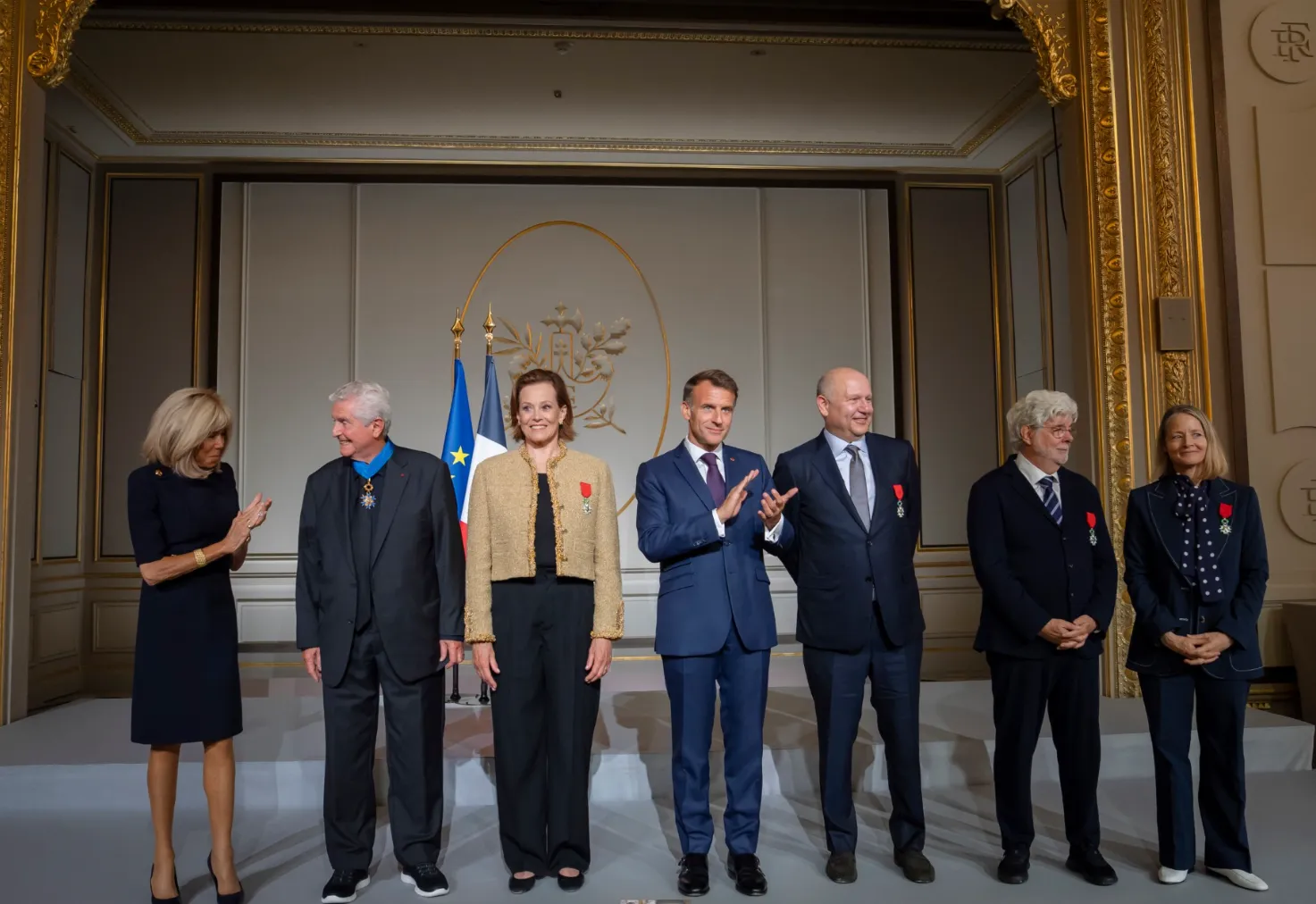
George Lucas, Jodie Foster, Sigourney Weaver, Illumination founder and CEO Chris Meledandri, and French filmmaker Claude Lelouch were awarded the Legion of Honor at the Élysée Palace in Paris by President Emmanuel Macron earlier today. The ceremony elevates major global media figures into France's most storied recognition, with ripple effects for cultural policy, industry partnerships, and cross-border production strategy.
Earlier today, President Emmanuel Macron awarded the Legion of Honor at the Élysée Palace in Paris to George Lucas, Jodie Foster, Sigourney Weaver, Illumination founder and CEO Chris Meledandri, and French filmmaker Claude Lelouch. That is a mouthful of names, but the real point is simple: these are not just famous creators, they are global brand engines, and today the French state put its seal on that engine room.
If you associate awards like this with a ceremonial curtain instead of actual business gravity, that assumption is about to get tested. Lucas, Foster, Weaver and Meledandri were presented with the Legion of Honor by Macron at the palace. The Deadline write-up frames it with the kind of pop-cultural shorthand you can feel immediately, cue the “Victory March” theme from Star Wars, but the institutional meaning is bigger than Star Wars nostalgia. France is using a historic honor to spotlight people who shape worldwide attention, entertainment distribution, and audience demand.
To understand why this matters beyond the photo op, you have to remember how cultural recognition travels in media. Awards and state honors are not box office. But they can be leverage. They help create durable “who is trusted” signals for studios, distributors, and partners looking for long-term relationships. When a government recognizes a creator tied to mass-market franchises, the message lands with decision-makers on the other side of the screen. It suggests that the honoree is aligned, at least in the public narrative, with the values and prestige the state wants attached to its cultural ecosystem.
There is also a very practical industry angle here: these recipients sit at different points in the modern content supply chain. George Lucas is synonymous with blockbuster world-building. Jodie Foster and Sigourney Weaver represent high-profile acting talent with long careers that span mainstream and awards gravity. Chris Meledandri, as the founder and CEO of Illumination, connects the honor to a studio model that has proven the ability to sell animated storytelling at global scale. And Claude Lelouch, known for A Man and a Woman, brings the auteur tradition that often anchors European cultural legitimacy.
That mix is not random, even if the ceremony is. It reads like a strategic portfolio of influence across genres and formats: franchise spectacle, prestige performance, animation as global pipeline, and classic French cinema heritage. When the state selects names like these, it is effectively acknowledging that modern media dominance is plural. Not one style, not one market, but a network of creators whose work travels across borders.
Second-order implications for executives and boards follow quickly. A state honor can grease partnerships without formally changing any contract. It can make co-production discussions feel less like a pitch and more like a shared alignment. It can also affect how governments interpret the “cultural value” of a project when policy and public funding conversations come up. In practice, executives who are negotiating location, talent access, or distribution alliances know that perception matters. Recognition like this can become a reference point in internal debates: not evidence of revenue, but evidence of standing.
There is another subtle point for decision-makers who track risk. Honors rarely come with operational terms, yet they can influence stakeholders. Talent teams, brand sponsors, and distributors may read the ceremony as a sign that the recipient is lower political risk and higher cultural visibility. That can matter when budgets are large and timelines are long. For example, the film and animation ecosystem often requires complex coordination across countries, regulations, and rights structures. When the public sector puts a stamp on global players, it can change the tone of those cross-border conversations.
Finally, this is a reminder that media is now treated as a strategic cultural asset, not just entertainment. Macron’s presentation at the Élysée Palace in Paris is the kind of event that signals where France wants its narrative to sit in the global conversation. For peers, the strategic takeaway is clear: creators and studios with worldwide reach are increasingly interacting with state institutions. The winners are not only those who make content, but those whose influence can be recognized by governments and turned into durable partnership credibility.
This story's Key Insights and Take-aways are locked.
Create a free account to unlock Executive Actions for one credit.
Register to UnlockAlways free for Executives Club members. Join the Club
More in Entertainment

12TB Steam 'teraleak' goes beyond Valve: GTA 3, Mafia 2 prototypes exposed
A 12-terabyte dump of Steam data reveals prototypes and builds of third-party classics like GTA 3 and Mafia 2, plus unreleased Valve content, rewriting game history.

LinkedIn's romance problem: 1 in 4 workers say dating on it is fair game
A new survey shows a quarter of U.S. employees treat the professional network as fair game for romance, even as LinkedIn bans it and removes hundreds of thousands of offending posts.

Enhypen's first No. 1 album breaks K-pop's Billboard 200 streak
The K-pop group's 98,000-unit debut tops the chart while Dolly Parton's catalog reentry shows how death reshapes streaming.