
Macron makes Keir Starmer the first UK PM to get France’s Légion d’honneur
Why a top French award for Starmer is really about Europe’s Ukraine security coalition at a turning point in 2025.
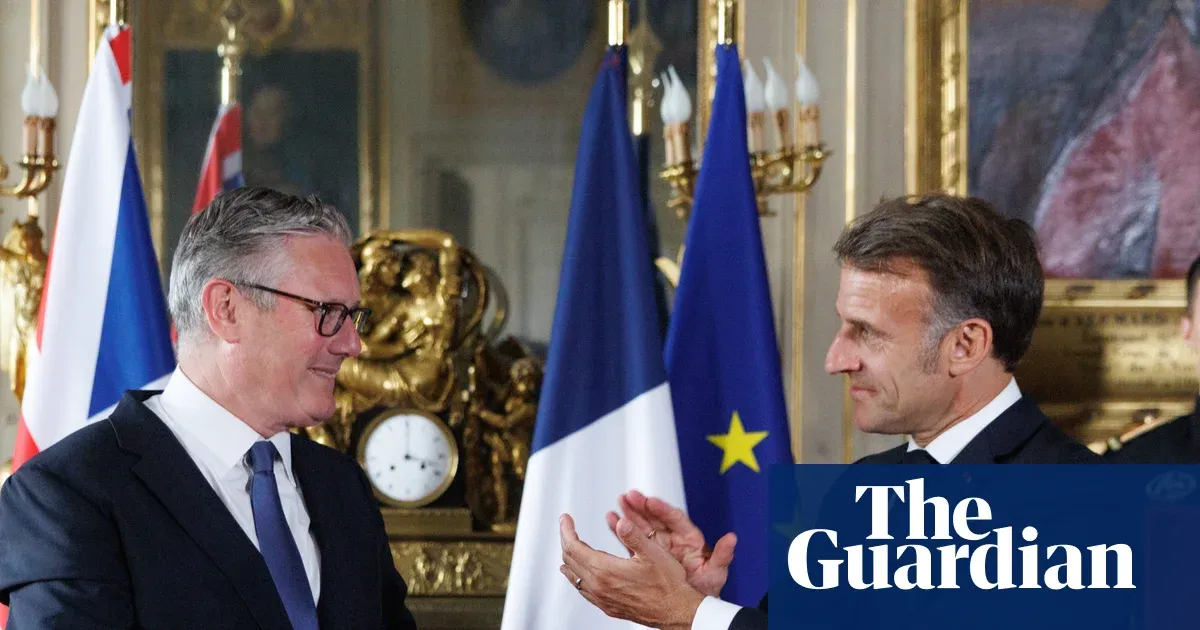
Keir Starmer became the first UK prime minister to receive France’s Légion d’honneur, presented by President Emmanuel Macron. The honour cites Starmer’s leadership in setting up a coalition of countries, chaired by France and the UK, that pledged support for Ukraine early in 2025.
Keir Starmer has become the first UK prime minister to receive France’s Légion d’honneur, and it was President Emmanuel Macron who handed over the historic award. The timing is not incidental. Macron recognized Starmer for work tied to the security of Europe, specifically Starmer’s leadership in setting up a “coalition of the willing” of countries chaired by France and the UK, aimed at supporting Ukraine at a critical moment for Europe in early 2025.
For decision-makers, the key detail is the “first” part. This is not just a ceremonial pat on the back. It is a signal of political alignment between London and Paris when Europe’s security posture, and the funding and industrial capacity behind it, are under pressure. The message is that Starmer’s Ukraine-focused coalition-building is treated in France as leadership with real European impact, not just UK diplomacy.
So what is this coalition the award is pointing to? According to the source, it is a group of countries pledged to support Ukraine, chaired by France and the UK. In early 2025, Europe is portrayed as being at a critical moment, and Starmer’s role is framed as leadership in setting up the coalition at that point. That matters because coalitions are the political mechanism Europe uses to coordinate commitments that countries might not be able to deliver alone, especially when the work spans years and involves hard choices.
The most interesting part of this story, for executives and board members, is how it maps to incentives and decision-making inside governments and across allied institutions. Coalition-building changes what gets prioritized, what gets funded, and what gets operationalized quickly. When two capitals like France and the UK chair a pledged-support network, they effectively become agenda-setters for what other states join, how commitments are interpreted, and how quickly members are expected to deliver.
There is also a second-order effect that is easy to miss if you only track the headlines. When security coalitions become a recurring norm, they tend to spill into the broader economic system. That can include defense procurement timelines, the regulatory environment around cross-border support, and the “plumbing” that makes military and civilian logistics move faster. Even if this specific piece is political, the underlying action described in the source, setting up a coalition of the willing to support Ukraine, tends to force governments and their industrial partners to plan for sustained support rather than short bursts.
The award itself functions like a political credential. In diplomacy, honors often do two jobs at once. First, they reward a specific contribution. Here, Macron awards Starmer for his leadership in setting up the coalition chaired by France and the UK. Second, they reassure audiences that the recipient’s leadership is aligned with the awarding state’s strategic framing. Macron’s decision to honor an outgoing UK prime minister suggests continuity of European priorities across UK leadership changes, at least in the way France wants those priorities to be understood.
For peers in comparable roles, the strategic stakes are straightforward: coalition leadership is not just about negotiating documents. It is about building durable trust that outlives government transitions. Starmer is being credited in this account for leadership at a critical moment for Europe in early 2025. When someone earns a French presidential honor for that, other senior leaders can infer that Europe is valuing coalition architecture as much as it values battlefield outcomes. That has implications for how governments design initiatives, how companies prepare to support procurement and logistics, and how boards interpret geopolitical risk when it shifts from “commentary” to “commitment.”
In short, Macron’s Légion d’honneur to Starmer is a headline about recognition, but the source ties it tightly to substance: supporting Ukraine through a coalition of the willing chaired by France and the UK. For decision-makers, that is the part to watch. When coalition-building gets a spotlight at the presidential level, it often means the strategy is becoming institutional, and the commitments behind it are expected to be real, sustained, and coordinated.
This story's Key Insights and Take-aways are locked.
Create a free account to unlock Executive Actions for one credit.
Register to UnlockAlways free for Executives Club members. Join the Club
More in Politics

LA County: DOJ's 20,000 'noncitizen' voter list is 'unreliable,' includes U.S.-born
Preliminary review by Los Angeles County election officials finds errors in the federal list, raising the stakes for voter roll integrity ahead of November.

Trump's $1.5B Pentagon chip investment lands in North Carolina
A $1.5 billion defense infusion for North Carolina chipmaking signals a new era of Pentagon-backed reshoring - here's what it means for the industry.

Nigeria confirms first Ebola case in Abuja, a woman just off a Uganda flight
Health Minister Muhammad Ali Pate says the patient flew in from Uganda, putting Africa's latest outbreak on Nigeria's doorstep.