
Macy’s Murugan makes “AI-first” a redesign, not an add-on
Why Macy’s is moving AI into decision systems across search, personalization, planning, and software delivery.
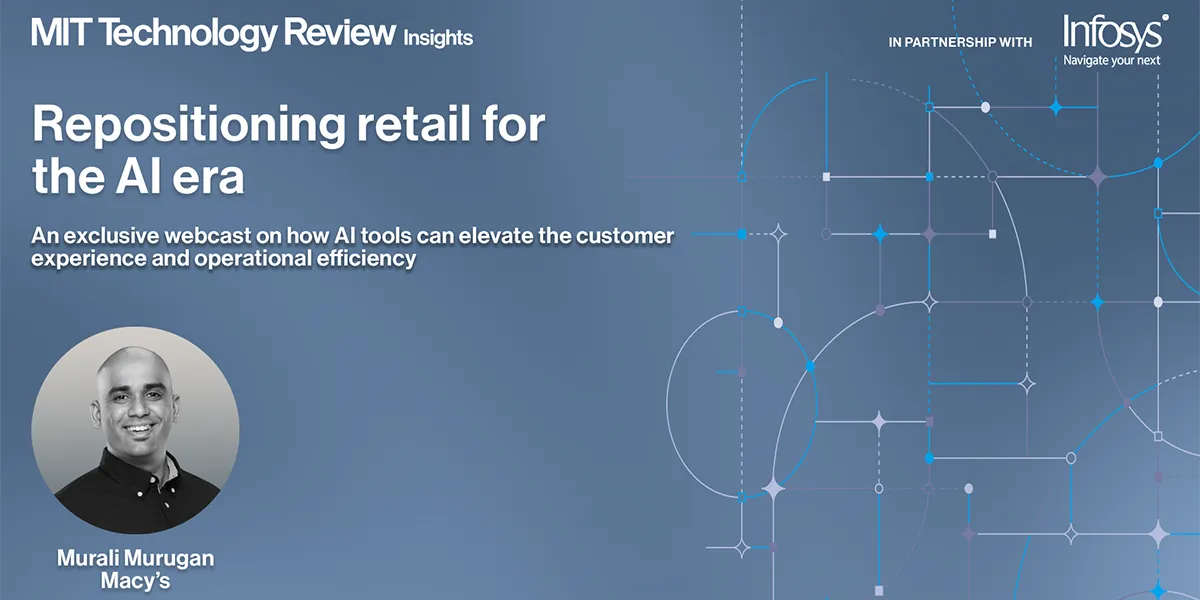
Murali Murugan, senior director of engineering at Macy’s, describes an “AI-first” approach that redesigns how decisions happen across the business instead of layering models on top. The result is faster operations, more relevant shopping experiences, and a roadmap from pilots to integrated systems.
If you think retail AI is mostly about flashy consumer features like virtual try-ons, Macy’s is telling a different story. Senior director of engineering Murali Murugan frames “AI-first” as a full redesign of decision-making, aiming to shrink “the gap between the signal and the action” so the business moves faster and experiences feel more relevant by default.
That “redesign” shows up in multiple places, not just one proof-of-concept. Macy’s is embedding intelligence across personalization, search, operational planning, and even software development. The point is not to bolt AI onto existing workflows, but to change the underlying systems so decisions are made with better data and more responsive automation, and so the company can continuously improve what shoppers see and how operations run.
This is where Macy’s strategy mirrors a broader shift in retail. For years, many retailers have treated AI like a set of pilots: a narrow use case here, an experiment there. That model runs into a familiar wall: pilots can demonstrate novelty or short-term wins, but they struggle to become the way the company operates day after day. Murugan’s description is basically the anti-pilot play: start with narrow, high-impact uses like search recommendations and customer engagement, use measurable gains to prove value internally, and then scale once the success becomes a business decision instead of a “technology debate.”
In practical terms, the “quick wins” phase matters because it changes the internal incentives around AI. When teams can point to conversion improvements and reduced friction, AI stops sounding like a science project and starts looking like operational leverage. Murugan links early momentum to outcomes like better search recommendations and stronger customer engagement, which are exactly the kinds of metrics that boards and executive teams can track without needing to understand the model math.
Once those foundational wins are in place, Macy’s is extending the approach toward conversational commerce. The company points to Ask Macy’s, an AI-powered shopping assistant designed to behave more like a personal stylist than a traditional search bar. Customers can describe what they need conversationally, and the system returns curated recommendations informed by past purchases, preferences, and context. The takeaway for executives is not just that a chatbot exists. It is that the assistant sits on top of the same decision systems that power recommendations and personalization, so the shopping experience is more adaptive and less dependent on users finding the right query.
Even with all that automation, Macy’s is signaling that it does not treat AI as a replacement for human judgment. Murugan describes AI more as an invisible layer that augments how humans make decisions, rather than something that replaces them outright. That framing matters in retail, where customer trust and brand feel can be threatened by overly rigid automation. It also matters for organizations: when AI is positioned as augmentation, it can be easier to align teams across engineering, merchandising, operations, and customer experience.
The longer-term vision is continuous improvement, not “launch and forget.” Murugan says the transformation comes from learning from mistakes quickly, adapting to newer technology standards as they come into play, and focusing on timing and execution. In other words, the compounding advantage is not one breakthrough model. It is the operational cadence of iteration: ship improvements faster, monitor where things go wrong, and update systems so the experience gets better over time.
For decision-makers across retail, the second-order implication is board-level: the competitive fight increasingly happens inside the infrastructure of everyday decisions, like what surfaces in search, how inventory flows through supply chains, and how software gets shipped. If AI compresses that gap between signal and action, then the retailers who treat AI as an operating philosophy may outpace rivals not only in customer-facing features, but in the speed of operational adjustment. In a fragmented and hyper-competitive landscape, that difference can translate into tangible outcomes: fewer delays between customer behavior and system response, tighter planning cycles, and software development that iterates with less friction.
This webcast is produced in partnership with Infosys. This content was produced by Insights, the custom content arm of MIT Technology Review. It was not written by MIT Technology Review’s editorial staff. It was researched, designed, and written by human writers, editors, analysts, and illustrators. This includes the writing of surveys and collection of data for surveys. AI tools that may have been used were limited to secondary production processes that passed thorough human review.
This story's Key Insights and Take-aways are locked.
Create a free account to unlock Executive Actions for one credit.
Register to UnlockAlways free for Executives Club members. Join the Club
More in Technology

Ford rehired 350 engineers after AI vehicle quality failed, admits VP Charles Poon
The automaker says it believed it could “swap in AI” without losing product quality, then had to fix the process.

Russian hackers shut JLR for 6 weeks, costing Britain $2.5B, NYT says
A 31 August 2025 attack tied to Russian hackers stalled Jaguar Land Rover production and hit the British economy hard.
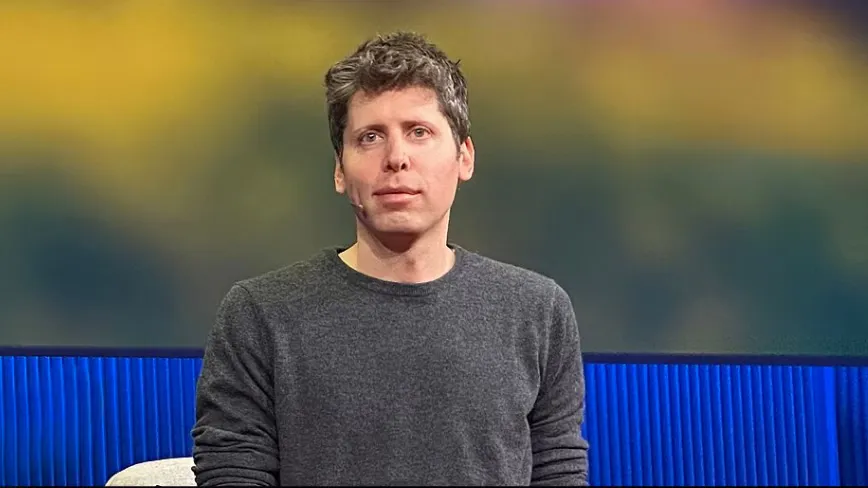
OpenAI ships GPT-5.6 Sol to ~20 US-approved partners in first government access test
A frontier model goes live under a named-partner list, signaling a shift from voluntary reviews to managed rollout.