
Madonna’s 'Confessions II' hits No. 1 again, making her first 2020s artist in four decades
Her 10th chart-topping album reshapes the decade-crossing power dynamics labels bet on, starting now.
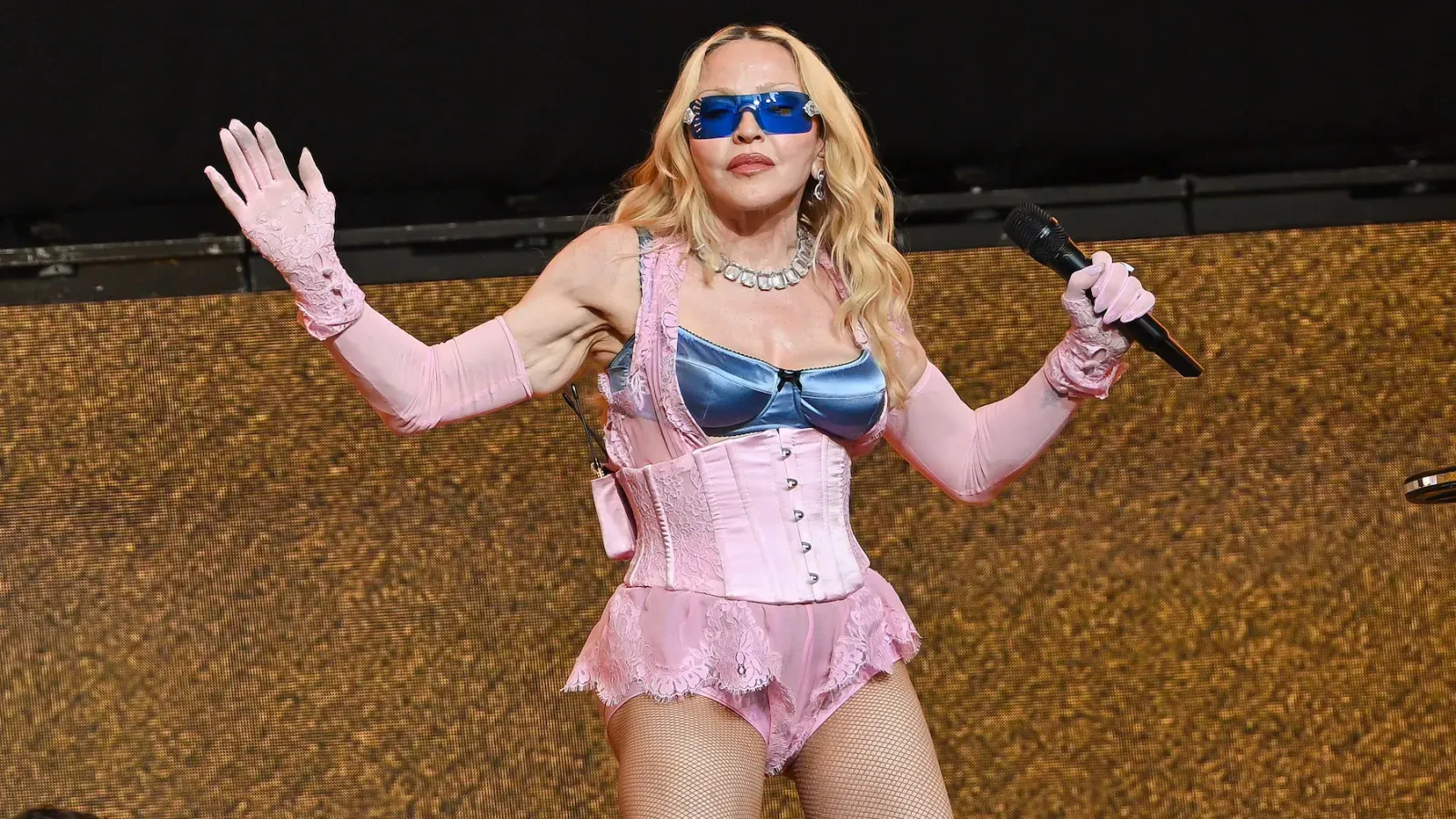
Madonna has returned to Number One on the charts with 'Confessions II,' scoring her 10th chart-topping album. She also becomes the first artist of the 2020s to land Number Ones in four different decades.
Madonna is back on top, returning to Number One on the charts with 'Confessions II' and scoring her 10th chart-topping album. The other headline-worthy detail is even more telling about where today’s music business is headed: she becomes the first artist of the 2020s to land Number Ones in four different decades.
For decision-makers, the practical question is not “can Madonna do it?” It is “what does a decade-spanning No. 1 signal about how chart performance will be engineered, funded, and measured going forward?” Because when an artist reaches Number One across four different decades, you are not just looking at nostalgia. You are looking at a repeatable ability to convert attention into measurable demand, even as formats, platforms, and fan behavior change underneath the numbers.
Charts are where strategy becomes visible. Labels and rights holders pay close attention to chart positions because they function like a compressed signal for broader momentum: marketing budgets, playlisting priorities, retail and streaming promos, and even how the industry narrates an artist’s relevance. A Number One album is not merely a trophy. It is a shorthand that can influence internal resourcing decisions, partner negotiations, and how aggressively teams escalate campaigns. That is why Madonna’s 10th chart-topping album matters beyond her discography. It is a reminder that certain artists can repeatedly “reset” the perception of their market value.
This “four decades” stat adds a second layer of pressure for operators and boards. If an artist can achieve Number Ones across multiple eras, it suggests the underlying engine is not tied to one distribution channel or one audience cohort. In a business where streaming has shifted the economics and discovery mechanics of music, that kind of track record challenges the common assumption that chart dominance is primarily a young-audience phenomenon. It also creates a benchmark that competitors will struggle to match with only short-term campaign tactics.
There is also a governance and incentive angle. Public and private companies alike set targets around growth, catalog monetization, and release cadence. An artist like Madonna hitting No. 1 again can tighten the loop between strategy and outcome: teams can point to measurable chart success while defending longer-term investments in marketing, production, and creative development. From a board perspective, that can reduce uncertainty in the narrative of what the company is buying when it invests in star power, and what it expects to earn when it takes that risk.
Now, a quick reality check for anyone trying to translate this into spreadsheets: chart outcomes are influenced by many moving parts, including release timing, marketing spend, and the behavior of listeners in the specific period the album competes. Still, the stat that she becomes the first artist of the 2020s to land Number Ones in four different decades is not a vague brag. It is an indicator of durability, and durability is the rarest asset in music. Most artists get one moment. Even successful artists often require reinvention or a supportive wave to get another.
For peers and platform partners, the stakes are clear. If the “sustained relevance playbook” can produce another Number One in the 2020s, it raises the bar for how you evaluate future releases. It can also affect how aggressively companies chase catalog value versus debut momentum. In practical terms, it nudges the industry toward treating enduring artists and long-term audience relationships as central to forecasting, not as a nice-to-have.
And for anyone in the room making calls today, the lesson is straightforward and uncomfortable: charts are still where cultural impact becomes capital, and cultural impact can outlast the lifecycle you assumed it would follow. Madonna’s 'Confessions II' landing at Number One, her 10th chart-topping album, and her “first in the 2020s across four decades” distinction are a reminder that repeatability is the real flex. The strategic question now is whether other teams can build systems that create repeatable demand, not just one-time spikes, in an industry where the ground keeps shifting.
This story's Key Insights and Take-aways are locked.
Create a free account to unlock Executive Actions for one credit.
Register to UnlockAlways free for Executives Club members. Join the Club
More in Entertainment

12TB Steam 'teraleak' goes beyond Valve: GTA 3, Mafia 2 prototypes exposed
A 12-terabyte dump of Steam data reveals prototypes and builds of third-party classics like GTA 3 and Mafia 2, plus unreleased Valve content, rewriting game history.

LinkedIn's romance problem: 1 in 4 workers say dating on it is fair game
A new survey shows a quarter of U.S. employees treat the professional network as fair game for romance, even as LinkedIn bans it and removes hundreds of thousands of offending posts.

Enhypen's first No. 1 album breaks K-pop's Billboard 200 streak
The K-pop group's 98,000-unit debut tops the chart while Dolly Parton's catalog reentry shows how death reshapes streaming.