
Mahnaz Mohammadi’s camera beats coercion after solitary torture and a 2014 prison sentence
After months in solitary confinement and torture, the Iranian director uses her fictional drama Roya to outlast the regime.
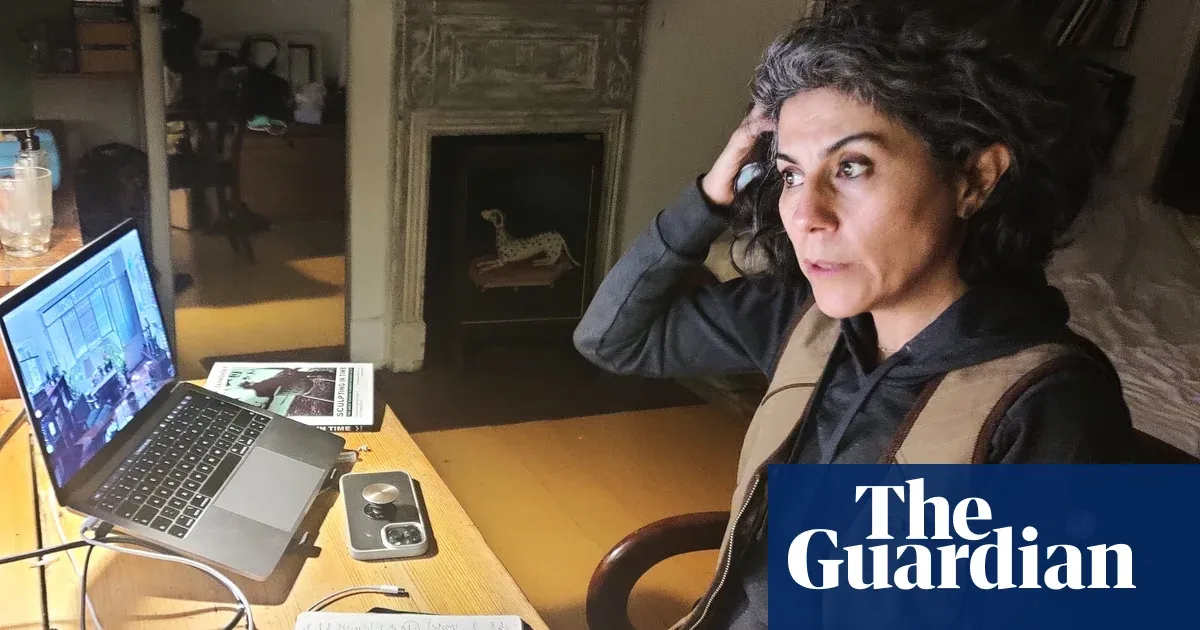
Mahnaz Mohammadi, an Iranian film director and women’s rights activist, discusses her fictional drama Roya, drawing on her experience of imprisonment and torture. Her account includes repeated arrests, months in solitary confinement in 2011, and a 2014 five-year sentence with additional time in prison.
Mahnaz Mohammadi does not describe survival like a victory lap. She describes it like a sentence that didn’t finish. The Iranian director and women’s rights activist has been arrested “on many occasions” and imprisoned several times, including months in solitary confinement and torture in 2011. In 2014, she was sentenced to five years and spent several months in prison. And even now, she says she feels unsafe in Europe.
In a line that lands because it is specific, Mohammadi recalls meeting one of her first interrogators. After an early arrest, she was later forced to endure what she describes as torture, and then, later, she heard from the man’s own mouth a message that reframed the entire power dynamic. As she tells it, the interrogator said that after “doing all those things,” if she were “going back behind the camera,” it meant they “couldn’t do anything with” her. When she heard that, she thought, “He’s right! Nobody can hurt me.” Whether you read that as defiance, grief, or something closer to a survival technique, the point is clear: her creative work is not a side hobby. It is the refusal to be managed by coercion.
Mohammadi’s fictional drama, Roya, becomes the vehicle for that refusal. The “fictional” matters, because regimes and their enforcers often treat art as evidence, as propaganda, or as a recruit for dissent. By drawing on her own experience of imprisonment and torture, Roya is not pretending the world is safe. It is translating her past into a story structure she controls. In practical terms, it also means she is leveraging something the interrogator underestimated: visibility. A camera, used by a person who has already been targeted, is a threat that does not require access to weapons. Mohammadi’s own framing is blunt. She describes herself as a soldier without a gun, but with a pen and a camera. That metaphor matters because it tells you what kind of leverage she believes in. Not force. Focus.
There is also a second-order implication here for anyone who thinks human rights risk is “local” or “contained.” When someone like Mohammadi says she feels unsafe even in Europe, that signals a broader footprint of intimidation. The story is about an activist, but the mechanism is bigger than one person. It’s about what happens when a state tries to neutralize dissent through detention, isolation, and torture, and then uses pressure beyond jail walls. Even if a director is physically outside the country, the fear can follow. That is the kind of environment that can change how distributors, festivals, studios, and streaming platforms operate, because the “cost of carrying the content” becomes more than licensing and budgets. It can become compliance, security, and reputational exposure.
For executives and boards, this is where the conversation often gets awkward. Leadership teams like to treat free expression and activism as brand-adjacent, not operational. But Mohammadi’s account shows the reality: the art world is exposed to the same coercive logic that hits journalists, academics, and civil society groups. When arrests happen “on many occasions,” and when solitary confinement and torture are part of the record, the risk profile is not hypothetical. It is structural. And when a filmmaker says a former interrogator essentially admitted the limits of his own coercion, that does not just speak to personal resilience. It reveals an intelligence problem for regimes: once a message escapes confinement, it can multiply faster than detention can contain it.
There is another layer too. Mohammadi’s story is deeply personal, but it intersects with how democracies talk about safeguards for dissidents. European space is typically framed as protective, a place with legal recourse. Yet she still describes feeling unsafe. That mismatch is the warning. If even Europe cannot guarantee a sense of security, then organizations that operate across borders need to treat safety planning and ethical due diligence as ongoing work, not a one-time checkbox. That includes how partners are vetted, how public events are handled, and how to think about downstream effects when content touches sanctioned, targeted, or politically sensitive networks.
Ultimately, Roya and Mohammadi’s testimony are about power that shifts when the target changes tactics. The interrogator’s comment, as Mohammadi relays it, suggests that the regime counted on imprisonment to sever her from filmmaking. Instead, the camera returned. That is the strategic lesson: coercion can impose harm, but it does not automatically eliminate influence. For leaders in media, technology, capital, and governance, the stakes are straightforward. The question is not only whether a story can be told. It is whether institutions can responsibly host, fund, distribute, and protect stories that come from places where dissent is punished. Mohammadi’s experience makes that question unavoidable.
This story's Key Insights and Take-aways are locked.
Create a free account to unlock Executive Actions for one credit.
Register to UnlockAlways free for Executives Club members. Join the Club
More in Entertainment

Russell Brand's accuser 'bewildered and confused' as he denies 7 sex charges
The criminal case against the comedian is a live test of how media companies manage talent risk when serious allegations go public.

'It's a Magic Trick': Ballet Experts Say Rosalía's SNL Pose Is Impossible
Three ballet experts tell Rolling Stone Rosalía's gravity-defying SNL stillness shouldn't be possible - and why the debate is now part of the show.

Activision CMO: GTA 6 Will Boost Call of Duty, Not Bury It
Activision's top marketer says Rockstar's blockbuster will drive players back to consoles and into Modern Warfare 4, even as the company admits its recent strategy failed.