
Manel Kape TKOs Kyoji Horiguchi in round three for UFC Fight Night’s fourth straight win
Kape stops Horiguchi at 2:42 in the third, extending his streak as the flyweight title picture moves into a new phase.
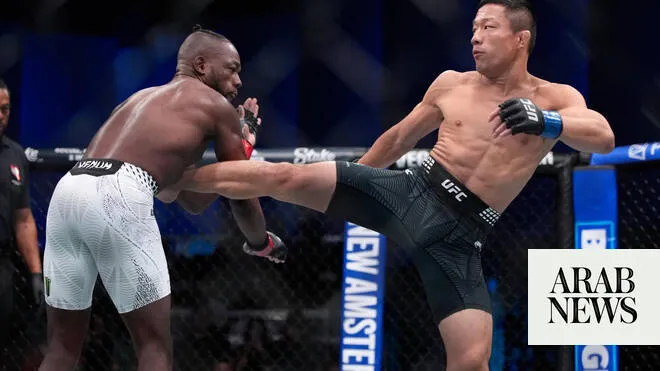
Flyweight fighter Manel Kape extended his winning run in the UFC Fight Night main event in Las Vegas, stopping Kyoji Horiguchi in the third round. For decision-makers watching fight-card momentum, streaks like this reshape match-making, brand value, and the speed of title challengers’ climb.
Manel Kape kept his hot streak alive at UFC Fight Night in Las Vegas, stopping Kyoji Horiguchi in the third round for his fourth straight victory. The finish came at 2:42 of round three, in a five-round main event, with Kape recording a TKO as the fight’s tempo shifted decisively in the latter stages.
That “how it ended” detail matters because Kape’s run is not just another win column. A third-round TKO at 2:42 signals he can alter the fight plan after early information is collected, then convert it when opponents are forced to react. And in the flyweight division, where championship status and contender selection can turn on a few high-visibility performances, fourth straight wins are a loud credential. Kape’s streak also lands right after a pivotal title moment: the division’s champion, Joshua Van, successfully defended his title for the first time last month at UFC 328, marking a transition period in what is still one of the sport’s most tightly packed rankings.
To understand why this is more than a highlight reel, zoom out to how UFC momentum typically works in divisions like flyweight. Title reigns create a gravitational pull, but defenses do not pause everything below them. When a champion defends successfully, the contender pipeline does not magically stop. Instead, it gets more urgent. Fighters who are already proving they can win in main-event style bouts push their cases, while promoters and match-makers look for opponents who can deliver both competitiveness and story value.
Kape now sits squarely in that contender logic. Four straight victories is the kind of streak that forces the sport’s internal math to change. It increases the odds that future match-making will treat him as a serious threat, because every additional win reduces uncertainty about his trajectory. Even for executives thinking in terms of audience demand, streaks act like built-in marketing. They translate to better mainstream narrative clarity: this is not random variance, it is a pattern.
The timing also matters for how the division’s competitive landscape looks to everyone involved, including managers and sponsors. Joshua Van’s first successful title defense at UFC 328 last month set a new benchmark. Once a champion successfully defends, the question becomes who can reliably trouble the champion’s style for long enough to turn pressure into a decisive outcome. Kape’s third-round stoppage shows he is capable of finishing, not only outpointing. For a contender path, finishing ability is often the difference between “he’s winning” and “he is the kind of threat that forces a championship-level planning shift.”
There is also a business-and-operations angle, even if the source report stays focused on the fight itself. UFC fight nights involve a complex ecosystem of broadcast schedules, ticketing, sponsorship exposure, and regulatory compliance across jurisdictions. Moves that create clear, decisive outcomes, like a TKO at 2:42 in round three, can influence how promotions position fighters in subsequent events. Regulatory processes still govern fighter safety and bout outcomes, but the sport’s calendar is built on momentum. A streak like Kape’s makes it easier for decision-makers to justify continued investment in a fighter’s next high-visibility appearance.
Second-order implications show up in how peers respond. When one flyweight extends a streak immediately after a champion’s first defense, it tightens the window for other contenders to separate themselves. It can also affect negotiations, because fighters and their teams often anchor value on recent performance clarity. If a competitor is seen as “the one handling business” over multiple bouts, match-makers have fewer incentives to gamble on lower certainty options. That does not eliminate surprises in MMA, but it shifts which risks look worth taking.
For executives, investors, and operators tracking combat sports talent pipelines, Kape’s result is a reminder that rankings are not abstract. They are built from moments like this one: a five-round main event, a 2:42 stoppage in the third, and a fourth consecutive win that arrives during a division transition. In a flyweight landscape where Joshua Van has just defended his title successfully for the first time, Kape’s streak raises the urgency for anyone who wants to claim the next title-relevant spot. The contenders who treat that urgency like strategy will be the ones who get the fights that matter next.
This story's Key Insights and Take-aways are locked.
Create a free account to unlock Executive Actions for one credit.
Register to UnlockAlways free for Executives Club members. Join the Club
More in Business

A flaw in PHP just forced governments to pull their own sites offline
European agencies from Belgium to Germany took websites dark to patch a critical weakness in the language behind almost 70% of the web, and the blast radius extends far beyond government portals.

BioWare shuts down, Mass Effect 5 dead after $55B EA buyout
The legendary RPG studio's closure lands months after a $55 billion investment group buyout of EA, raising tough questions for gaming's biggest acquirers.

Musk weighs Tesla-SpaceX mega-merger as boards form review panels
Special committees at both companies will examine a tie-up that could fuse electric vehicles and space launch, forcing a fresh look at governance and valuation.