

Marathon debuts Vault Breaker today: a time-limited PvE roguelite separate from normal modes
Bungie’s Season 2 mid-season update launches an experimental PvE mode that cannot be switched on like a toggle.
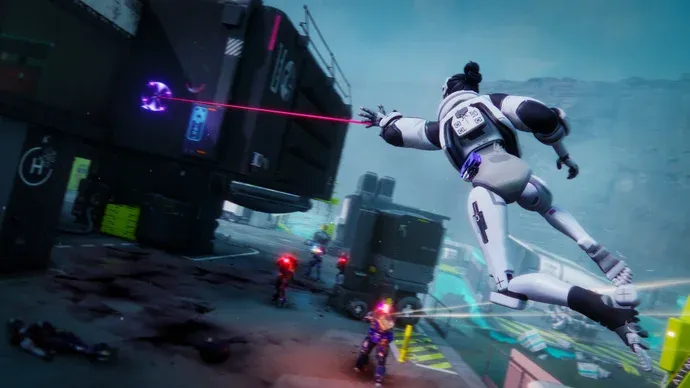
Bungie is debuting Vault Breaker in Marathon today through Season 2's mid-season update, after showcasing it in a new gameplay trailer. For decision-makers, the move tests how far an experimental, time-limited PvE offering can run in parallel without cannibalizing the core playlist.
Marathon players get their next “major moment” today, and it is not just another lobby option. Bungie has debuted Vault Breaker, an experimental, time-limited PvE mode, via the Season 2 mid-season update, alongside a gameplay trailer that spells out what Bungie is trying to do.
The key detail is also the one that changes how you should think about it: Vault Breaker is a roguelite mode that exists separately from Marathon's normal modes. It is not simply a PvE toggle you can turn on across the game. That separation matters because it frames Vault Breaker less like a feature checkbox and more like a distinct product path that runs in parallel with the main experience.
Start with what Vault Breaker is at a systems level. As described, it is a time-limited PvE offering with roguelite structure. Roguelites, broadly speaking, usually emphasize repeated runs, incremental progression, and the tension between trying again and learning faster. Even without extra specifics here, the “time-limited” label sets expectations for engagement cycles. Players have a runway during the window, and after it ends, the mode either resets for another period or becomes something players must wait to return to. In practical terms, time limits can compress behavior, pulling players toward scheduled participation instead of open-ended sampling.
Now add the “separate from normal modes” part. In many live-service games, a “toggle” approach means the PvE experience is just another state the player can switch on while staying inside the same ecosystem of rules, progression, matchmaking, and matchmaking health. Vault Breaker, by existing separately, implies a different boundary: potentially different entry requirements, different run structure, and a different way for players to route their time. That can be a smart design choice if the goal is to protect the core modes from the churn and experimentation that come with new game loops. It can also reduce player confusion, because when you load Vault Breaker, you are opting into a mode with its own identity, not asking players to mentally recalibrate inside the same session type.
From a business and execution standpoint, this is also a risk and an investment, and not a small one. Experimental modes create operational pressure. They need content cadence, balancing attention, and telemetry, even if the mode is intentionally limited. They also create community expectations. If the mode becomes a fan favorite, the expectation turns from “event” to “feature.” If it underperforms, the “time-limited” constraint gives Bungie an off-ramp. Either way, the separation from normal modes provides a lever for decision-making. It is easier to isolate performance, measure outcomes, and adjust without disrupting everything else.
This is why the timing in the Season 2 mid-season update is interesting. Mid-season drops are often where teams test whether momentum carries through, whether players return after initial seasonal engagement, and whether the new content landscape keeps the active base from flattening. The fact that Bungie “arrives” Vault Breaker today, paired with a new gameplay trailer, signals that Bungie wants players to understand the mode quickly and show up during the early window when adoption is most fragile.
There is also a subtle but real second-order implication for anyone tracking the live-service playbook. Vault Breaker being explicitly “not simply a PvE toggle” suggests Bungie is intentionally controlling the product surface area. For executive teams, that matters because it affects support burden, community management, and perceived fairness. If players think everything is unified behind one switch, they often expect unified progression or unified availability. Bungie is preemptively avoiding that misunderstanding by positioning Vault Breaker as its own lane.
Put differently, this is Bungie running an experimental experiment, not just adding content. A time-limited PvE roguelite can function like a laboratory for engagement loops. It can also act like a talent and community filter, rewarding players who like repeated runs and structured progression. The payoff for decision-makers, including founders, publishers, and board-level leaders, is clearer measurement. You can observe whether an isolated, experimental PvE loop can pull players in without undermining normal modes.
For executives in similar roles, the strategic stake is straightforward: can an experimental mode create a meaningful return spike when it is limited in time and separated in structure? Vault Breaker is the answer Bungie is choosing to test now. The next major moment arrives today, and the structure Bungie chose gives them a tight way to learn, iterate, and decide how much of this roguelite PvE direction deserves to live beyond the window.
This story's Key Insights and Take-aways are locked.
Create a free account to unlock Executive Actions for one credit.
Register to UnlockAlways free for Executives Club members. Join the Club
More in Entertainment

12TB Steam 'teraleak' goes beyond Valve: GTA 3, Mafia 2 prototypes exposed
A 12-terabyte dump of Steam data reveals prototypes and builds of third-party classics like GTA 3 and Mafia 2, plus unreleased Valve content, rewriting game history.

LinkedIn's romance problem: 1 in 4 workers say dating on it is fair game
A new survey shows a quarter of U.S. employees treat the professional network as fair game for romance, even as LinkedIn bans it and removes hundreds of thousands of offending posts.

Enhypen's first No. 1 album breaks K-pop's Billboard 200 streak
The K-pop group's 98,000-unit debut tops the chart while Dolly Parton's catalog reentry shows how death reshapes streaming.