
Marco Balich runs FIFA’s first triple opening in one year, across 3 countries
The producer behind Mexico, Canada, and USA ceremonies explains the 1,000-person machine, protocol math, and Shakira reality.
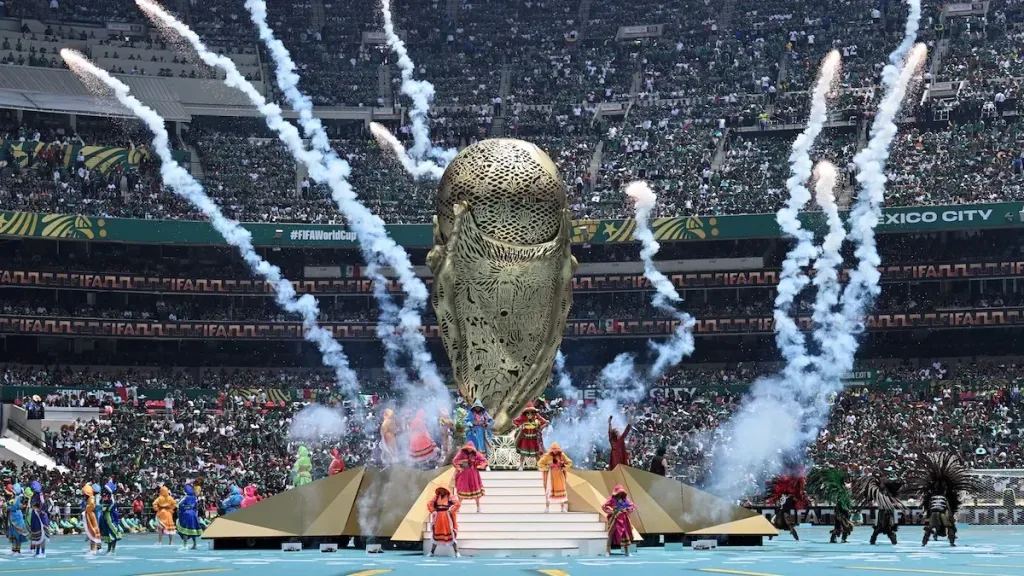
Marco Balich, founder and chairman of Balich Wonder Studio, tells TheWrap about producing three FIFA World Cup opening ceremonies across Mexico, Canada, and the United States. For decision-makers, it is a playbook on scaling global live events without breaking protocol, brand moments, or audience trust.
Marco Balich, founder and chairman of Balich Wonder Studio, is describing an unusually specific kind of logistics flex: producing the FIFA World Cup opening ceremonies across Mexico, Canada, and the United States in the same year that his team also created the Olympics opening. In his words to TheWrap, “I’m very proud to say that for the first time in the same year, the same live agency has created the opening of the Olympics and for FIFA.” He says it with obvious pride, but the more useful part is what it required: the same live agency sustaining three massive, culturally distinct productions in two days for an estimated 1.2 billion viewers worldwide.
That scale matters because this was not just “a show.” The ceremonies opened games in the respective host cities Thursday and Friday, launching the biggest soccer tournament on record. Balich frames the audience impact in blunt numbers: he compares the reach to the latest Super Bowl, saying the ceremonies drew roughly 10 times that audience. And he also points to early performance proof, noting that the Mexico-South Africa match secured more than 20 million viewers in the U.S. across platforms in both English and Spanish.
To understand how an operation like this survives contact with reality, Balich walks through the structure. The World Cup opening arc was the same across the three countries, but narrated “from three different points of view,” with “three different color tones” and “three different kinds of music,” including three different language presentations. He breaks the vibe down like a DJ set with geography: a “very cumbia, Latin energetic vibe” at the beginning, “very glitzy, shining superstar themes” in Los Angeles, and “this very natural, earthy approach in Canada.” There were three on-the-ground teams, described as one Canadian, one Mexican, and one American, while Balich Wonder Studio and “the experts in big ceremonies” oversaw and supported FIFA’s vision.
So what does it mean to run this kind of global live-event stack? Balich says it is like “three halftime shows in 14 hours,” with one major difference versus typical sports entertainment: protocol. He estimates about 300 people per ceremony as cast, plus about 700 staff across lights and moving stages, setting up sets, pyro, and music. That is a workforce built to execute under time pressure, then immediately run again. He emphasizes the pressure point that boards and executives should understand, especially in the era of social media: every mistake is amplified. “With social media, every mistake is amplified to a scale that you know you have to be so careful about everything,” he says, because someone will film it, post it, and it goes viral “just like that.”
He offers two concrete examples of how that plays out. In Toronto, he says there was an issue with the trophy: a “technical problem,” described as “really a composition of issues we could not forecast.” If it had been only broadcast, he suggests it would have been ephemeral; with social media, it was “obviously noted immediately.” In Mexico City, he says the folkloric dancers celebrating pre-Hispanic culture wore elaborate feather outfits that were “very difficult for them to walk in,” and that if you see someone trip, “it becomes the story of the day.” His takeaway is not that mistakes can be eliminated, but that live TV makes them inevitable, and there is nothing to hide.
The next question is the one that executives always ask once they see star talent on a global stage: how do you balance celebrity performance with host-country identity without turning it into a generic brand mashup? Balich compares it to the Super Bowl halftime model, where there is usually one leading artist with guest stars. For this World Cup, he says it worked differently: “a sequence of really relevant artists for the region” performed “in sequence,” with performers moving “up and down the stage,” and anchoring protocol moments with flags and national anthems. He credits creative direction and team specialization by naming Carlos Navarrete Patino as the creative director for Mexico and Canada ceremonies, calling him “one of the best line directors in the world.” For the U.S., Balich names Jenny Koons from Vitamotus and notes her team comes “from the theater,” with Balich Wonder Studio supporting them with big-ceremony experience.
Then there is the Shakira thread, because online discourse rarely stays still for long. Balich says Shakira returned to the World Cup stage with new single “Dai Dai” featuring Burna Boy as part of the opening ceremonies, alongside major acts including Andrea Bocelli, Danny Ocean, Alejandro Fernandez, and Belinda in Mexico; Jessie Reyez, Alessia Cara, Michael Bublé, and Elyanna in Canada; and Future, Anitta, Lisa, Rema, and Katy Perry in the USA. On working with Shakira on her first performance of “Dai Dai,” Balich emphasizes her professionalism and camera control, saying she “knows exactly what she wants,” including the camera angle. He also says she will be back for the final halftime show with Madonna and BTS.
That sets up why fans were joking about a Shakira impersonator. Balich notes that “those sunglasses sparked so many memes,” tying the impersonator jokes to the openness social media creates, allowing people to “say whatever they want.” For an exec audience, the strategic subtext is clear: even when the core product (the ceremony) lands, the surrounding narrative becomes part of the scoreboard. Balich’s account suggests the difference between viral noise and brand damage comes from execution credibility. And that credibility, in his telling, was protected by protocol discipline, cultural tailoring, and teams prepared for what a single filmed trophy moment or a tripping feather dancer can do to the day’s story.
This story's Key Insights and Take-aways are locked.
Create a free account to unlock Executive Actions for one credit.
Register to UnlockAlways free for Executives Club members. Join the Club
More in Entertainment

Russell Brand's accuser 'bewildered and confused' as he denies 7 sex charges
The criminal case against the comedian is a live test of how media companies manage talent risk when serious allegations go public.

'It's a Magic Trick': Ballet Experts Say Rosalía's SNL Pose Is Impossible
Three ballet experts tell Rolling Stone Rosalía's gravity-defying SNL stillness shouldn't be possible - and why the debate is now part of the show.

Activision CMO: GTA 6 Will Boost Call of Duty, Not Bury It
Activision's top marketer says Rockstar's blockbuster will drive players back to consoles and into Modern Warfare 4, even as the company admits its recent strategy failed.