

Marianne Lake retires from JPMorgan, ending the female CEO pipeline everyone watched
Her abrupt exit closes the most credible path to a first: the first woman to run JPMorgan.
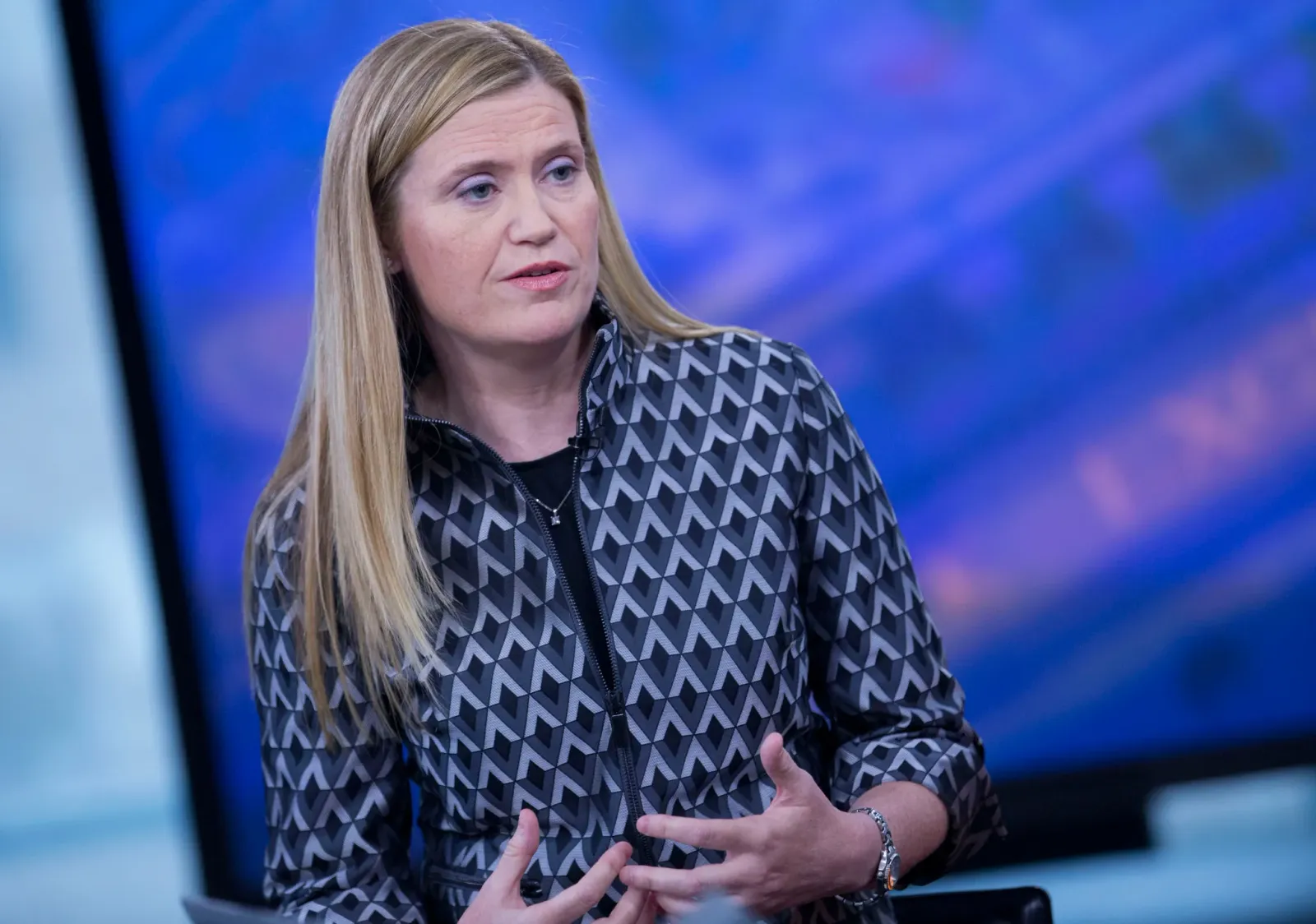
Marianne Lake, CEO of JPMorgan’s consumer and community banking, retired after 25 years, with JPMorgan elevating two executives to co-presidents. Her departure ends the bank’s long-running succession narrative that had two female contenders in the race to succeed Jamie Dimon.
Marianne Lake, JPMorgan’s CEO of consumer and community banking, retired after 25 years. The bank announced the elevation of two executives to co-presidents the same week, a move that immediately matters for one big reason: Lake was widely seen as a leading contender to succeed Jamie Dimon, and her exit shuts down what had been, for years, one of the clearest shots to put a woman at the helm of the world’s most powerful banks.
This wasn’t just a personal career turning point. Fortune reports that JPMorgan had been searching for a CEO successor to Dimon, a process that sometimes leaks into public view. Lake’s prominence in that search was not subtle. For much of the past decade, JPMorgan’s succession story included two senior women in the orbit of the top job, making the bank a case study in how talent pipelines can look at one moment and then quietly collapse at the next. When Lake left, Bloomberg called her retirement “abrupt,” and the practical effect was immediate: the board and CEO track that had kept multiple female contenders alive narrowed to a smaller set.
To understand what fell apart, start with the “pipeline” JPMorgan built. Lake joined the bank in 1999 and built her career across divisions, with emphasis on financial rigor and operational command. She moved through finance roles, became chief financial officer, then CEO of consumer lending, and eventually co-CEO and then sole CEO of consumer and community banking, one of JPMorgan’s most important divisions. That division brought in $76 billion in revenue last year and served more than 86 million consumers.
Lake’s profile also became part of a larger narrative: she repeatedly showed up on Fortune’s Most Powerful Women list, ranking No. 23 in 2026. Even within JPMorgan, she wasn’t a “side bet.” When JPMorgan explicitly shaped its succession narrative, Lake was central. The attention was not only that she had one strong female counterpart in the CEO conversation. She had two.
In 2021, the same year Jane Fraser became CEO of Citi, Lake became co-CEO of CCB alongside Jennifer Piepszak. They had even swapped jobs before, taking turns as CFO and CEO of the consumer bank, and they were framed as a team poised to prepare for the biggest job. Fortune reports that this duo was even the first-ever tie on Fortune’s Most Powerful Women list in 2021. That parallel rise sent a clear signal to internal audiences and observers: JPMorgan wasn’t just promoting individuals, it was actively constructing a runway.
But early 2025 changed the math. Piepszak exited the JPMorgan CEO race. JPMorgan spokesperson Joe Evangelisti told Fortune at the time that she “does not want to be considered for the CEO position at this time,” and her “clear preference is for a senior operating role working closely with Jamie [Dimon] and in support of top leadership going forward.” Piepszak later became COO, a role she still holds today, leaving Lake as the lone serious female contender in the CEO race.
Still, succession planning is not a straight line. Dimon’s decision-making style is part of why JPMorgan’s pipeline looked so intentional and also why it can change fast. Fortune reports that Dimon has long favored “test jobs,” roles designed to stretch executives across different parts of the business. The approach applies regardless of gender, but it has at times helped elevate women at the firm, in part because women can be less likely to raise their hands without feeling fully qualified.
Dimon’s memo to employees, shared with Fortune, provides a window into the next chapter of the board’s thinking. The board elevated Doug Petno and Troy Rohrbaugh to co-presidents. Dimon wrote that the decision “reflects the board’s confidence in their extraordinary leadership capabilities, business performance, relationships, experience and commitment to always doing the right thing.” He added that the changes mark “an important step in our board’s thoughtful process around succession planning and development of our top leaders.”
Lake’s own memo mirrored the same reality from the inside: she framed her retirement as bittersweet and emphasized pride in what the team built together, while expressing confidence in CCB’s future. Importantly, her departure is consistent with how Dimon described succession timing. Often, his retirement timeline answer was “five years away.” In 2024, he said it was “not five years anymore.” He also told Fortune in January 2025 that at the last minute people get sick, change their minds, or have family circumstances, and therefore nobody can be completely sure even if they think they know today.
By mid-2026, signals around Lake had begun to shift. The Wall Street Journal reports that Lake decided to leave after it became clear she was no longer in the running to become CEO. She is expected to eventually take on another top executive role elsewhere, and the source notes she is still only in her 50s. Her departure also lands in a broader moment for women’s leadership at the very top of the economy. Fortune reports that about 55 women run Fortune 500 companies, an all-time record, but still far from parity at 11%.
That is why this isn’t only a JPMorgan story. Before Lake’s exit, two other succession races that looked likely to elevate a woman to one of the top CEO jobs in the world went the other way. At Walmart, Kath McLay left her role as CEO of Walmart International after John Furner was named chief executive. At Disney, Dana Walden emerged with an expanded role as president and chief creative officer, but not the CEO title, which went to Josh D’Amaro. Taken together, these cases highlight a pattern decision-makers in corporate leadership can’t ignore: even when top-tier talent pipelines exist, the final CEO outcome can shift when timelines, board confidence, and the CEO’s pacing align.
So what should executives and board members take from this? JPMorgan’s “envy of Wall Street” pipeline didn’t fail because women lacked competence or leadership. It closed because succession is a moving target, and because leadership tracks depend on a narrowing selection window. When the clock changes, the board can pivot, and the “future” candidate can become the one exiting first.
This story's Key Insights and Take-aways are locked.
Create a free account to unlock Executive Actions for one credit.
Register to UnlockAlways free for Executives Club members. Join the Club
More in Business

Comcast shares jump 25% as it plans to split NBCUniversal and Sky
The tax-free spin-off could reshape focus, funding, and competition across media and tech for years.

Bungie cuts most Destiny 2 staff as Sony says Marathon still matters
Herman Hulst confirms layoffs affecting most Destiny and some Marathon teams after Bungie admits Destiny fell short.

SK Hynix jumps 11% after seeking up to $29.4B in Nasdaq listing
The chip giant filed for a Nasdaq listing plan that could raise $29.4 billion, instantly reshaping investor expectations.