

Marjane Satrapi dies at 56 after redefining how Iran told its story
The Persepolis creator’s death closes a rare cultural bridge between Iran and France, and reminds leaders how art can outlast politics.
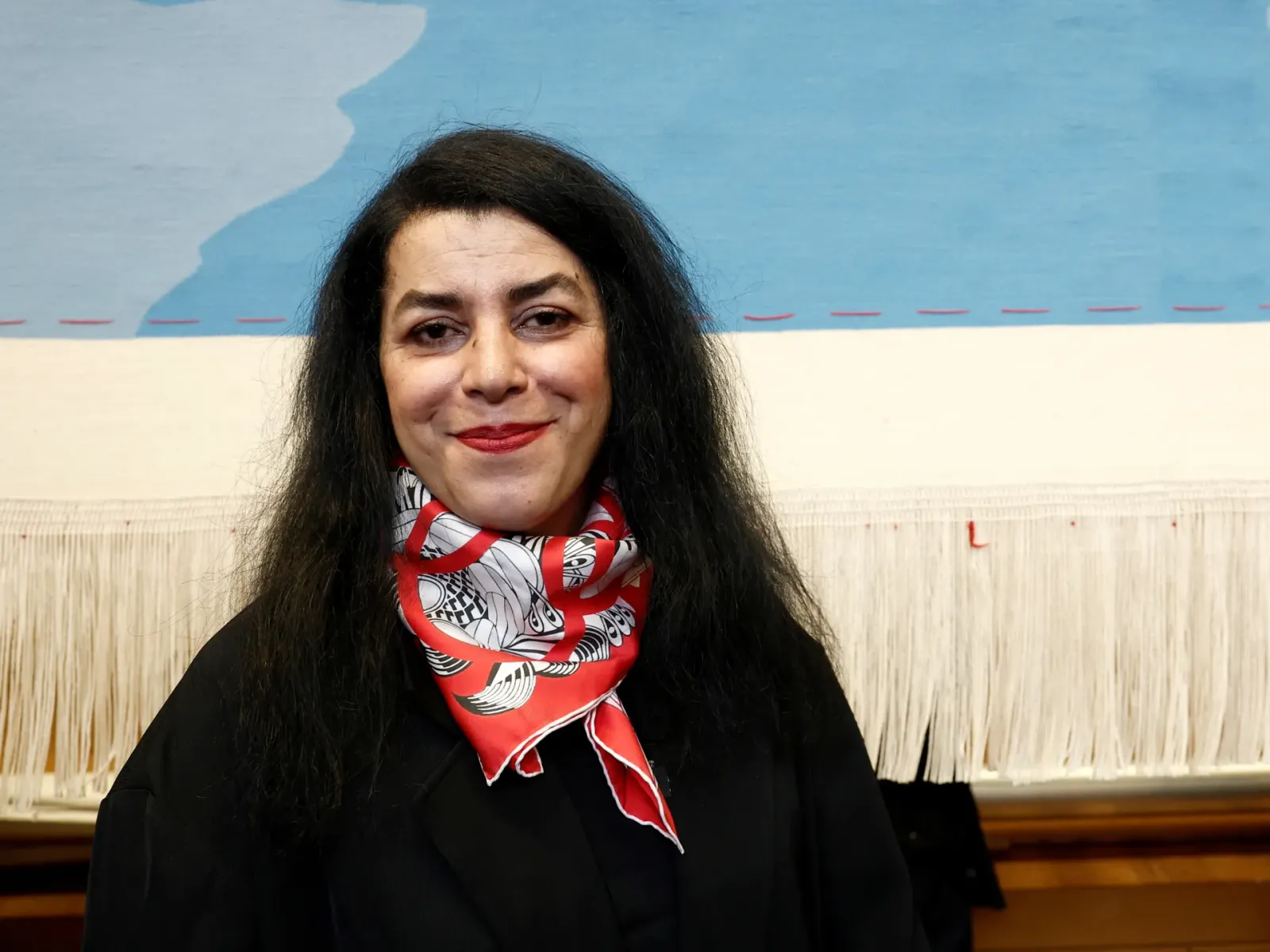
French-Iranian author and film director Marjane Satrapi has died at 56, with her family saying she died of "sadness" a little over a year after her husband, Mattias Ripa. Her death matters because Persepolis was not just a bestselling graphic novel and acclaimed film, it became a global reference point for freedom, identity, and Iranian dissent.
Marjane Satrapi, the French-Iranian author and film director best known for Persepolis, has died at 56. Her family said in a statement to AFP that she died of "sadness" a little over a year after the death of her husband, Mattias Ripa. That personal detail is striking on its own, but Satrapi’s public significance was much larger: French President Emmanuel Macron’s office announced her death on Thursday, and Macron called her passing "the loss of a leading figure in French culture and an artist devoted to freedom, whose work carried a universal message and earned her immense international renown".
For executives, creators, and anyone trying to understand how a story becomes durable, Satrapi is a case study in turning lived experience into a cross-border cultural asset. Her defining work, Persepolis, began as a black-and-white autobiographical graphic novel published in 2000 and later became a film she directed herself. The book drew from her experiences of the Islamic revolution and the fallout of the war with Iraq, and that very specific history gave it global reach. The hook was local, but the resonance was universal: a young woman navigating repression, family, politics, and identity became a story readers and viewers around the world could recognize immediately.
That reach was not accidental. Satrapi was born in 1969 in Rasht, in northern Iran, and her childhood tracked with one of the defining political ruptures of the late 20th century. In 1983, her parents sent her to Austria to finish her studies because of the growing extremism that followed the Iranian revolution in 1979, when Ayatollah Ruhollah Khomeini came to power. She later returned home because of homesickness and attended the University of Tehran, where she obtained a degree in visual communications. That detail matters: Persepolis was not simply a memoir written in hindsight. It was the product of someone who moved between systems, languages, and cultures, then translated all of that into an accessible visual form.
She left for France in 1994 and lived much of her life there, while remaining deeply connected to her Iranian roots through her work. That dual identity helped make her unusually legible to audiences on both sides of the cultural divide. In a media environment where attention is fragmented and narratives are often reduced to slogans, Satrapi proved that a sharply observed, personal story can travel farther than a generic statement about politics ever could. Her art did more than describe events. It gave them faces, emotions, and context. In 2007, she told Variety, "I come from a country where a woman is worth half a man," and added, "I never thought I had one leg less just because I was a woman." That line captures the force of her work: personal, blunt, and impossible to flatten into a talking point.
Persepolis later became a film that won broad praise and picked up major recognition, including a nomination for best animated feature at the 2008 Academy Awards. It also won the Cannes Jury Prize in 2007 and the Cesar award for Best First Film. Satrapi told AFP at Cannes in 2007, "What we wanted to say is, if these people scare you, look closer: they have parents, they have lovers, they have hope, they have stories." For people leading companies, institutions, or campaigns, that sentence is basically a masterclass in narrative strategy. It is not a policy memo. It is not a slogan. It is a humanization engine, and that is why it traveled.
Satrapi’s career did not stop there. She went on to work on films including Chicken with Plums, The Voices, which starred Ryan Reynolds, and Radioactive, starring Rosamund Pike as scientist Marie Curie. That range matters because it shows she was not trapped by the success of one title, even one as famous as Persepolis. She used the platform it created to keep moving across genres and audiences, which is exactly what strong creative brands do when they want longevity instead of a single peak. For anyone building a public-facing business or institution, the lesson is plain: one defining work can open the door, but sustained relevance comes from continuing to translate your point of view into new forms.
Her final public chapter also carried a political edge. In 2024, she was offered France’s highest award, the Legion of Honour, but refused it because she felt France had not done enough to support Iranian people fighting for democracy. In a January 2025 letter to French authorities, she wrote, "Supporting the women’s revolution in Iran cannot be reduced to photos or speeches," and, "When people are fighting for democracy, we should support them." That refusal fits the rest of her life: Satrapi did not separate art from principle, and she did not treat recognition as a substitute for action. For leaders, that is the deeper takeaway. Reputation is built not only by what you create, but by what you are willing to stand for when the spotlight is on and the easy answer is to smile for the camera.
This story's Key Insights and Take-aways are locked.
Create a free account to unlock Executive Actions for one credit.
Register to UnlockAlways free for Executives Club members. Join the Club
More in Entertainment

Christopher Nolan’s “The Odyssey” posts his biggest Tuesday haul, surpassing “The Dark Knight’s” record
The film’s Tuesday breakout reframes Nolan’s box-office ceiling and forces competitors to rethink timing, budgets, and release strategy.

Kacey Musgraves cancels Aug. 20, 29, Sept. 2 Middle of Nowhere shows
Ticketmaster emails are telling fans refunds are coming, while the tour still starts Aug. 21 in Chicago.

Billie Joe Armstrong launches Epiphone Les Paul Junior and Marshall 1959BJA signature gear
Two limited releases turn decades of Green Day’s tone into branded hardware, including Marshall’s first artist amp in 14 years.