

Mark Cuban wants every employee stock, with tax-code incentives and CEO pay at parity
Cuban argues CEOs and janitors should get the same equity percentage, or face higher taxes.

Billionaire entrepreneur Mark Cuban, speaking on the “What It Takes” podcast from Unmoderated News released on Thursday, said companies should give all employees company stock to reduce wealth inequality. He proposes using the tax code to reward broad equity sharing with lower corporate tax rates and raising taxes if firms do not.
Mark Cuban is pushing a simple idea with a big bite: every employee, from CEO to janitor, should receive company stock. Speaking in an episode of the “What It Takes” podcast from Unmoderated News released on Thursday, the billionaire entrepreneur framed employee equity as the most direct way to narrow wealth inequality, because workers benefit when the company succeeds.
Cuban did not keep it theoretical. He said the government could nudge CEOs in that direction through the tax code by conditioning lower corporate taxes on whether companies broadly distribute equity, not just hand it to top executives. His example was proportional and blunt: if a CEO gets stock worth 10% of their cash compensation, then employees should receive stock worth the same percentage of their own cash compensation. He illustrated the math directly, saying if a CEO receives $100,000 worth of stock because they make $1 million in cash, and the janitor makes $50,000, then the janitor should get the same percentage in stock.
The urgency behind Cuban’s argument is hard to ignore. The debate over who gets the upside has been widening between executives and workers. Oxfam and the International Trade Union Confederation found that CEOs of the world’s largest companies enjoyed an 11% real-terms pay rise in 2025, while average worker pay increased just 0.5%. In the US, S&P 500 CEO pay climbed 25.6% from 2024 to 2025, compared with a 1.3% real-terms rise in average hourly earnings for private-sector workers. That gap is part of why “equity for everyone” reads less like a perk and more like a pressure release valve for broader economic frustration.
Cuban’s philosophy is not brand new. He has long championed giving employees a stake in the companies they help build, and he has argued for years that companies should share more of their success with workers. He has repeatedly called for employees to receive equity broadly, and he has pointed to outcomes from his own playbook. After every company sale, he said he paid bonuses, helping about 300 Broadcast.com employees become millionaires when Yahoo bought the company in 1999. His pitch, at its core, is that wealth inequality does not just happen at the top; it concentrates when upside rewards only a small slice of the organization.
Where Cuban gets extra policy-specific is his belief that voluntary adoption is not enough. When host Sarah McCammon noted that Cuban’s own equity-sharing was voluntary, he argued the government could use incentives in the tax code to steer corporate behavior. In his framing, companies should be allowed to enjoy lower corporate tax rates if they distribute equity broadly to every single employee. He suggested a structure like this: if the CEO is aiming for a 21% tax rate, the company would need to give every employee the same percentage in stock warrants, options, or whatever portion of equity tracks that cash compensation share.
He also implied a consequence for ignoring the approach. If companies do not do it, Cuban said, “then your taxes go back up.” That is the part boards and CFOs should really clock. Equity programs are already complex, and they live at the intersection of compensation design, retention strategy, and financial reporting. Layering a possible tax-based incentive or penalty onto that mix would force companies to think of employee equity less as HR theater and more as part of a measurable capital allocation decision.
Cuban’s comments also land in the middle of a broader conversation about employee ownership sparked by other big-tech loudmouths. His calls echo remarks made by Elon Musk in the wake of SpaceX’s IPO. In an earlier July radio appearance, Musk said he has always wanted employees to benefit from the success of his companies, telling Texas Gov. Greg Abbott, “I’ve always had the philosophy that everyone at the company should receive stock in the company, so that they can participate in the upside of the company.” That sounds aligned with Cuban’s “upside for everyone” theme, even if the implementation details differ.
And just when the industry seems to agree on equity in principle, implementation catches up. SpaceX’s big rival Blue Origin is also introducing a new, more generous equity scheme to address internal dissent over its options program. But Business Insider’s Tom Carter reported a catch: employees will forfeit all their stock options if they join a competitor within 18 months of leaving Blue Origin. That kind of forfeiture rule is a reminder that “employee stock” does not automatically mean employees get durable, liquid upside. It means they get exposure under a specific set of terms, often tied to retention.
So the real second-order question for executives is this: are you treating equity as a moral argument, a retention lever, or a financial strategy? Cuban’s proposal pushes it toward the last category by tying broad distribution to tax rates and proposing parity between executives and other employees. If policymakers take cues like this, compensation committees could find themselves pressured to redesign equity plans around inclusivity and proportionality, not just around competitive benchmarks. In an era where CEO pay is rising faster than worker earnings, Cuban is effectively arguing that the next “competitive advantage” might be who gets the upside, and how quickly the board responds when the tax code becomes the enforcement mechanism.
This story's Key Insights and Take-aways are locked.
Create a free account to unlock Executive Actions for one credit.
Register to UnlockAlways free for Executives Club members. Join the Club
More in Business

Uber buys Delivery Hero for nearly $15B, vaulting to top food delivery outside China
The deal doubles Uber's dual-services footprint and pushes a ride-and-eats bundling play into 50 more markets.

Epic and Google drop settlement bid, forcing rival Android app stores by July 22
Google told the court it is ready to carry third-party app stores starting Wednesday, July 22.
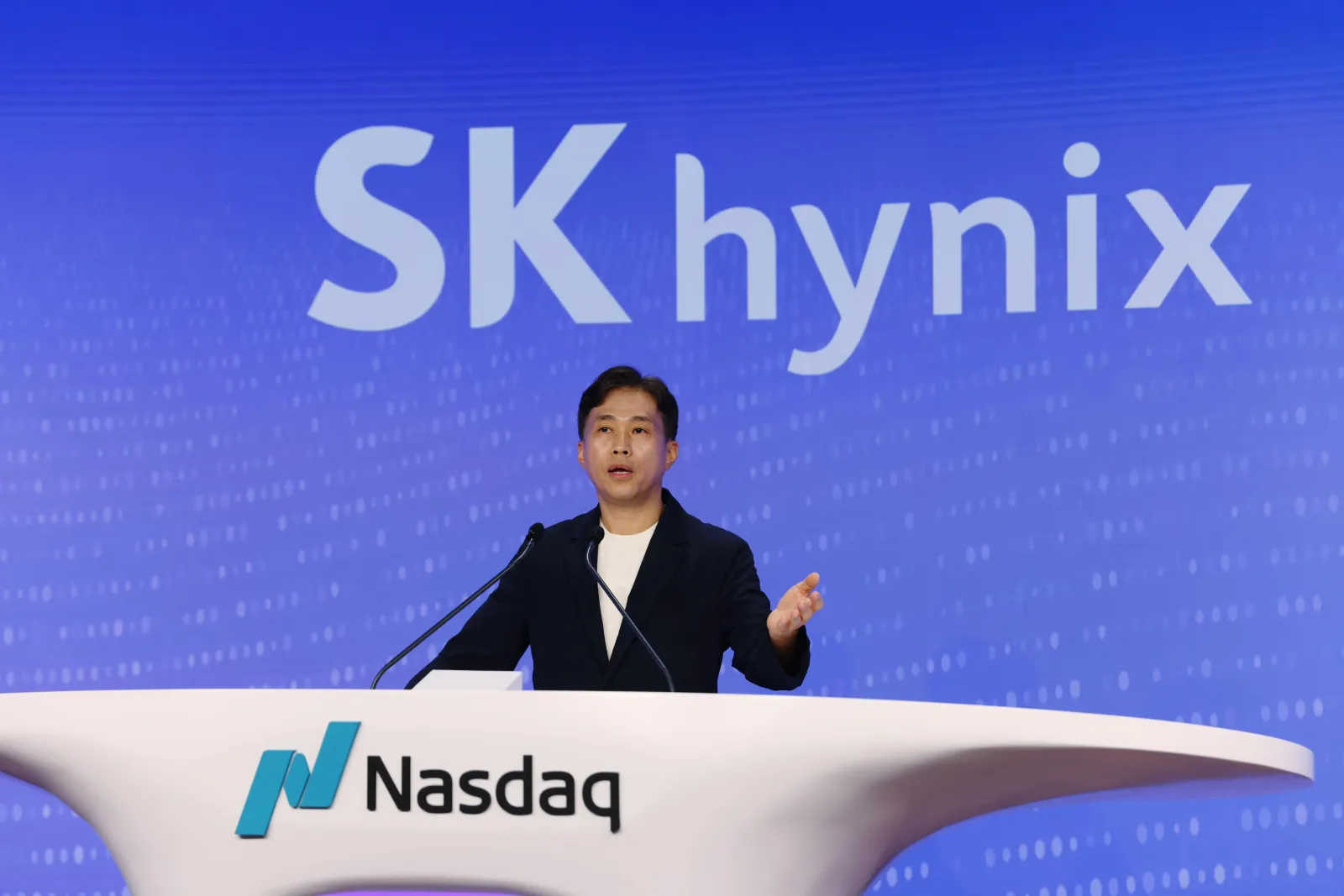
SK Hynix opens at $170, raises $26.5B, and tops foreign IPO records
In Friday's Wall Street debut, SK Hynix turns AI RAM demand into a $26.5B fundraising moment that rewrites comps.