
Mars microbes: the biotech CEO rewriting planetary engineering
Pioneer Labs CEO Erika DeBenedictis is engineering microbes to terraform Mars, turning a sci-fi dream into a biotech business model.
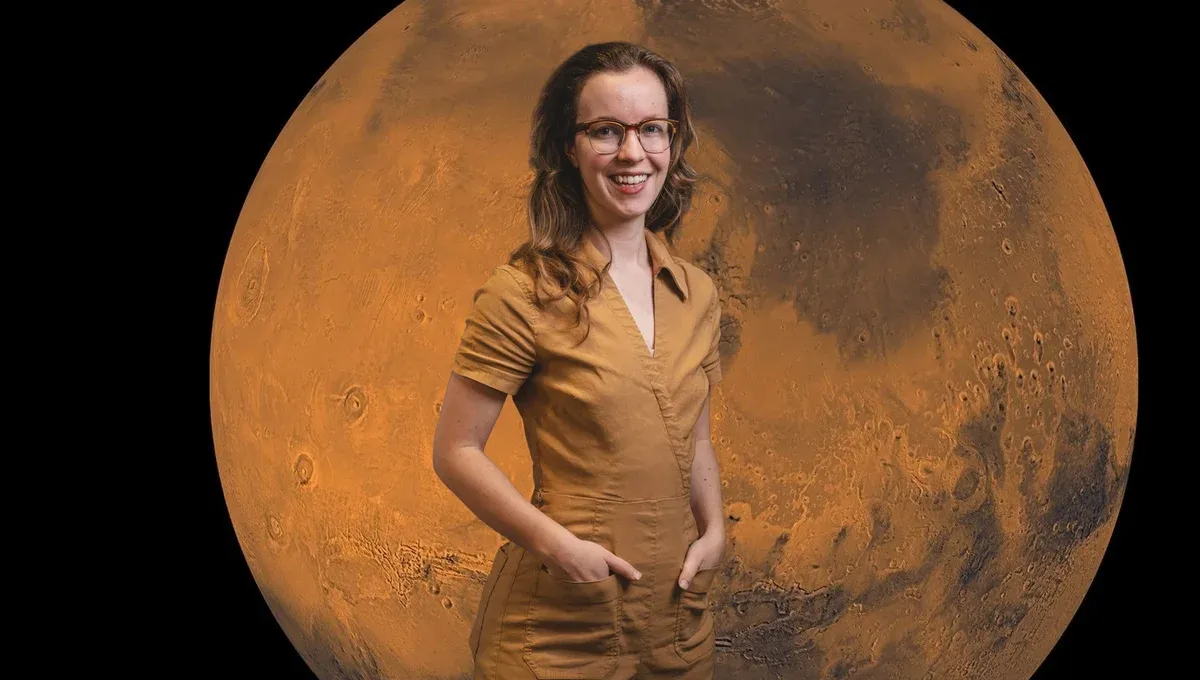
Erika DeBenedictis, CEO of Pioneer Labs, is developing Mars-adapted microbes to make alien worlds habitable. For decision-makers, this signals a new frontier where synthetic biology meets planetary-scale infrastructure investment.
Erika DeBenedictis, CEO of Pioneer Labs, is not waiting for rockets to deliver habitats to Mars. Her biotech startup is engineering microbes designed to survive and reshape the Red Planet, a bet that the first terraformers will be single-celled, not human. In a Scientific American profile, DeBenedictis lays out a vision where synthetic biology does the heavy lifting of planetary transformation, turning an inhospitable world into something closer to home. The pitch is audacious, but it is grounded in a real and growing industry: companies are already commercializing microbes for Earth-bound problems, from carbon capture to soil restoration. Pioneer Labs wants to take that playbook off-planet, and the implications for investors, founders, and infrastructure planners are larger than the Martian soil itself.
Terraforming Mars has long been the domain of science fiction, but DeBenedictis is approaching it as an engineering problem with a biological toolkit. The core idea is to deploy microbes that can alter the Martian environment, potentially releasing gases, breaking down minerals, or generating organic matter in ways that make the planet more hospitable for future human settlers. The Scientific American profile does not specify which microbes Pioneer Labs is developing or the exact mechanisms they would use, but the strategic logic is clear: instead of hauling massive physical infrastructure across 140 million miles, send self-replicating biological agents that do the work on arrival. That is the same logic driving synthetic biology on Earth, where engineered cells are already producing fuels, materials, and medicines at commercial scale. Pioneer Labs is simply extending the timeline and the target.
The business case for Mars-adapted microbes is not immediate revenue. It is about positioning at the intersection of two massive trends: the falling cost of space launch and the accelerating capability of genetic engineering. Launch costs have dropped dramatically over the past decade, and companies like SpaceX have made interplanetary transport a realistic planning assumption for the 2030s and beyond. Meanwhile, the cost of DNA synthesis and genome editing has plummeted, making it feasible to design organisms for extreme environments. DeBenedictis, who trained as a synthetic biologist, is betting that those two curves intersect on Mars. For a CEO or board evaluating long-horizon bets, Pioneer Labs represents a category of investment where the payoff is decades out but the strategic value is being built now, in the form of proprietary biological designs and data.
There is also a regulatory dimension that executives should watch. Space activity is governed by the Outer Space Treaty of 1967, which prohibits national appropriation of celestial bodies but does not clearly regulate biological contamination or planetary modification. The Committee on Space Research maintains planetary protection guidelines, but those rules were written for robotic probes, not self-replicating organisms. If Pioneer Labs or any competitor moves toward actual deployment, regulators will face a novel question: who approves the intentional modification of another planet's ecosystem? That uncertainty is both a risk and an opportunity. Early movers with credible safety frameworks could help shape the rules, while laggards may find themselves locked out of a new regulatory regime.
The scientific community has debated the ethics and feasibility of terraforming for decades, and DeBenedictis is stepping into that debate with a commercial entity. That changes the conversation. Historically, terraforming proposals came from academics and science fiction authors, with no clear path to funding or execution. Pioneer Labs introduces a private-sector actor with a profit motive, which could accelerate research but also raises questions about governance. Who decides what Mars should look like? Who owns the data and the biological designs? These are not abstract questions for a future generation. They are the kind of issues that boards and investors will need to grapple with as the technology matures, and the answers will likely be shaped by whoever shows up first with a working system.
For the broader biotech and space industries, Pioneer Labs is a signal that the two sectors are converging. Space biotech has historically been limited to experiments on the International Space Station, testing how microbes and cells behave in microgravity. Pioneer Labs is pushing further, designing organisms for the Martian surface itself. That requires solving problems that Earth-bound synthetic biology does not face: extreme cold, low pressure, high radiation, and a soil chemistry that is toxic to most life. The company's work could produce spin-off technologies with Earth applications, such as organisms that thrive in contaminated soils or extreme industrial environments. In that sense, the Mars mission is a forcing function for innovation that could pay dividends regardless of when humans land.
The strategic stakes for peers are clear. If Pioneer Labs succeeds in demonstrating even a small-scale proof of concept, it will validate a new category of infrastructure investment: biological planetary engineering. That would attract capital, talent, and competition, much like the early days of commercial spaceflight. If it fails, the lessons will still inform a generation of researchers and founders who believe that life, not just machines, will be the tool that opens the solar system. DeBenedictis is not promising a timeline or a price tag, but she is making a claim that is more important for decision-makers: the question is not whether Mars can be terraformed, but who will build the tools to try. Pioneer Labs is placing its bet on biology, and the rest of the market is now on notice.
This story's Key Insights and Take-aways are locked.
Create a free account to unlock Executive Actions for one credit.
Register to UnlockAlways free for Executives Club members. Join the Club
More in Technology

Cop fired after sharing Flock login with ICE husband: 983 searches
A Savannah officer's shared credential let an ICE agent run hundreds of plate searches on Hispanic drivers, exposing a surveillance backdoor.

Elizabeth Holmes doc 'You Can See Everything' posts second-biggest doc debut ever
The true-crime draw shows fraud narratives still sell - a signal for media execs and a caution for founders.

She blocked an Uber delivery robot to save jobs. Police arrested her.
Carolyn Marvin's disorderly conduct arrest turns a sidewalk standoff into a test case for how cities police the automation-versus-workforce debate.