
Marvel drops the first Avengers: Doomsday trailer, reshaping Phase Six after Majors conviction
The MCU’s Phase Six finale realigns around Russo brothers, after Marvel fired Jonathan Majors and retooled plans.
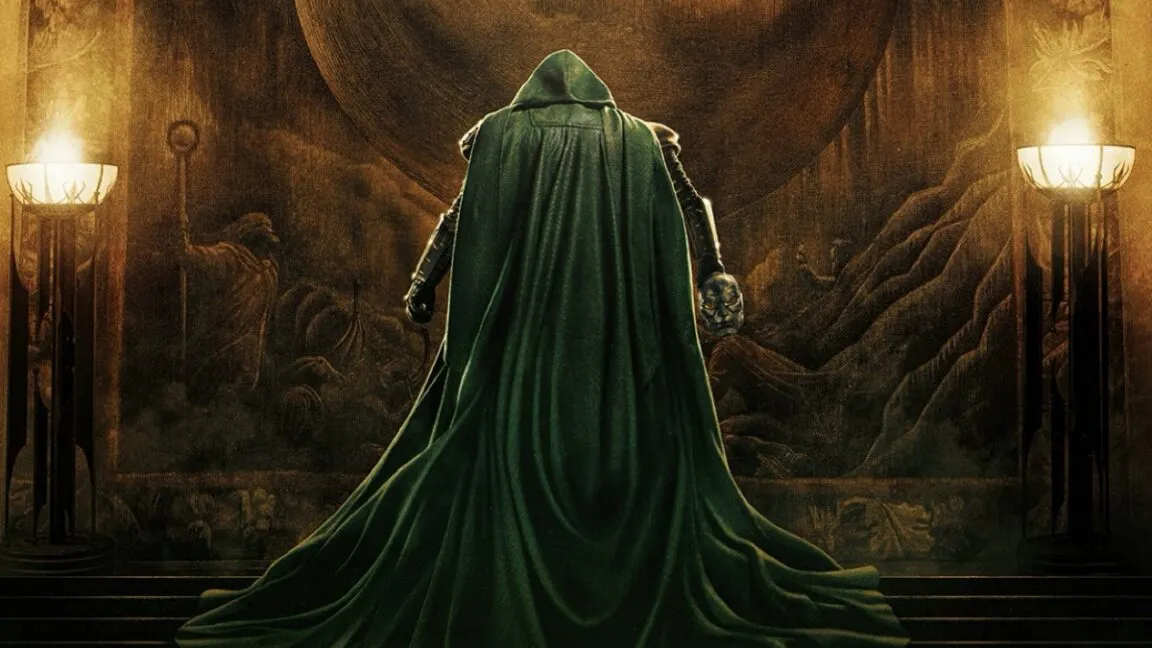
Marvel Studios has released the first official full trailer for Avengers: Doomsday as San Diego Comic-Con kicks off. The trailer lands after Marvel shifted Phase Six following Jonathan Majors' domestic violence conviction and the announced Russo brothers return.
San Diego Comic-Con is about to ignite, and Marvel Studios is arriving with a curveball: the first official full trailer for Avengers: Doomsday. It is the penultimate film in the MCU’s Phase Six, and it’s also the end of the so-called “Multiverse Saga.” The trailer’s vibe is warning, not hype. The line in the teaser is doing heavy lifting too: “Something's coming. Something we may not be able to deter.” In other words, Marvel is not just previewing a movie. It is previewing a finale that has been forced to survive major real-world disruption.
Here is the real stake for anyone tracking media strategy, board dynamics, or risk management: Marvel originally planned its Phase Six Avengers arc, “The Kang Dynasty,” around Jonathan Majors’ Kang the Conqueror and related variants introduced in Loki and Ant-Man and the Wasp: Quantumania. Then Majors was convicted of domestic violence, and Marvel fired the actor soon after. That decision did not just remove a performer. It forced a retooling of Phase Six, culminating in a different centerpiece plan that the studio has now leaned into publicly, including the announced return of the Russo brothers, who directed four of the Marvel Cinematic Universe’s most successful films.
To understand why this matters beyond fandom, zoom out to how blockbuster universes are built like long-duration capital projects. MCU releases are not isolated events. They are synchronized bets across years, where casting, story continuity, and production schedules all function like interlocking assets. When Marvel lost Majors, it didn’t just have to swap talent. It had to re-optimize narrative architecture for the late-cycle of Phase Six, the arc intended to end the Multiverse Saga. That kind of pivot is hard because the audience has been trained to expect continuity. If continuity breaks, engagement can too.
So Marvel’s response has a strategic through-line: bring back proven leadership aligned with prior “most successful” outcomes. The source is explicit that the Russo brothers directed four of the MCU’s most successful films, which brought in more than $6 billion at the global box office. That number matters because it signals credibility to the organization and confidence to stakeholders. In a retooling moment, boards and internal decision-makers generally want a track record that reduces variance, especially when the original creative plan has been disrupted by personnel risk.
This is also where regulation and governance logic, even in entertainment, enters the conversation. Domestic violence convictions are not the kind of headline that stays inside an actor’s personal life once the entertainment company faces reputational and legal exposure. The source ties the conviction directly to Marvel’s response: Marvel fired Majors soon after. That sequence matters because it shows a risk-trigger response that changes downstream planning. For executives, the lesson is not “be cautious.” It is that risk events can quickly turn into production events, because long-range projects require stable, approved talent and predictable stakeholder sentiment.
From there, the trailer itself becomes more than marketing. It is a public signal that Marvel’s Phase Six endgame is operational again, not just creatively reimagined. The trailer being released as Comic-Con kicks off later this week is a timing choice too. Comic-Con is where industry attention concentrates, where press and fan discourse amplify quickly, and where studios can validate that the new direction is resonating early. The trailer’s framing, with the ominous line about something “we may not be able to deter,” also reads like narrative justification for the rebuild. The story is warning the audience that the “deterrent” might fail, mirroring, in metaphor, how the MCU’s prior plan had to fail and be replaced when real life intervened.
Second-order implications are where execs should pay attention. When an MCU installment shifts due to a major casting shake-up, it changes risk allocation across departments. Production has to manage reshoots, rewrites, and schedule compression. Marketing has to reframe continuity. And finance has to recalibrate assumptions about audience reach, merchandise momentum, and international release confidence. Even the director return is a governance signal. Bringing back the Russo brothers is effectively using organizational memory and prior performance to de-risk a late-phase strategy. If Phase Six is the MCU’s concluding chapter for the Multiverse Saga, then every decision has compounding effects.
For executives in adjacent categories, the pattern is transferable: long-duration ecosystems need contingency planning for human-risk events, not just creative ones. Marvel’s stated pivot from “The Kang Dynasty” built around Majors to a retooled Phase Six path underscores that casting is structural, not cosmetic. The boardroom version is simple. When the original thesis collapses due to a conviction and a firing, you either delay and reset, or you rapidly re-anchor around leadership with proven outcomes. Marvel appears to be choosing the latter, with Doomsday and the Russo brothers return acting as the institutional fix. Now the market will decide whether the new plan lands as hard as the old one promised.
This story's Key Insights and Take-aways are locked.
Create a free account to unlock Executive Actions for one credit.
Register to UnlockAlways free for Executives Club members. Join the Club
More in Entertainment

12TB Steam 'teraleak' goes beyond Valve: GTA 3, Mafia 2 prototypes exposed
A 12-terabyte dump of Steam data reveals prototypes and builds of third-party classics like GTA 3 and Mafia 2, plus unreleased Valve content, rewriting game history.

LinkedIn's romance problem: 1 in 4 workers say dating on it is fair game
A new survey shows a quarter of U.S. employees treat the professional network as fair game for romance, even as LinkedIn bans it and removes hundreds of thousands of offending posts.

Enhypen's first No. 1 album breaks K-pop's Billboard 200 streak
The K-pop group's 98,000-unit debut tops the chart while Dolly Parton's catalog reentry shows how death reshapes streaming.