
Mary Harron resuscitates I Shot Andy Warhol, years after Solanas’ 1968 shots
The “anti-biopic” returns with a blunt question: why Valerie Solanas fired, and why we still watch.
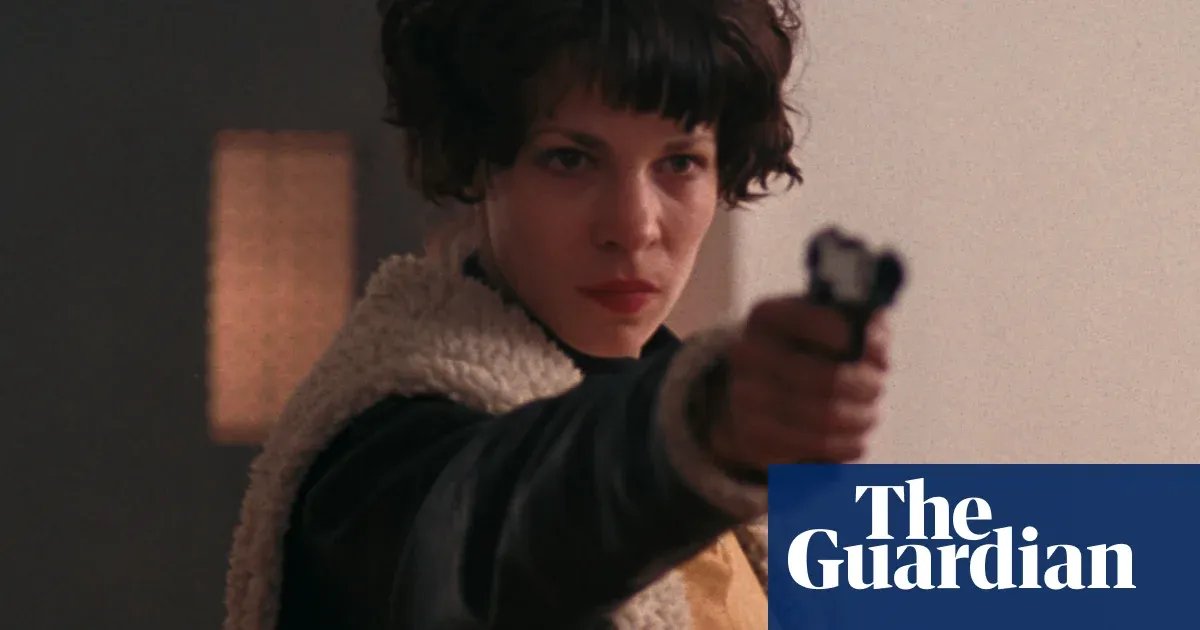
Director Mary Harron’s 1996 debut I Shot Andy Warhol revisits Valerie Solanas, the sole member of Scum, after her 3 June 1968 attack on Andy Warhol. For decision-makers, the film’s comeback is a reminder that cultural narratives around violence, art, and accountability still shape what audiences reward.
On 3 June 1968, Valerie Solanas walked into Andy Warhol’s Factory, pulled out a.32-caliber pistol, and fired three shots. The first hit art critic Mario Amaya in the hip. The second lodged in a wall. The third pierced Warhol’s chest. A little over two days later, in the early hours of 6 June, Robert Kennedy was assassinated, stealing airtime from the attempted murder of America’s most famous pop artist.
Director Mary Harron’s 1996 film I Shot Andy Warhol takes that sequence of events and treats it like a deliberate disruption. The title itself is a clue: it comes from a line in Solanas’s police confession, and it frames the story as an “anti-biopic” that refuses to settle the central question. When police asked Solanas why she shot Warhol, she replied she “had a lot of very involved reasons.” Harron makes that phrase the recurring hinge of the film, returning to it as the movie walks backward through Solanas’s life while leaving the “why” open to interpretation.
That structure matters more than it sounds, especially for anyone who thinks of biopics as a genre built for closure. Harron’s approach challenges the instinct to package a person into a moral lesson, a hero-vs-villain binary, or a neat psychological origin story. Instead, the film leans into ambiguity. It is not trying to win a courtroom argument about intent. It is asking what happens when a culture obsessed with celebrities gets interrupted by violence that does not fit the script. The “15minutes of fame” idea lands differently here because the question is not whether Solanas wanted attention, but what attention does to the meaning of the act and the people around it.
The movie also arrives with a historical credibility boost that extends beyond the subject matter. Thirty years ago, it opened Cannes in the Un Certain Regard section, and today it has become one of the 90s’ most formally adventurous biographical dramas and a queer cult classic. In other words, its critical entry point was prestigious, and its long tail was not mainstream but persistent. For executives thinking about content pipelines, this is a case study in how risk can compound. A film that is structurally “off” for mainstream audiences can still earn legitimacy in elite festivals, and then convert that legitimacy into durable niche demand.
Harron’s “anti-biopic” stance also intersects with how regulators and institutions tend to think about violence in media, even when no specific regulation is cited in the source. When portrayals of attempted murder, confessions, or motive are involved, the friction point is usually not whether a story exists, but how it is framed, marketed, and distributed. Editorial choices like leaving motive ambiguous can change public interpretation, platform treatment, and how conservative audiences react. That is not a claim about the film’s legal status in any jurisdiction; it is simply how content governance typically evaluates risk: context, impact, and the absence or presence of sensational framing. A movie that refuses to over-explain can be seen as more responsible, or it can be seen as more unsettling. Either way, it is working with real cultural stakes.
Then there are the second-order implications for boards, founders, and investors in media and tech. The story includes a hard fact about timing: the attempted murder occurred on 3 June 1968, but Robert Kennedy’s assassination on 6 June pulled attention away. That is a reminder that “who gets airtime” is often a function of news cycles, not only of public interest. When cultural institutions later decide what to elevate, they are revisiting that timing gap and deciding what stays visible. The film’s return shows how later audiences can re-rank importance, especially when the original event sits inside a broader conversation about modern art, fame, and counterculture.
If you are building or backing brands in entertainment, the strategic stake is straightforward: audiences are not only consuming outcomes, they are consuming interpretive frameworks. I Shot Andy Warhol is built to keep the interpretive framework unsettled. It does not close the loop on why Solanas did it; it keeps the viewer circling the line about “very involved reasons.” That design choice is exactly what makes it cult-adjacent, festival-valid, and revisit-worthy decades later. For peers who oversee creative risk, it is proof that refusing to give viewers the comfort of certainty can still produce long-term value. In a media landscape that often rewards the fastest emotional resolution, Harron’s film is a reminder that the gap between “what happened” and “what it means” can be the most durable hook of all.
This story's Key Insights and Take-aways are locked.
Create a free account to unlock Executive Actions for one credit.
Register to UnlockAlways free for Executives Club members. Join the Club
More in Entertainment

Russell Brand's accuser 'bewildered and confused' as he denies 7 sex charges
The criminal case against the comedian is a live test of how media companies manage talent risk when serious allegations go public.

'It's a Magic Trick': Ballet Experts Say Rosalía's SNL Pose Is Impossible
Three ballet experts tell Rolling Stone Rosalía's gravity-defying SNL stillness shouldn't be possible - and why the debate is now part of the show.

Activision CMO: GTA 6 Will Boost Call of Duty, Not Bury It
Activision's top marketer says Rockstar's blockbuster will drive players back to consoles and into Modern Warfare 4, even as the company admits its recent strategy failed.