

Mass General AI reads faces to predict cancer survival odds
A new AI tool estimates biological age from a single patient selfie, giving oncologists a fast, non-invasive survival signal - and raising questions about how far facial analysis should go.
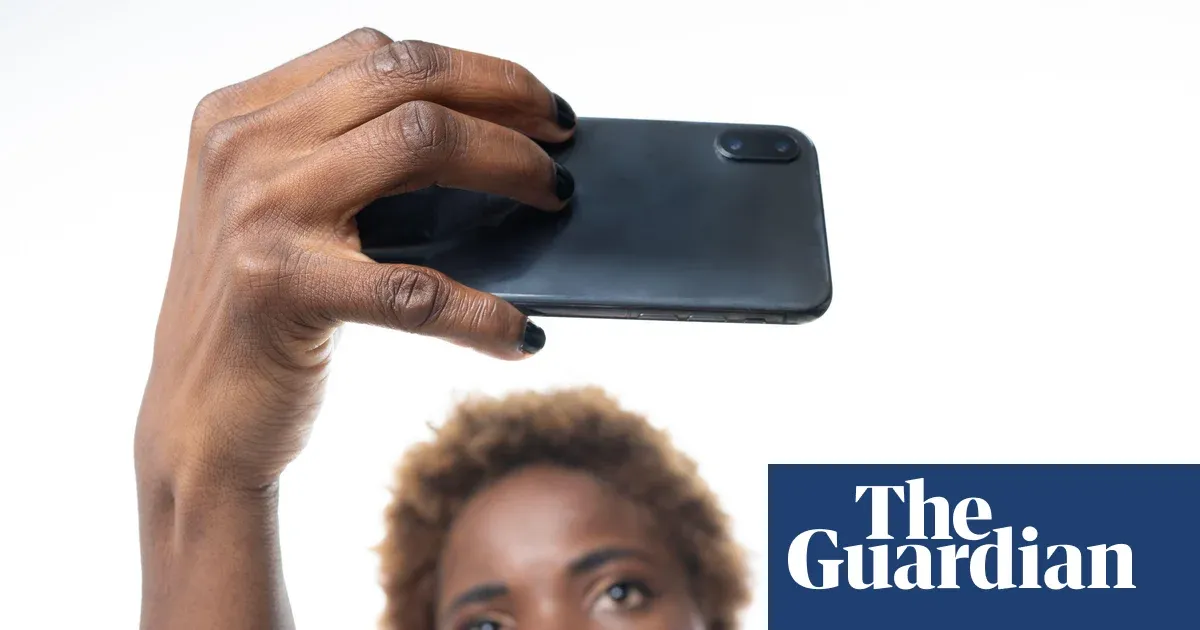
Researchers at Mass General Brigham built an AI system that estimates biological age from a single facial photo and uses it to predict cancer survival outcomes. For healthcare executives, the tool points toward cheaper, faster prognostic screening - and a new frontier of ethical and regulatory scrutiny around AI in medicine.
A single selfie may be enough to estimate a cancer patient's biological age and predict their chances of survival, according to a new AI tool developed by experts at Mass General Brigham, a nonprofit academic healthcare system in Massachusetts. The system, custom-built by the hospital's researchers, analyzes facial photographs to estimate biological age and directly predict survival outcomes in patients diagnosed with cancer. In other words, the same kind of photo you might post on Instagram could one day give oncologists a fast, non-invasive prognostic signal.
The headline finding is striking because it compresses a complex clinical judgment into a single image. Biological age, as opposed to chronological age, reflects how well your body is holding up relative to your peers. Clinicians have long used physical appearance as a rough health signal, but AI can now quantify it at scale. The Mass General tool appears to make that judgment available in settings where a full workup is impossible, from rural clinics to emergency rooms.
For healthcare executives, the promise is obvious: faster triage, lower cost, and a way to flag high-risk patients earlier. But the tool also lands in a regulatory gray zone. The FDA has been wrestling with how to classify AI that makes clinical predictions, especially when the input is as personal as a face. Facial analysis raises privacy concerns, and algorithms trained on one population may not generalize across ages, races, or lighting conditions. The published summary does not include dataset size or accuracy figures, so the practical timeline for clinical use remains unclear.
The bigger strategic question is whether such tools will be used to supplement or replace human judgment. If a selfie can predict survival, it could change how oncologists prioritize care, how insurers assess risk, and how patients think about their own bodies. It also opens the door to broader applications, from life insurance underwriting to employment screening, where facial age estimates could be used in ways the original researchers never intended. That is not a reason to dismiss the science, but it is a reason for leaders to think about governance before deployment.
Historically, AI in medicine has moved from imaging to genomics to now everyday data like photographs. Each step has brought new questions about consent, bias, and accountability. The Mass General tool fits that pattern, but with a sharper edge because the input is so accessible. A patient's face is not a biopsy or a blood test; it is a public artifact that can be captured without their knowledge. That makes the ethical stakes higher than a typical lab test.
For health system executives and health tech investors, the lesson is to watch this space closely. The underlying technology is advancing faster than the rules around it. Any organization deploying AI-based prognostics will need to build in transparency, bias testing, and patient consent from day one, or risk a backlash that could set the field back years. The competitive advantage will go to teams that treat these tools as clinical decision support, not as standalone oracles.
In the near term, expect to see more studies validating facial age estimation against traditional biomarkers like tumor staging and genomic profiles. If those studies hold up, the selfie could become a standard part of the intake process, especially in low-resource settings where advanced diagnostics are scarce. For now, the Mass General research is a proof point that the future of cancer care may be written on the patient's face.
This story's Key Insights and Take-aways are locked.
Create a free account to unlock Executive Actions for one credit.
Register to UnlockAlways free for Executives Club members. Join the Club
More in Science
2026 Nikon Small World Winners Reveal the Hidden Machinery of Everyday Life
A mycologist's frozen Edinburgh garden became the backdrop for vivid views inside cells, a reminder of what advanced imaging now makes visible to researchers and the industries built on biology.

Study: 1 in 4 depression cases may be a body-clock problem, not a chemical one
A 10,000-person study finds standard antidepressants often fail these patients, but melatonin and morning sunlight may hit the real root cause.

Start-Up Says A.I. Designed a Virus to Attack One Patient's Superbug
If the claim holds up, personalized phage therapy could become a new frontline weapon against antibiotic resistance - but proof is far from final.