
Matt Damon credits stunt double Devyn Dalton’s “greatest arms” in The Odyssey
The 4ft 6in Canadian performer stood in for Damon to make Nolan’s Laestrygonians look bigger, sharper, scarier.

Devyn Dalton, a Canadian stuntwoman, served as Matt Damon’s stunt double in Christopher Nolan’s new blockbuster The Odyssey, during a pivotal Laestrygonians confrontation scene. For executives and producers, this is a reminder that physical production design depends on specialized talent that rarely gets the spotlight.
Matt Damon did not just star in Christopher Nolan’s new blockbuster The Odyssey. In a pivotal scene, he also had to help sell an impossible visual: giant, armored Laestrygonians that feel larger than life because the bodies on screen are built to look that way.
That is where Matt Damon’s stunt double comes in. Canadian stuntwoman Devyn Dalton stood in for Damon in the Laestrygonians confrontation sequence, and Damon credited her with the kind of physical presence that changes what the audience believes. The Guardian reports that Dalton is 4ft 6in and 35 years old, and that Damon called her “the greatest arms I’ve ever seen.”
Why does this matter beyond the cute detail that Nolan’s movie had a tiny human with huge arms doing the work? Because blockbuster filmmaking is a manufacturing problem as much as it is an artistic one. You can write an epic confrontation on paper, but once cameras roll you are dealing with lenses, staging, scale perception, and human anatomy. A stunt performer like Dalton is not decorative. She is part of the visual logic that makes the giant Laestrygonians work as an on-screen concept.
Dalton’s job description, in this case, is plain: she stood in for Damon so the Laestrygonians could appear even bigger. The Guardian frames the Laestrygonians as “giant armoured cannibals” confronting Odysseus and his men. That is high-consequence scene-setting. The audience needs to feel the size difference quickly and viscerally. When the source says Dalton’s stature is 4ft 6in, that is not trivia. In practical staging terms, smaller bodies make larger opponents look larger, and stunt doubles help lock those visual relationships in during rehearsals and camera blocking.
This is also a business story about the hidden layer of production labor that executives underestimate at their peril. Big-budget films run on tight schedules and high coordination costs. If the people who can deliver reliable physical performance, consistent blocking, and scale cues do not exist, the entire visual plan gets more expensive. Dalton being described as one of the “great unsung heroes” signals how that reality works on the ground: the work is essential, but it is not always framed as a strategic asset.
From a governance and risk perspective, the stunt world sits in a constant tension between spectacle and safety. The Guardian article does not dwell on safety procedures, but it does make clear that stunt doubles are used in pivotal scenes. That means production leadership has to manage occupational risk with real discipline, not vibes. In board rooms, this usually shows up as questions like: How are stunt performers selected? How is training handled? How does the schedule account for rehearsal and recovery? Dalton’s credit in a major film is a reminder that stunt execution is a performance capability, not a last-minute workaround.
There is also a market implication for studios and investors. When talent is specialized and hard to replace, its value can compound across projects. If a stunt performer is uniquely suited to a role, or uniquely good at selling a physical illusion like scale, they can become a repeat production partner. The Guardian describes Dalton as standing in for Damon and showing what the actor called her “greatest arms.” That is the kind of differentiator that, once discovered, can shape future casting choices, rehearsal planning, and even the way directors visualize scenes during preproduction.
And then there is the audience side, which executives should care about because perception drives word-of-mouth and repeat viewing. If a giant opponent does not read as giant, the entire scene loses momentum. A stunt double effectively becomes a translator between fantasy writing and cinematic reality. The Laestrygonians confrontation is not a background moment. It is a pivotal sequence in the film's Odysseus plotline. The physical presence of the people performing the scale illusion is a key input to whether viewers feel the stakes.
So what should peers take from this? In film and in any performance-driven production, the most consequential work sometimes comes from the person behind the hero, the one who uses their body to make the script credible. For executives, the lesson is not to chase headlines. It is to treat stunt talent as critical infrastructure. The strategic stake is simple: when you build scale, intensity, and believability, you need the right specialists, on the right schedule, and with enough support to do the work safely and consistently. Dalton’s credited performance is a case study in how blockbuster magic is assembled, not magically summoned.
This story's Key Insights and Take-aways are locked.
Create a free account to unlock Executive Actions for one credit.
Register to UnlockAlways free for Executives Club members. Join the Club
More in Entertainment

'It's a Magic Trick': Ballet Experts Say Rosalía's SNL Pose Is Impossible
Three ballet experts tell Rolling Stone Rosalía's gravity-defying SNL stillness shouldn't be possible - and why the debate is now part of the show.

Activision CMO: GTA 6 Will Boost Call of Duty, Not Bury It
Activision's top marketer says Rockstar's blockbuster will drive players back to consoles and into Modern Warfare 4, even as the company admits its recent strategy failed.
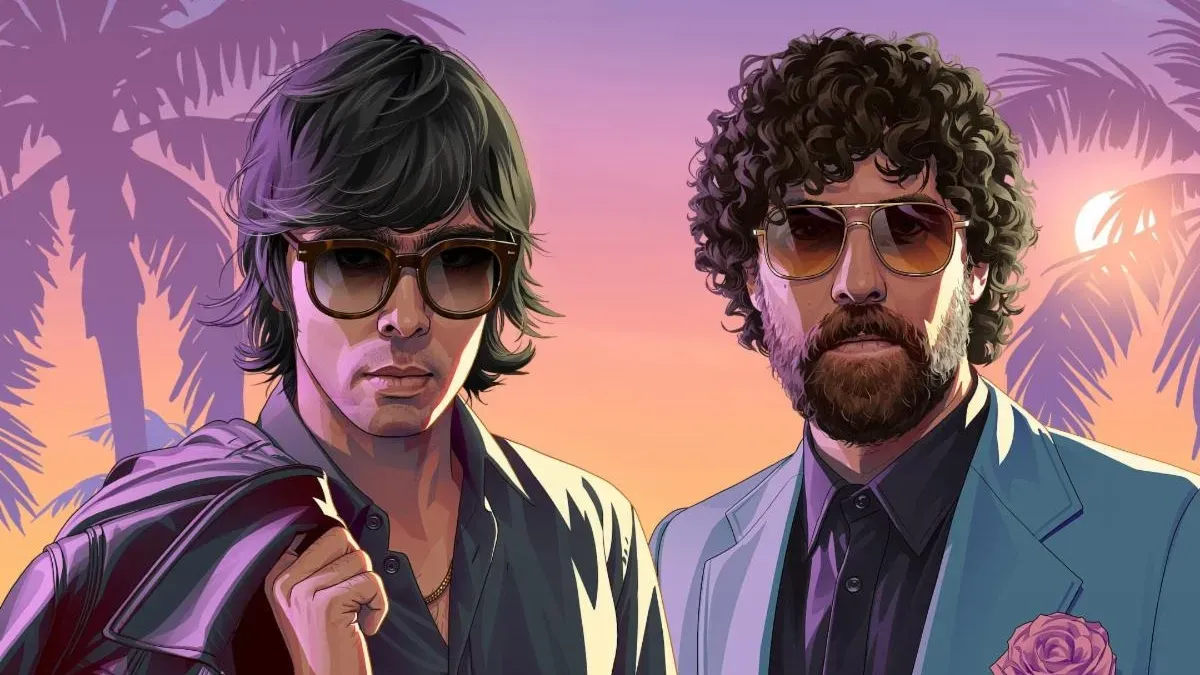
Justice to Score GTA 6, Share New Song with Tame Impala, SZA, King Gizzard
Rockstar taps the French duo for the GTA VI score, and the first taste is a genre-melting collab with Tame Impala, SZA, and King Gizzard & The Lizard Wizard.