

Maurice Lévy turned down President Obama’s Silicon Valley-style summit request
He says government-led control would crush freedom to speak, and the VivaTech idea survived anyway.
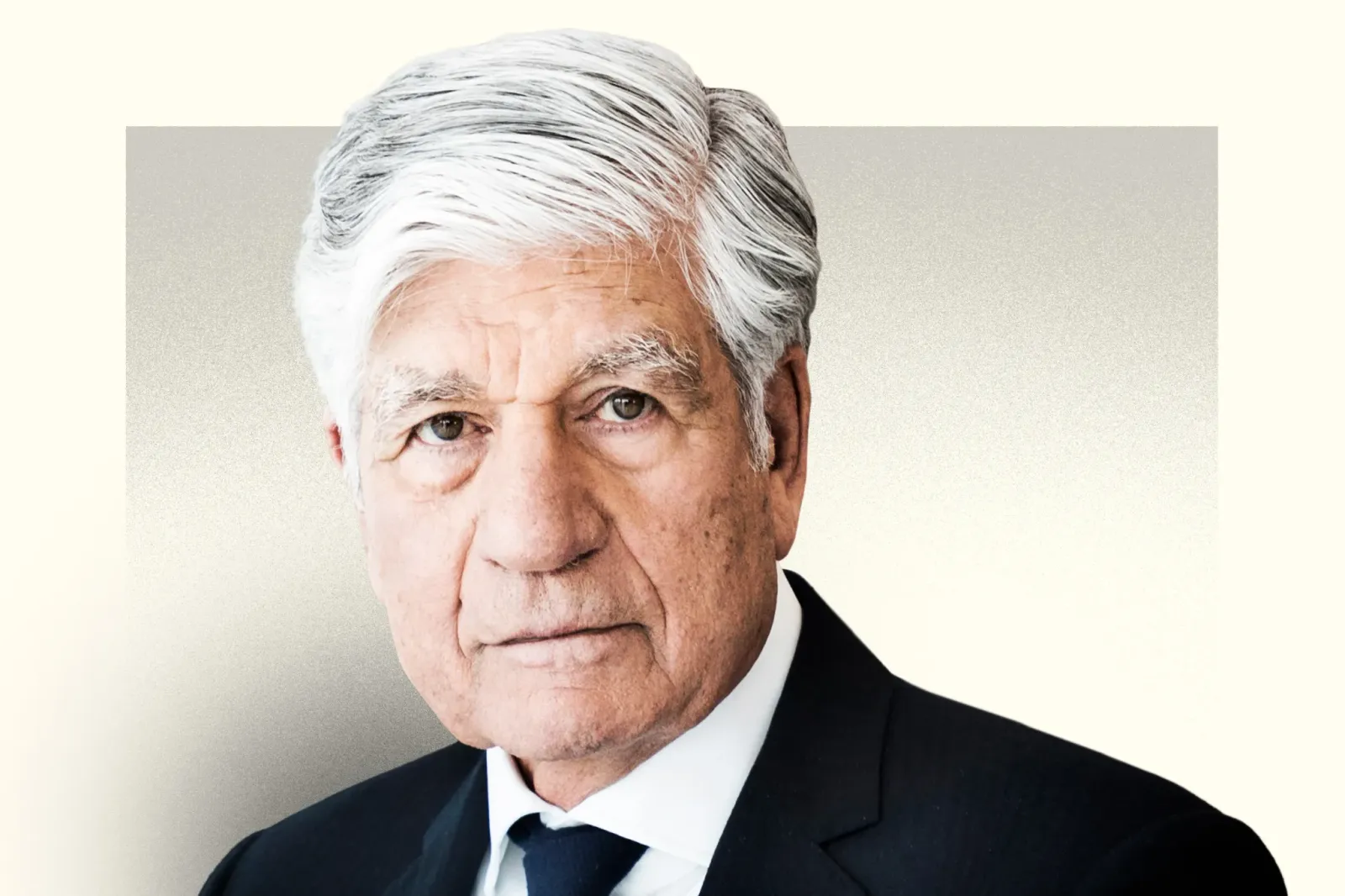
Maurice Lévy, long-time leader of Publicis, describes how President Barack Obama asked him to repeat a tech summit format in the United States after a 2011 G8-adjacent moment. The consequence: Lévy declined, and the freedom he protected later shaped VivaTech’s “no plan, no budget” launch.
VivaTech in Paris is celebrating its tenth anniversary with a tech takeover of the Champs-Élysées and, by this year, at least 180,000 delegates are expected to show up in June. The path to that outcome passes through an unexpected fork in the road in 2011, when Maurice Lévy says President Barack Obama asked him to organize the same kind of tech gathering in America. Lévy, then leading Publicis, told Obama he could not deliver what the White House seemed to want, because control would cramp the innovation that made the first meeting work.
In Lévy’s telling, the original setup was a G8-adjacent moment in 2011, after Nicolas Sarkozy invited him to “bring together” people in the technology sector and host a summit in France alongside that year’s G8 meeting. Six weeks later, Lévy had assembled a who’s-who of internet power: Eric Schmidt (executive chair of Google), John Donahoe (CEO of eBay), Mark Zuckerberg (Facebook), Jeff Bezos (Amazon), Sheryl Sandberg (chief operating officer at Facebook), Paul Jacobs (CEO of Qualcomm), and Jimmy Wales (founder of Wikipedia). The group produced a report on the battle over internet regulation, which was presented to G8 leadership including President Obama, Angela Merkel, and David Cameron. Then, right after the meeting, Obama asked Lévy for a repeat moment in the U.S.
This is where Lévy draws a line. He says he worried the White House’s desire for control would cramp the innovative success of 2011. When Obama’s communications team followed up in the way he feared, Lévy politely declined. His reasoning was blunt and very specific: he told the communications team that “what you want is an agenda and almost a result before the meeting has taken place,” and that “the only way to get those people sitting around the table is to let them have total freedom to speak.” He also frames the structural problem as a mismatch in leadership: he said Obama wanted the head of communications leading, which he argued would prevent the freedom of speech he believed was required.
That refusal mattered less as a personality quirk and more as a design principle. The U.S. repeat did not happen “America may not have worked out,” Lévy says, but the “kernel of an idea” did not die. It took another four years, and it started from a completely different motivation: Publicis was looking for ideas to celebrate its 90th anniversary, and Lévy wanted something innovative. In the brainstorming, he says he did not want a coffee table book, a short film that “tells the story,” or a black-tie celebration at the Opéra de Paris. Then someone proposed: “Why not… find 90 startups?” Lévy agreed. A competition followed, 6,500 applications rolled in, and Lévy decided to invite them all. The story emphasizes the speed of the commitment, too: he spoke to Les Echos (owned by LVMH), and to Bernard Arnault, LVMH’s CEO. A decision was taken to create a tech conference in France.
And the way they launched VivaTech is almost the opposite of how most big European brands manage risk. Lévy remembers they did the event “without a plan, without a budget, without knowing what we will be spending.” The first year still landed with close to 45,000 visitors, and Lévy says the success was “tremendous.” Importantly, he claims they kept improving year on year, beating their record and getting “the most important people on the internet planet,” with the Chinese showing up too. That combination, entrepreneurial energy plus global authority, is how he characterizes VivaTech: it brings together the startup drive associated with WebSummit and the clout of the World Economic Forum at Davos, where global business leaders and politicians meet. Last year, President Macron took to the stage with Jensen Huang, founder of Nvidia. Other named attendees include Joseph Tsai (co-founder and chair of Alibaba), Maya Rogers (CEO of Tetris), and Yann LeCun (chief AI scientist at Meta).
Zoom in on why this matters right now. VivaTech’s themes include AI adoption and digital sovereignty. Lévy points to a key bottleneck: a report from MIT showing that only 5% of AI pilot programs achieve significant and positive revenue results, which implies that 95% fail. He argues this is not because companies lack interest, but because implementing AI forces a deeper transformation: companies must change how they work and how people think, including training people in a certain way. For executives, the second-order implication is straightforward: if your board or leadership team is treating AI as a software procurement problem instead of a people-and-process rewrite, you should expect pilots to underperform.
Then there is sovereignty, plus cyber-security and defense, which Lévy frames as vital and not always understood. In his view, the broader debate is not just tech performance, it is governance, ethics, sustainability, and who gets to set the rules. In that light, the 2011 report on internet regulation, and the fact that the tech leaders were “not keen,” fits like a missing puzzle piece. VivaTech becomes the European venue where these arguments play out publicly, with delegates gathering at the Porte de Versailles in June and, this year, with a “tech takeover” of the Champs-Élysées where robots walk amongst the plane trees.
Finally, there is the language decision, because it is another example of “choice of freedom over local constraints.” Lévy says he had to make VivaTech “in English,” and calls it “not even debatable,” because “the tech world is a world where we speak English.” But he also notes a compromise: the Saturday of the conference is all in French, dedicated to general public events so families can attend with French-language programming.
For founders, investors, and executives building tech programs, summits, or partnerships across borders, Lévy’s throughline is the lesson: when the purpose is to get top innovators to speak honestly, control can be the enemy. The stakes are bigger than event optics, because these conversations influence how regulation gets framed, how AI gets adopted, and whether “pilot” becomes “profit.” And in a world where America and China dominate the technology debate, Europe is trying to create its own stage. VivaTech, from a no-budget gamble to a 180,000-delegate moment, is the proof-of-life for that bet.
This story's Key Insights and Take-aways are locked.
Create a free account to unlock Executive Actions for one credit.
Register to UnlockAlways free for Executives Club members. Join the Club
More in Technology

OpenAI says 10,000 agents cracked a 90-year math problem in 88 hours
The company's claim is audacious, but one mathematician is pushing back. Here's what it means for AI-driven discovery.
Meta still serves child sexual abuse ads on Instagram in India - BBC report
A new report following the BBC Eye investigation says the ads are still there - what it signals for every platform with a self-serve ad engine.
White House yanks 'Build the Wall' game after Tetris Company copyright warning
The administration's arcade game vanished in hours - and the takedown playbook every brand can learn from.